Gray blending hair color for women over 50 works with the silver coming through instead of fighting it. Your stylist weaves lowlights and highlights through your natural gray so regrowth looks planned rather than overdue. The result is softer than full coverage, kinder to fine or thinning hair, and far easier to live with between appointments.
If you have spent years covering every silver strand, the idea of showing gray can feel like a big step. Blending is the gentle middle path. You keep depth and shine, you lose the hard line at your part, and you stop racing the calendar every few weeks. Plenty of women find it the first colour routine that actually fits a busy life.
This article walks through what blending is, who it suits, how grow-out changes, and what to ask for in the chair. You will also find honest notes on maintenance, at-home care, and the colour mistakes that can age hair instead of flattering it.
Table of Contents
What Gray Blending Actually Means
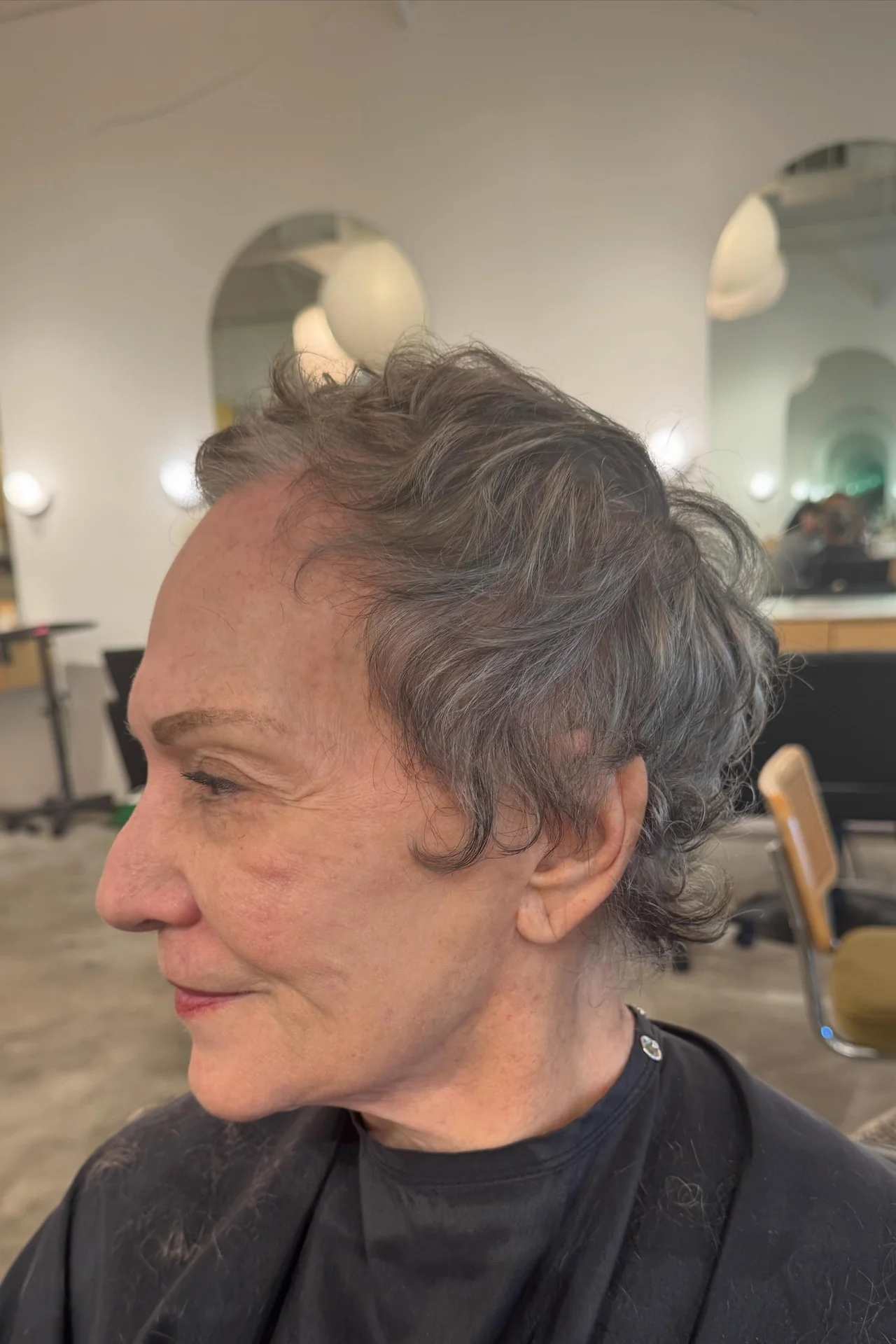
Gray blending is a colour technique, not a single shade. Your stylist studies how much gray you have and where it sits, then places darker lowlights and lighter highlights so the silver melts into the rest of your hair. Nothing is painted to match one flat colour. The goal is dimension that looks like your hair, only more even.
It differs from going fully gray in one important way. You are not giving up colour altogether. You are letting your natural silver become part of the pattern. That is why blended hair photographs so well in daylight. Light catches the lighter pieces, shadow sits in the lowlights, and the whole head reads as one intentional colour.
The technique suits a wide range of starting points. Women with scattered silver through dark hair, women with a strong silver streak at the part, and women who are already mostly gray can all benefit. What changes is the recipe, not the idea. Your stylist adjusts how much darkness stays and how much lightness gets added.
Who Gray Blending Suits Best
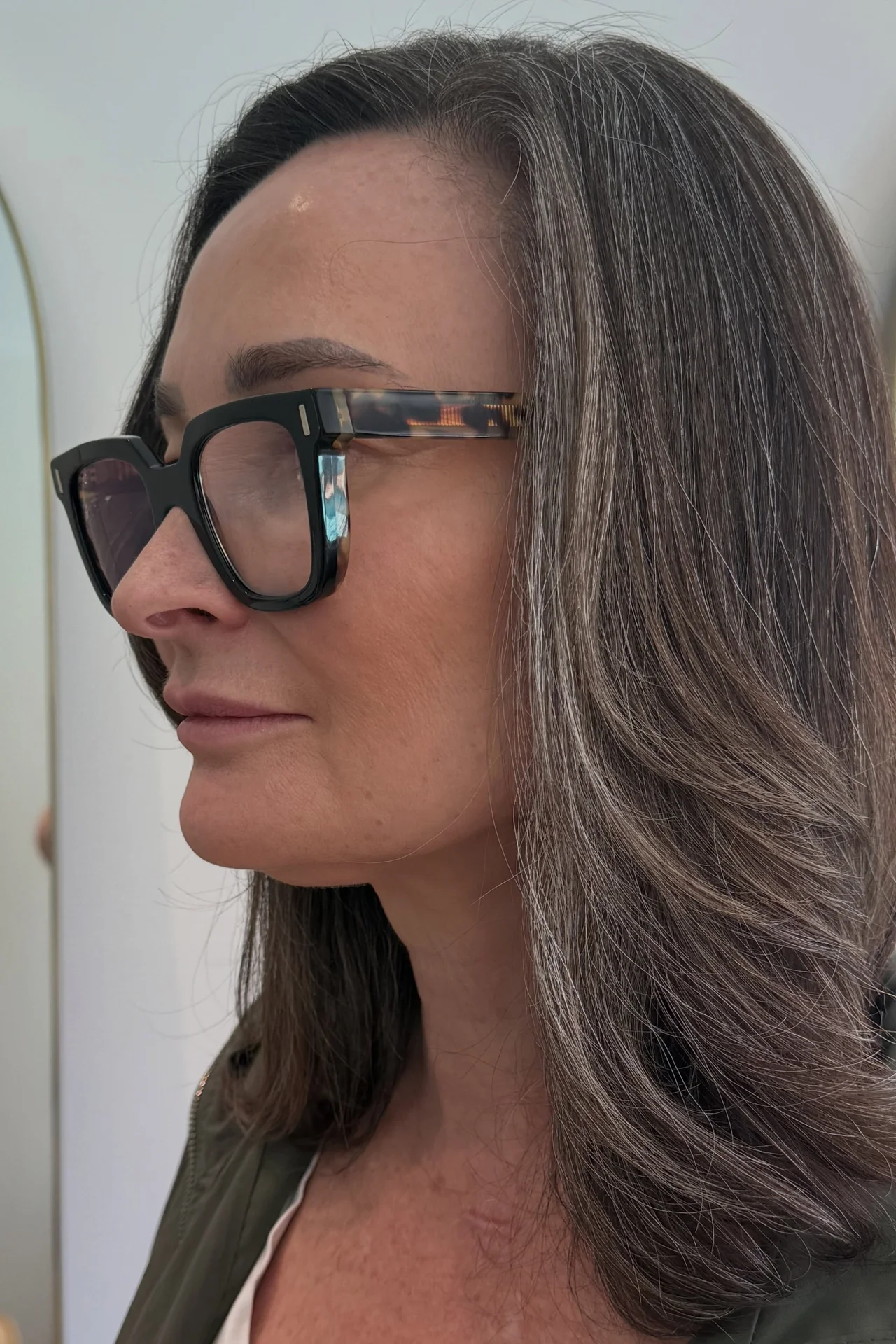
Blending suits you best if your gray is uneven. Most women gray first at the temples and the part, while the back stays darker for longer. Full coverage fights that pattern with a solid colour that shows regrowth fast. Blending copies the pattern instead, so the unevenness becomes the design.
It also suits women who want lower maintenance without a drastic change. If you like your current length and cut, blending keeps both and only changes the colour story. You do not need a big chop or a new style to make it work. A good cut still matters, though, since healthy ends show colour better than frayed ones. With gray blending hair color for women over 50, the colour should fit the life you already live, not demand a new one.
Skin tone plays a part too. Cooler silver tones flatter pink or neutral skin, while warmer caramel lowlights suit golden or olive skin. A skilled stylist will hold colour swatches near your face before mixing anything. If a proposed shade makes you look washed out in the mirror, say so before the colour goes on.
Blending Versus Full Coverage
Full coverage paints every strand one colour, root to tip. It looks polished on day one, but regrowth shows as a sharp line within weeks. That line is what sends most women back to the salon on a tight cycle. It also means more chemical processing over time, which fine hair feels first.
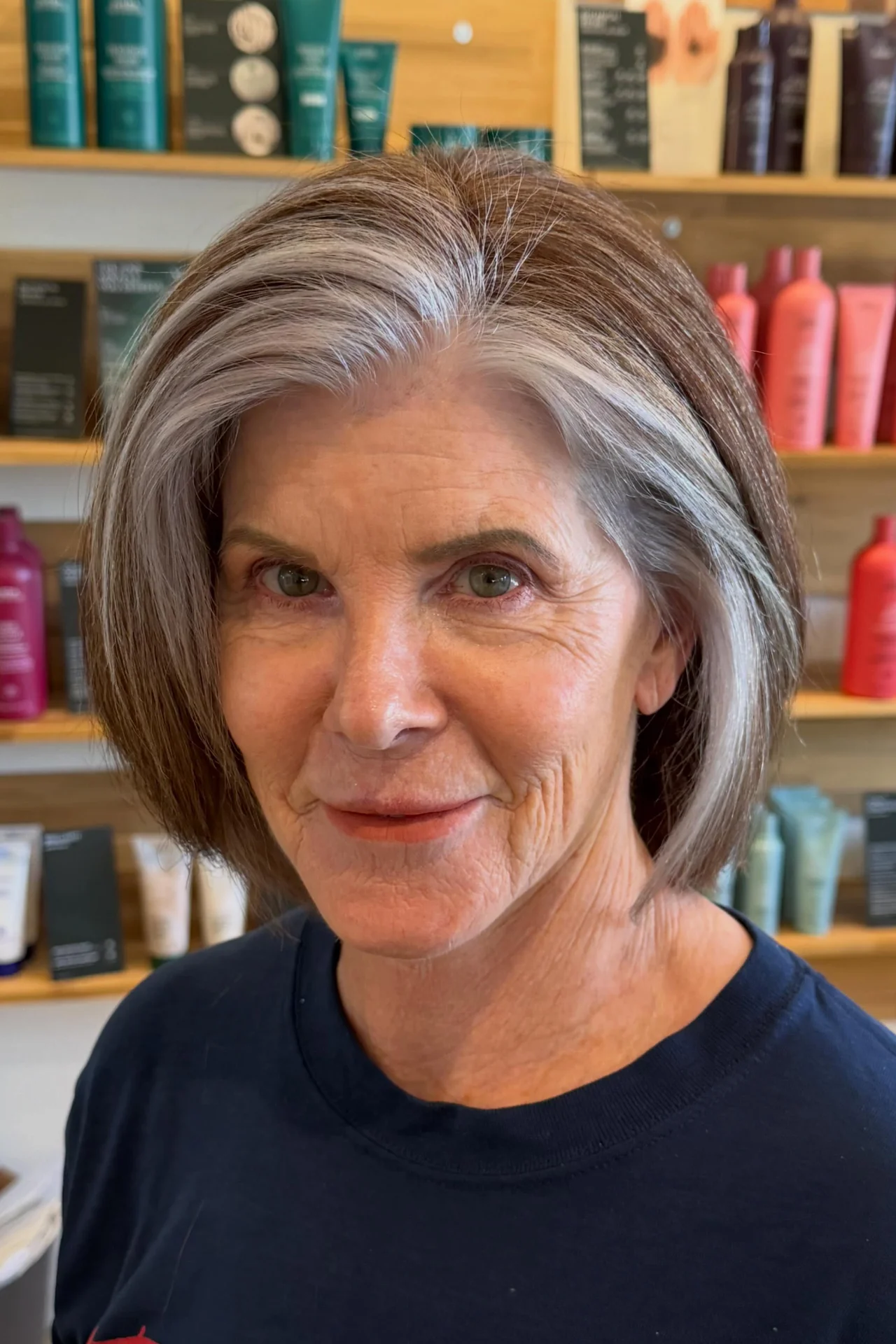
Blending takes the opposite approach. Because silver is already in the mix, new growth joins the pattern instead of interrupting it. Appointments stretch further apart, and each visit is usually a partial service rather than a full colour. Over a year, that means less processing, less breakage, and lower cost.
There is one honest trade to know. Blending will not give you the uniform, solid colour that full coverage does. If you love a single deep brunette or a flat black with zero variation, blending will feel too soft for you. But if you are tired of the root line and ready for movement, it is a welcome change. Pair it with a flattering shape, like the cuts in low maintenance haircuts for women over 50 with thin hair, and the whole look feels lighter.
The Grow-Out Advantage
Grow-out is where blending earns its keep. With full coverage, grow-out looks like neglect after a month. With blending, grow-out looks like the plan working. Silver threads join the lighter pieces, darker pieces keep depth, and nobody can tell exactly when your last appointment was.
Most women find they can stretch visits from four weeks to eight or even twelve, depending on how fast their hair grows and how much gray they have. That longer gap is gentle on both hair and budget. It also takes pressure off scheduling, which matters when life gets busy.
Grow-out still needs a little care. A gloss or toner between full services keeps the tone fresh and stops blonde pieces turning brassy. Ask your stylist whether a quick toner visit makes sense for you. It is usually faster and cheaper than a colour service, and it keeps blended hair looking deliberate rather than faded.
Lowlights That Do the Quiet Work
Lowlights are the darker strands woven back into gray hair, and they do more work than most people realise. Without them, gray hair can look flat and washed out, especially in indoor light. With them, your hair gains shadow, shape, and the sense of thickness that solid silver sometimes lacks.
Placement matters more than quantity. Good lowlights sit underneath the top layer and around the face in soft ribbons, not in harsh stripes. They should echo your natural darker tones rather than introducing a brand new colour. When lowlights match your brows or your natural base, the blend looks believable.
Too many lowlights can undo the whole effect. If your hair starts reading as dark again, the silver has been buried rather than blended. A good rule is to keep the darkest pieces close to your natural depth and let them fade toward the ends. That way the colour moves naturally instead of sitting in blocks.
Highlights That Lift Without Harsh Lines
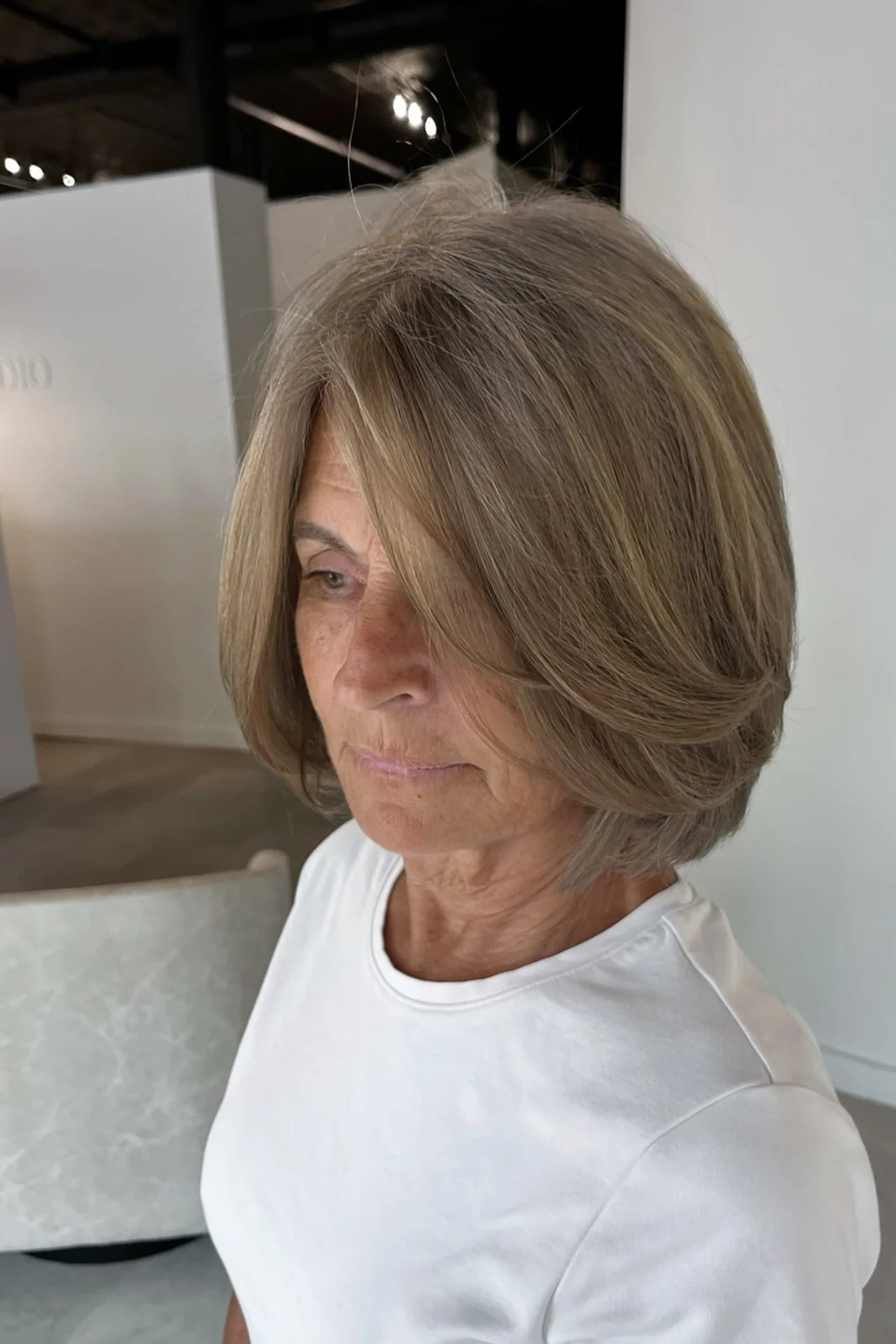
Highlights in gray blending are not the bright blonde streaks of younger years. They are soft, fine pieces that lift the silver and add light around the face. Think of them as brightening rather than lightening. The aim is glow, not contrast.
Foils or freehand painting both work, and your stylist will pick based on your hair. Foils give precise, even lift. Freehand painting gives a softer, more lived-in edge. Either way, the lightest pieces should stay near the face and the part, where light naturally falls. Highlights buried underneath do little for anyone.
Warmth is the thing to watch. Blonde highlights over silver can turn brassy if the toner is wrong or if hard water builds up at home. A violet or silver toner keeps the tone cool, and a shower filter helps if your water is heavy. If your highlights start looking yellow, book a toner before reaching for a box colour. A similar soft-dimension approach works beautifully in mocha balayage hair color for winter, where warm and cool tones are balanced rather than left to fight.
The Bob That Shows Off Blending
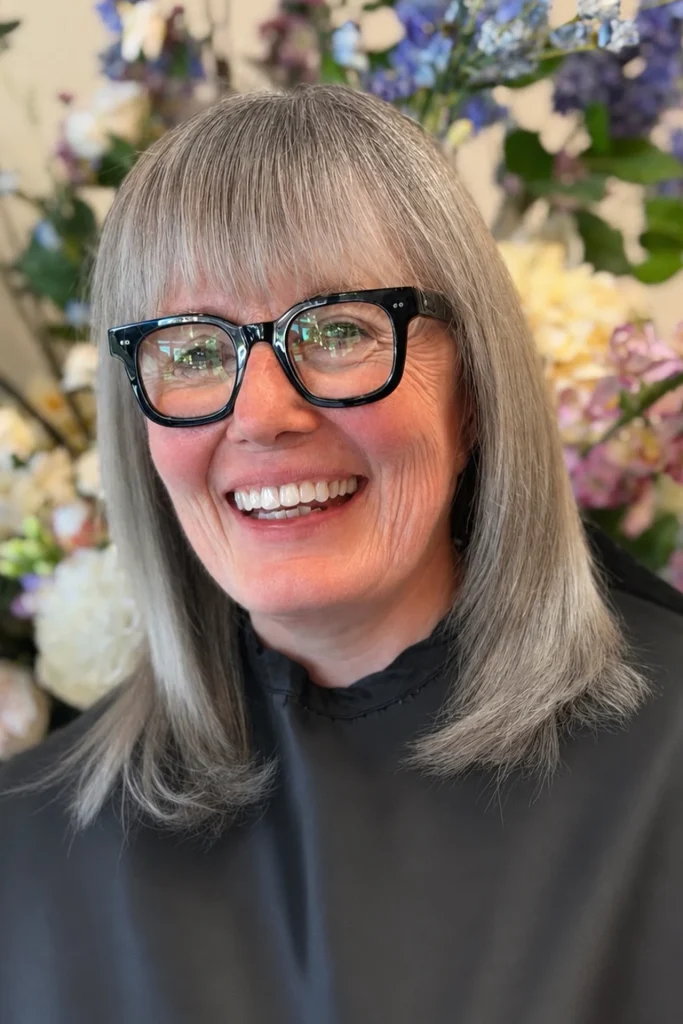
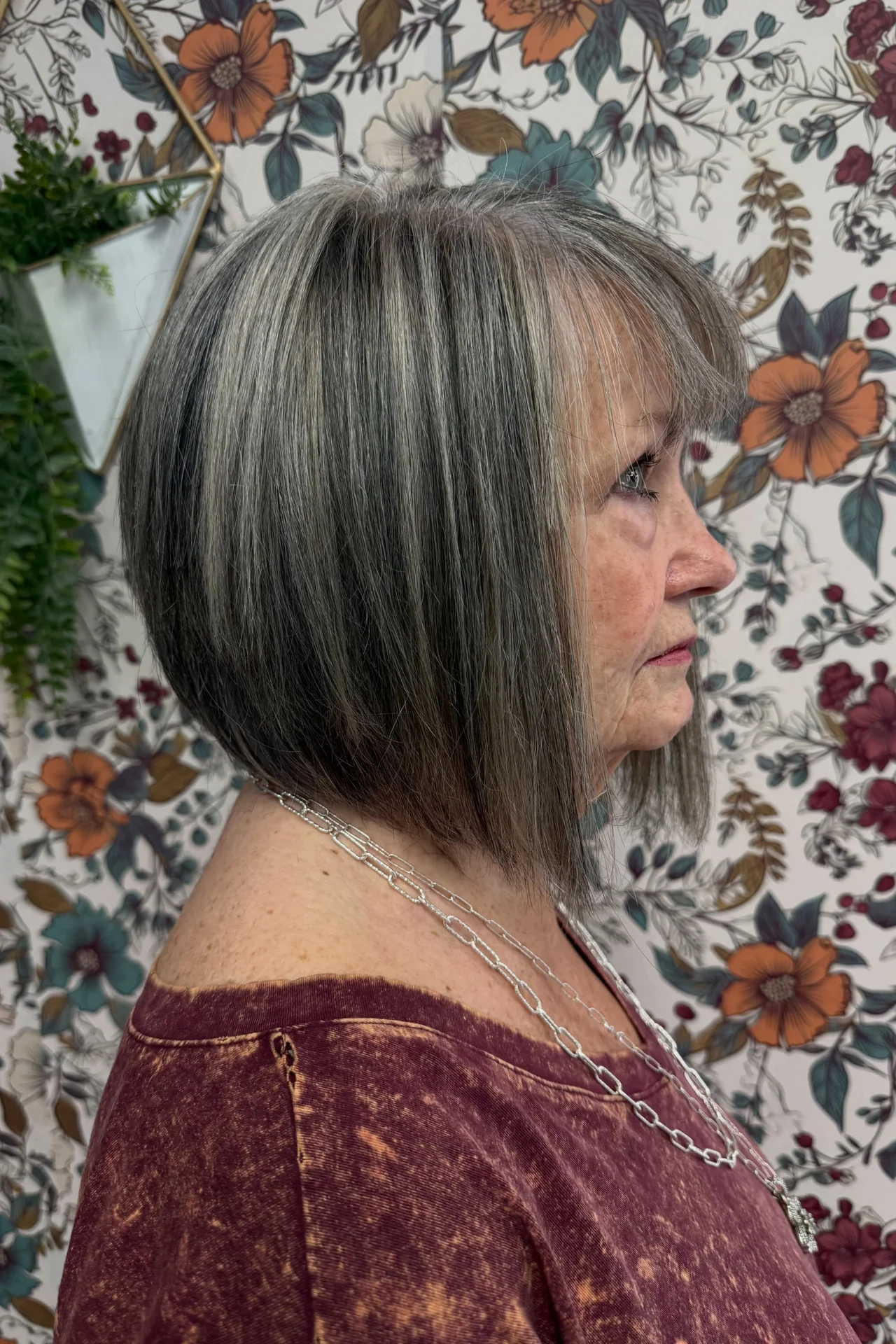
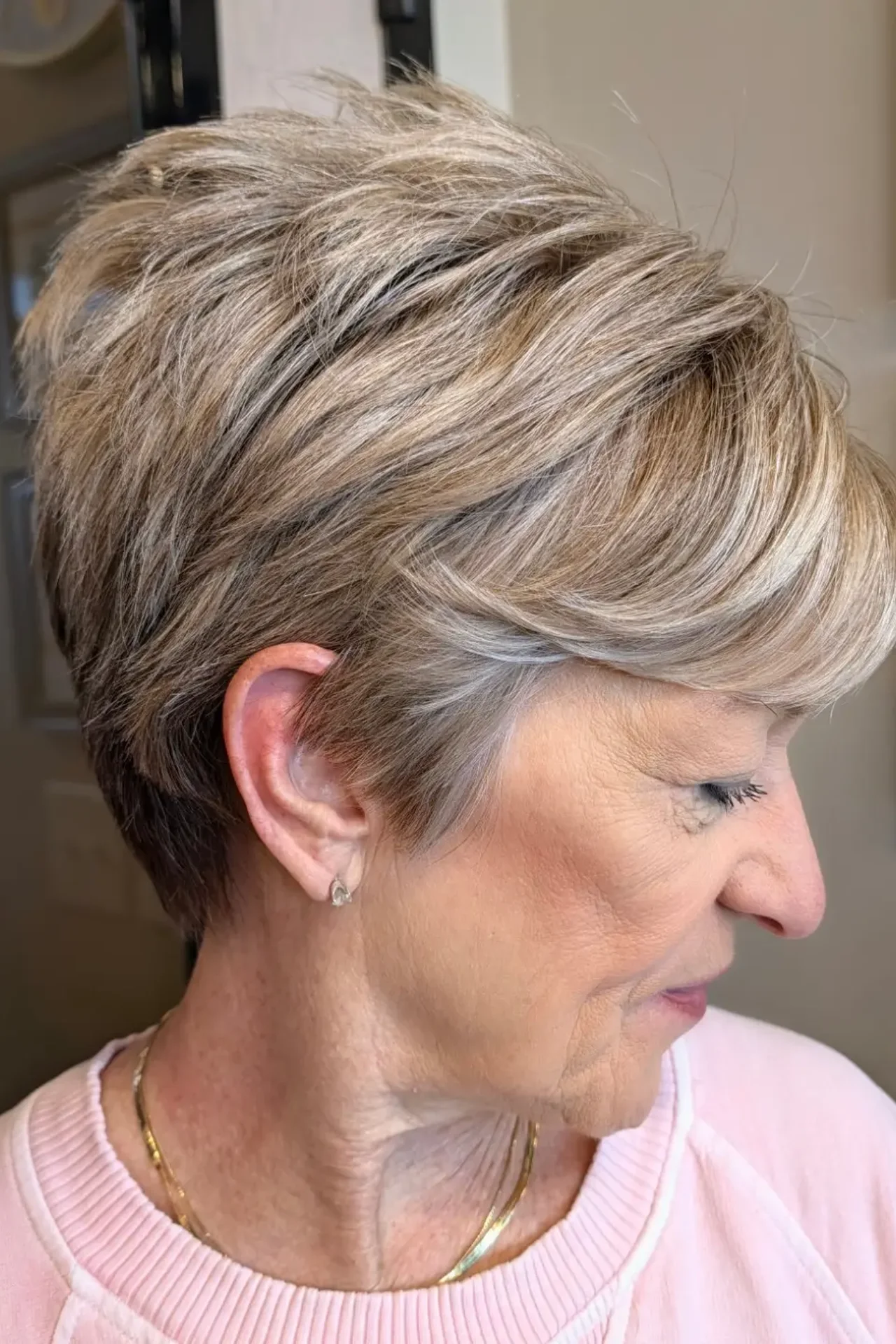
A bob is one of the best cuts for showing blended colour. Its clean outline gives every tone a clear frame, and its movement lets light travel through the layers. Chin-length and shoulder-length bobs both work, and the choice depends on your face shape and how much styling time you want.
For blending, ask for soft layers rather than blunt heaviness. Layers let the lowlights and highlights sit at different depths, which is what creates dimension. A bob cut all one length can still look lovely, but it shows less of the colour work you paid for.
Styling a blended bob is simple. A round brush through the top layers lifts the lighter pieces, while the ends can air dry or be tucked under. Avoid heavy waxes and thick serums, which clump fine strands together and hide the dimension. A light cream or a mist of shine spray is plenty.
The Pixie That Shows Off Blending
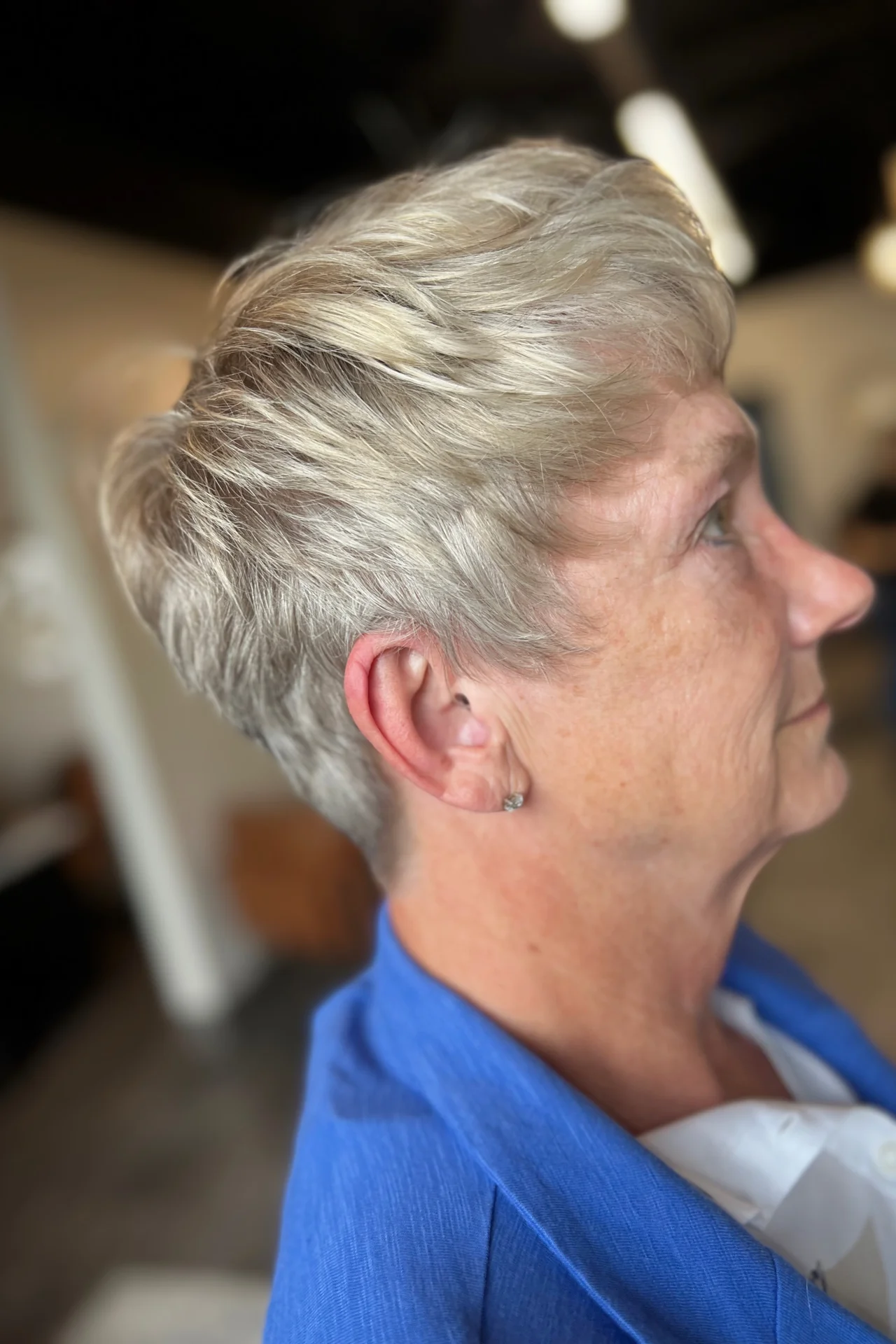
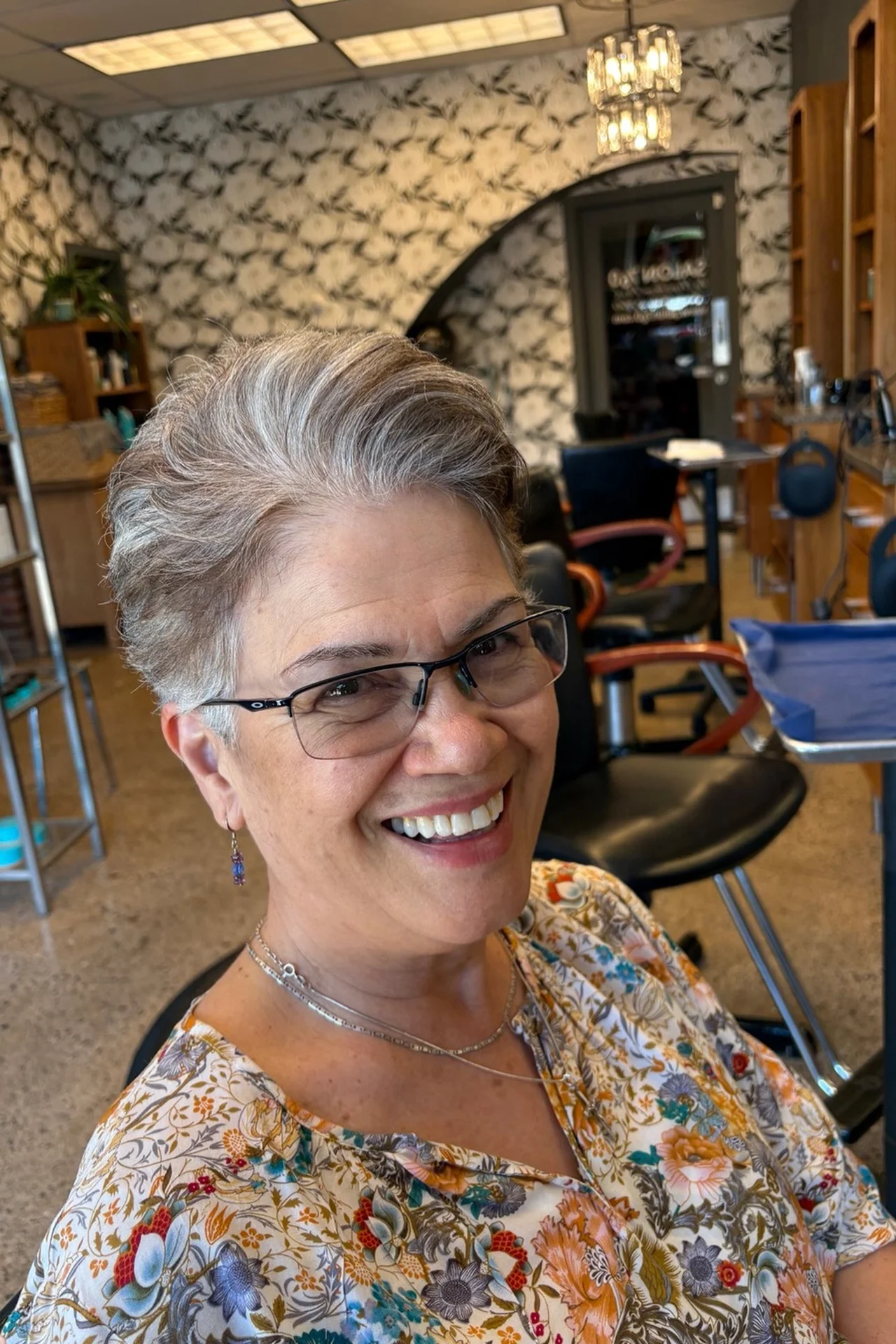
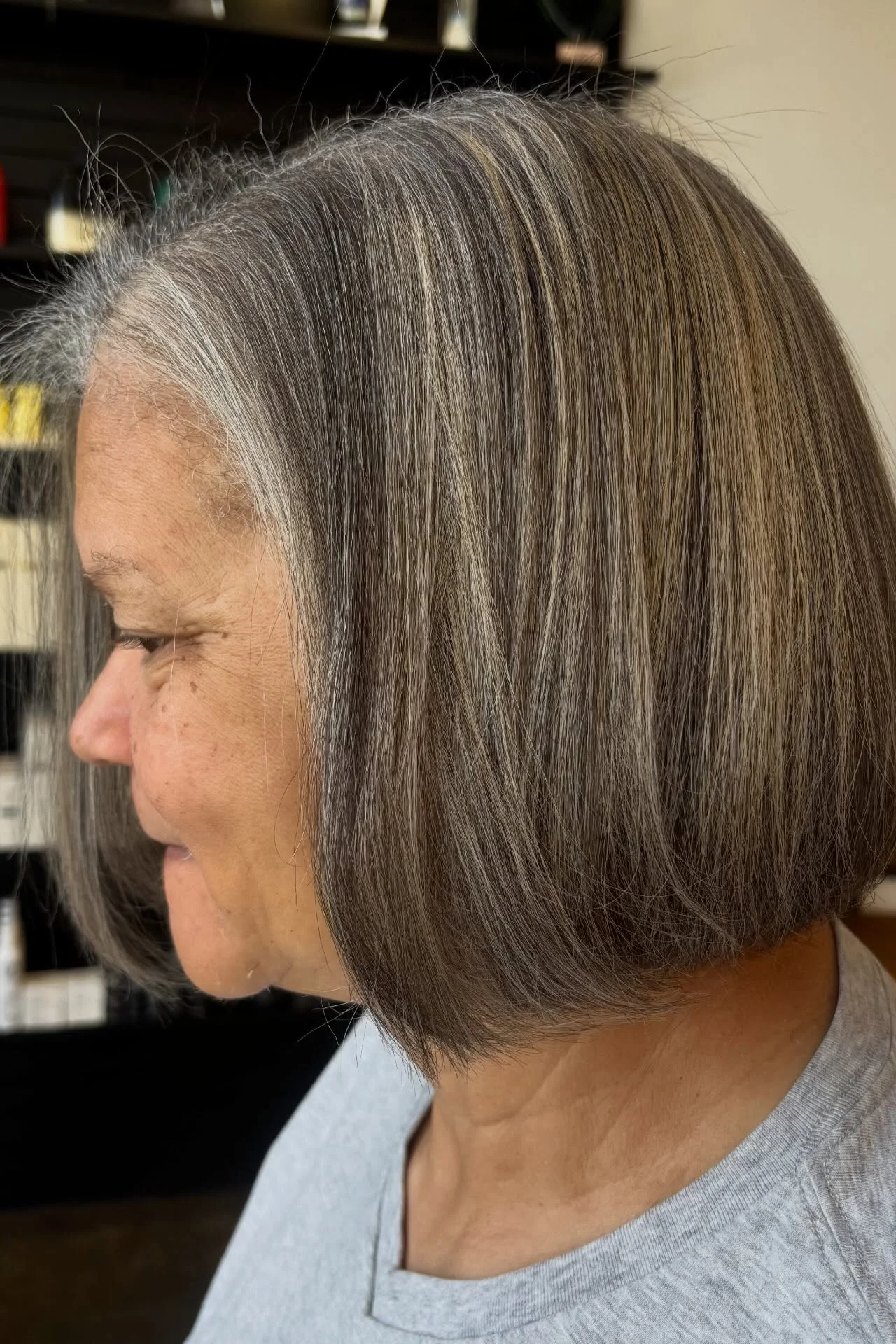
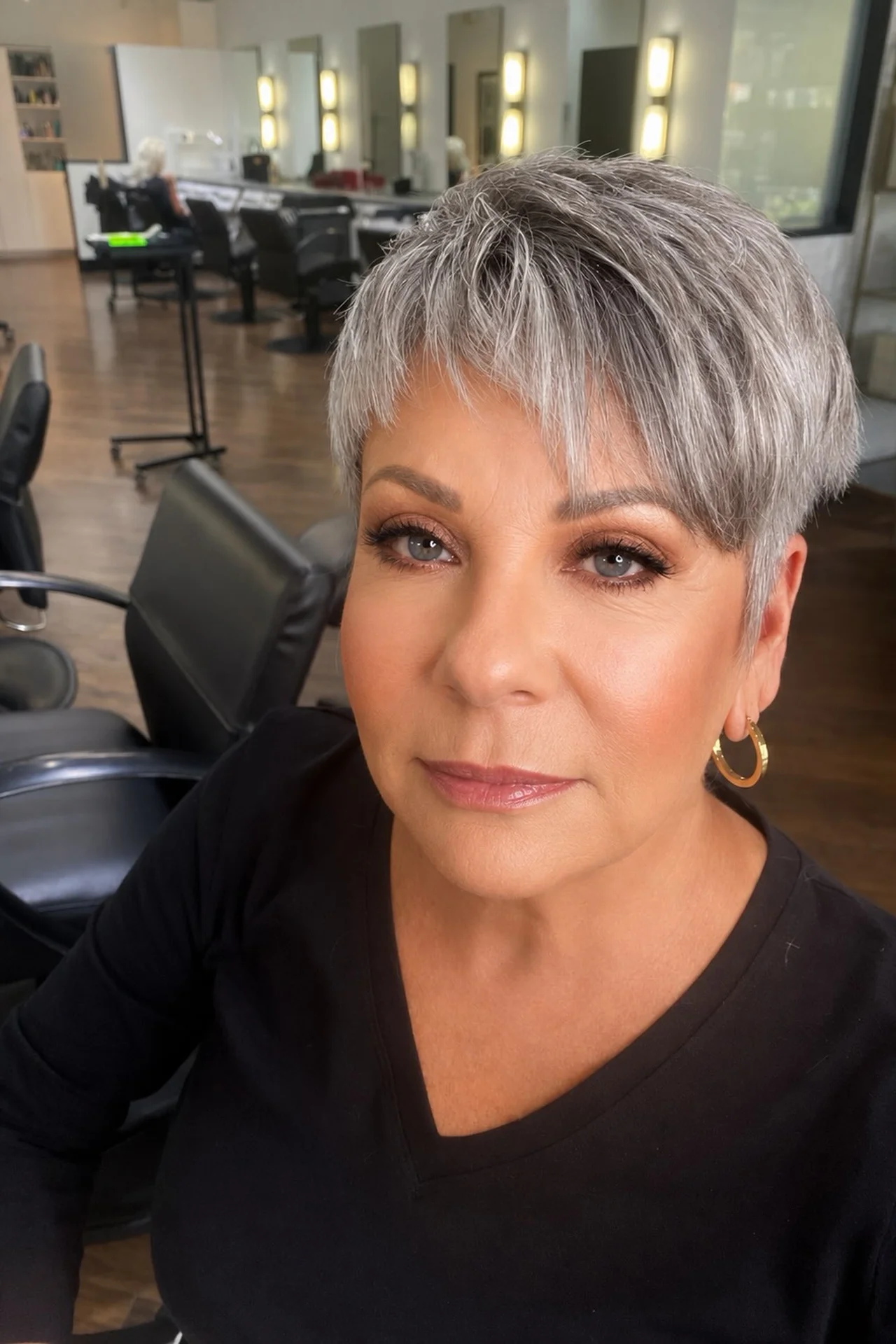
A pixie shows blending in a completely different way. With less hair to work with, every piece of colour counts, and the contrast between silver, lowlight, and highlight reads clearly. Pixies suit women who want a bold, low-effort shape with colour that does the talking.
The pixie cut for blending needs texture on top and a clean nape. Texture lets the lighter pieces catch light, while a tidy nape keeps the shape smart as it grows. If your pixie grows out shapeless, the colour will follow it downhill, so keep trims regular even though colour visits stretch out.
Colour placement on a pixie should favour the top and the fringe. Those are the areas people see first, and they frame your face. Darker pieces underneath give the cut depth and stop the top looking fluffy. If you wear glasses, mention it at your appointment, since frames change how colour sits around your face.
Asking Your Stylist for Gray Blending
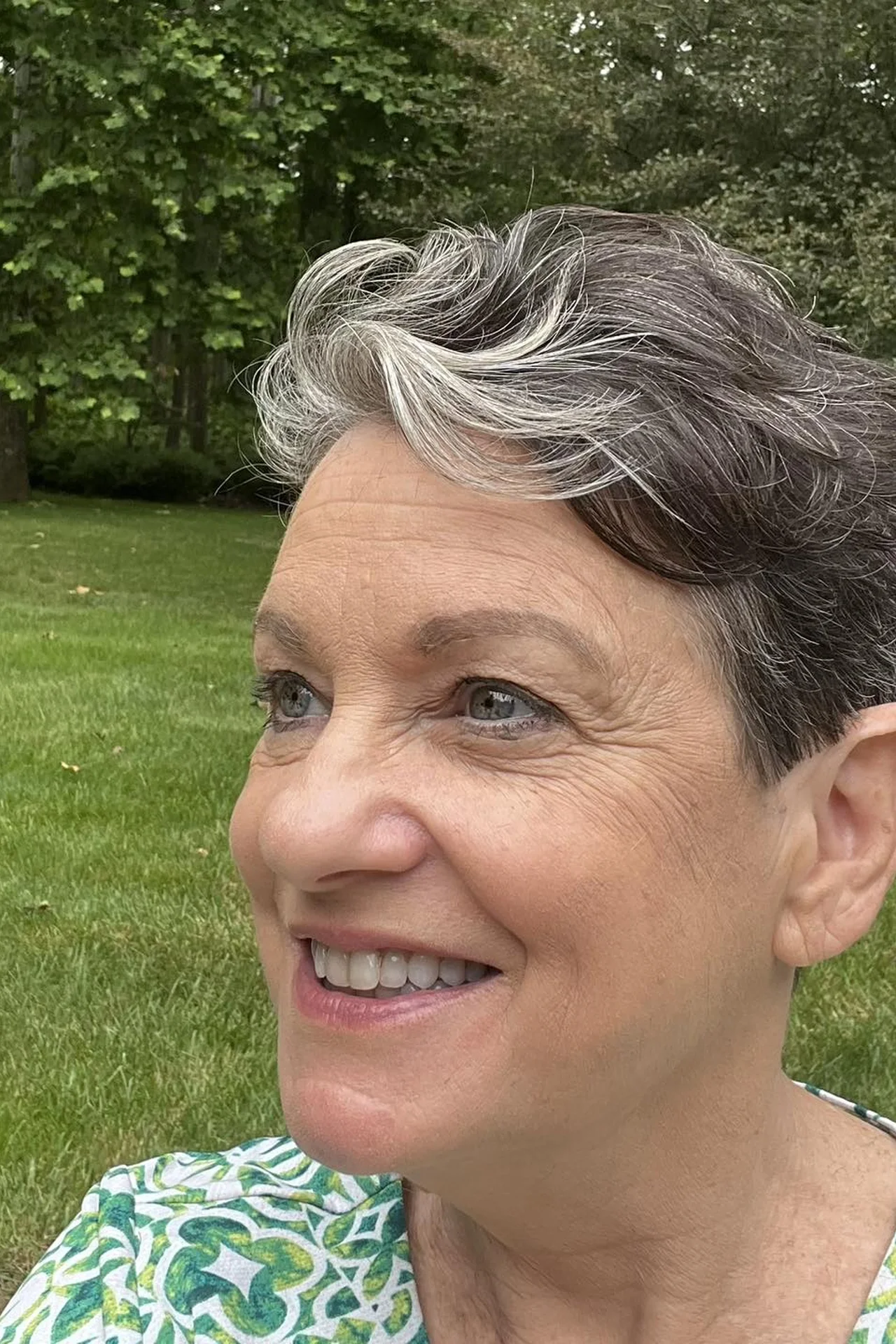
A good consultation makes all the difference, so arrive with clear language and a few photos. Say the words gray blending, not just gray coverage, and show pictures of blended hair you like and blended hair you do not like. Both help your stylist understand your taste faster than adjectives alone.
Ask three questions before colour starts. First, how much of my natural gray will stay visible. Second, what maintenance rhythm should I expect, including toner visits. Third, what happens if I do not love the first result. A confident stylist answers all three plainly and adjusts the plan with you.
Bring honesty about your routine too. Tell your stylist how often you wash, whether you heat style, and how much time you will spend on upkeep. Blending is low maintenance, not no maintenance, and a plan built around your real life will hold up far better than one built around an ideal week.
Keeping Blended Colour Healthy at Home
Blended colour fades gently, but home care still decides how long it looks good. Wash with lukewarm water and a shampoo made for colour-treated hair, and skip daily washing if your scalp allows it. Every wash lifts a little tone, so fewer washes mean longer-lasting colour.
Purple shampoo is useful but easy to overdo. Once a week is plenty for most blended hair, and leaving it on too long can turn silver pieces lavender. If your hair feels dry after purple shampoo, follow with a hydrating mask on the lengths only. Keep masks off the roots, where they flatten fine hair.
Heat and sun both shift tone over time. Use a heat protectant before styling tools, and wear a hat or a UV spray in strong sun. Chlorine deserves care too, since it can turn silver tones greenish. Wet your hair with clean water before swimming, and rinse straight after. For general hair health guidance, the American Academy of Dermatology has simple, practical tips worth reading. With gray blending hair color for women over 50, the gentlest routine is usually the one that keeps colour looking good longest.
Quick Answers
How often do I need gray blending redone?
Most women return every eight to twelve weeks for a partial service, with a quick toner in between if needed. Your exact rhythm depends on how fast your hair grows and how much gray you have.
Does gray blending work if I am mostly gray already?
Yes, and it often works beautifully. When you are mostly gray, your stylist adds lowlights to restore depth and shadow, which stops solid silver looking flat. The result keeps your silver as the star while giving it shape.
Will gray blending damage fine hair?
Blending is usually gentler than full coverage because visits are fewer and the service is partial. Damage risk rises only with heavy bleaching, so ask for gentle lift and regular trims to keep ends strong.
Can I go back to full coverage later?
Yes. Blended hair takes full coverage well, since the colour history is lighter and more even than years of solid dye. Tell your stylist about the blending so they can plan the return in one or two visits.
What should I ask for at my first blending appointment?
Ask how much natural gray will stay visible, what toner schedule suits you, and what the grow-out will look like at eight weeks. Bring photos you like and photos you do not like, and be honest about your washing and styling routine.