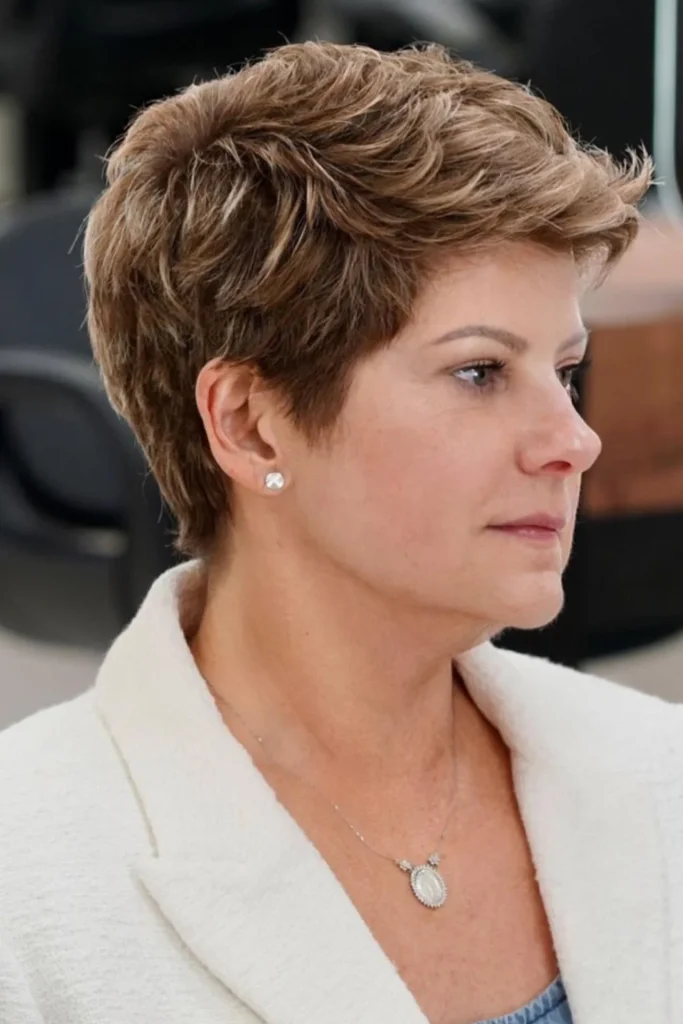
Low maintenance haircuts for women over 50 with thin hair work best when the cut does the heavy lifting. You want shape that holds after a quick towel dry, layers that fake fullness, and ends that look thick instead of straggly, all without a shelf of products or a long routine.
Thin hair changes as the years pass. Strands grow finer, the part can look wider, and hair that once held a style may fall flat by lunch. That only means the cut matters more: a good shape makes fine hair look denser, while a wrong one shows every thin patch.
Table of Contents
What Thin Hair Needs After 50
Fine hair after 50 needs lift at the roots and ends that stay solid. Shorter lengths help right away, since long hair pulls down on fine roots and leaves the top flat. A cut that ends around the jaw or above the shoulders lets the hair stand away from the scalp instead of hanging limp.
Layers help too, but only the right kind. Soft, interior layers build movement without eating into the ends, while heavy thinning all over leaves ends see-through. Texture helps as well: a little natural wave or piecey layers catch the light and make hair read thicker.
The Pixie That Adds Fullness
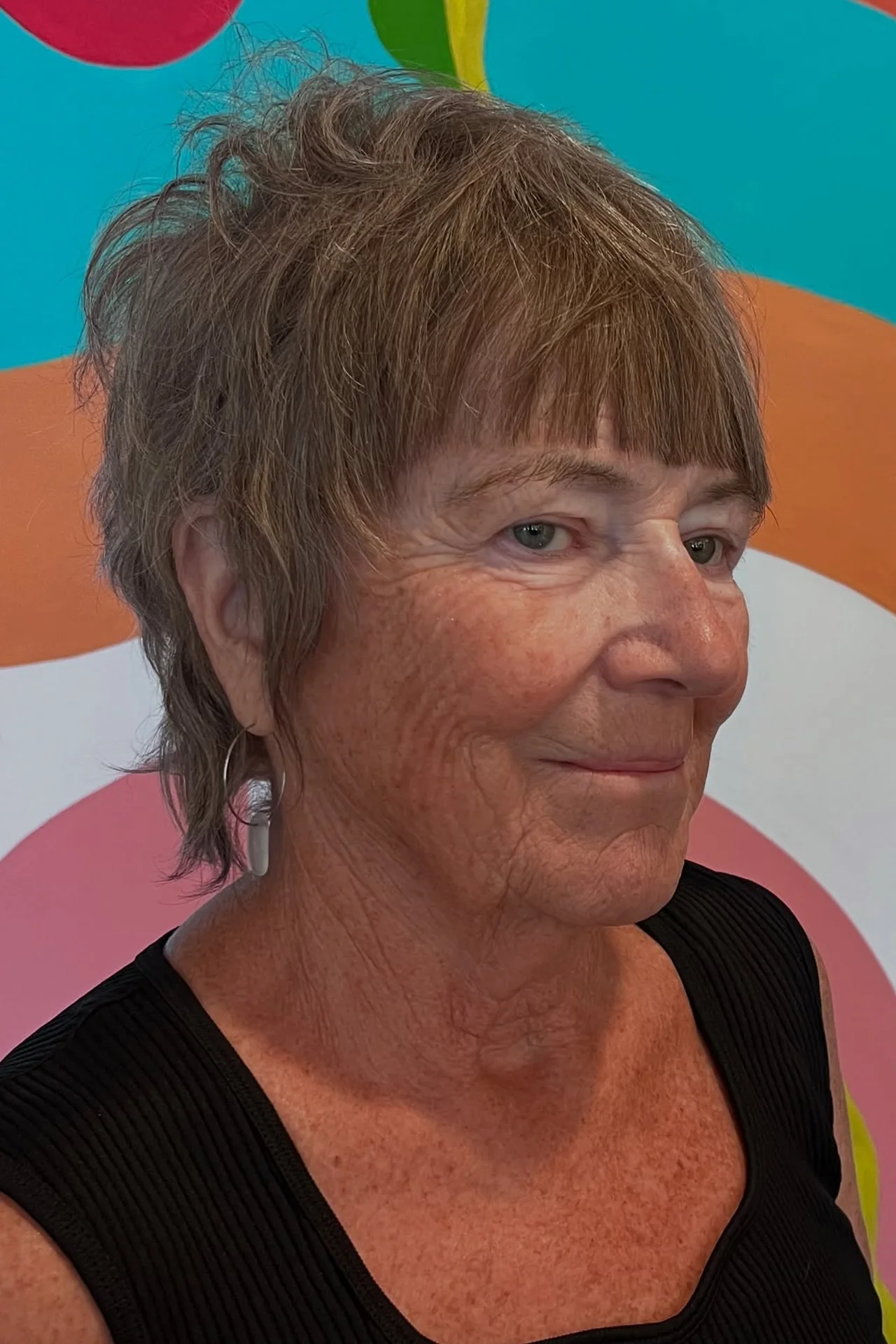
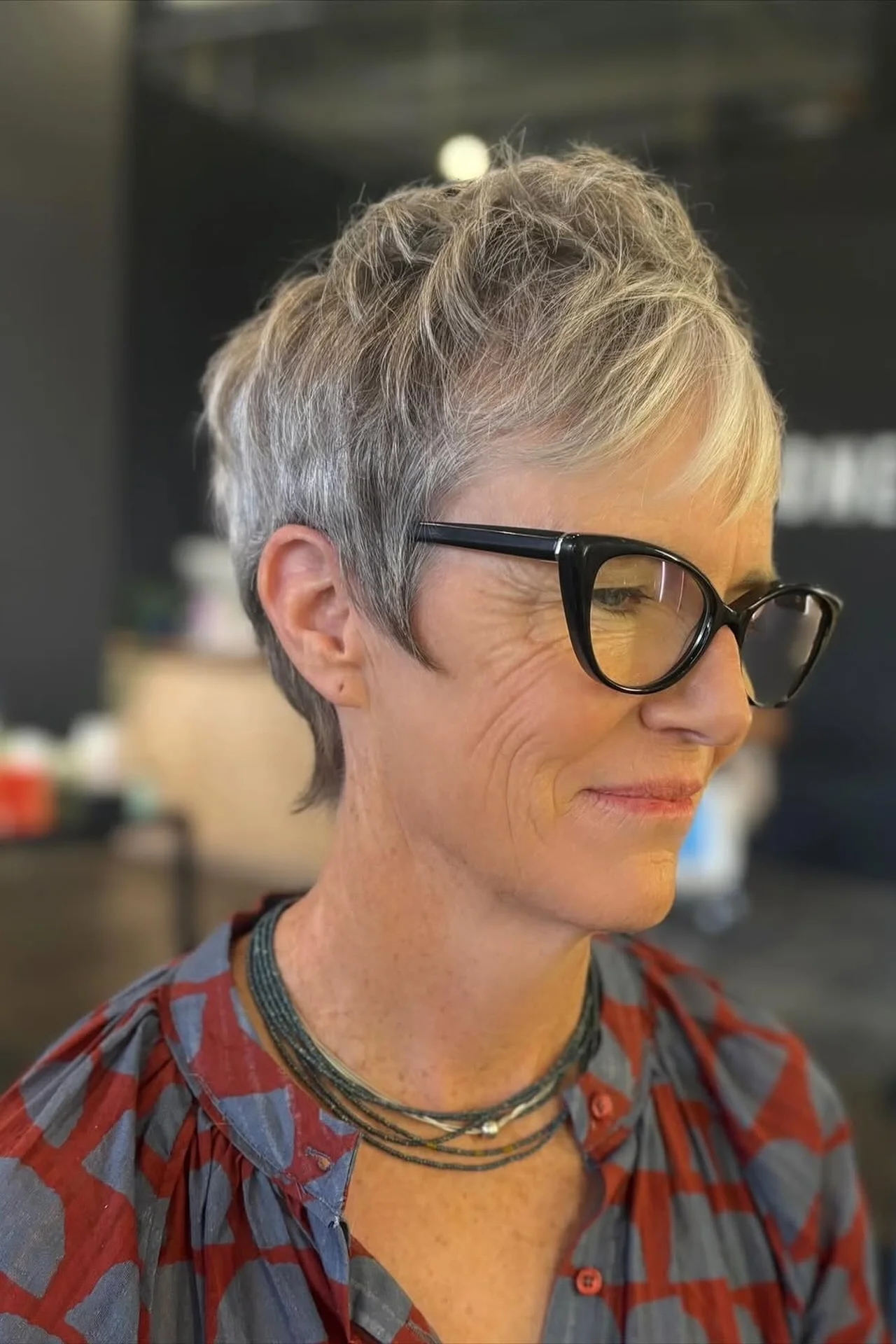
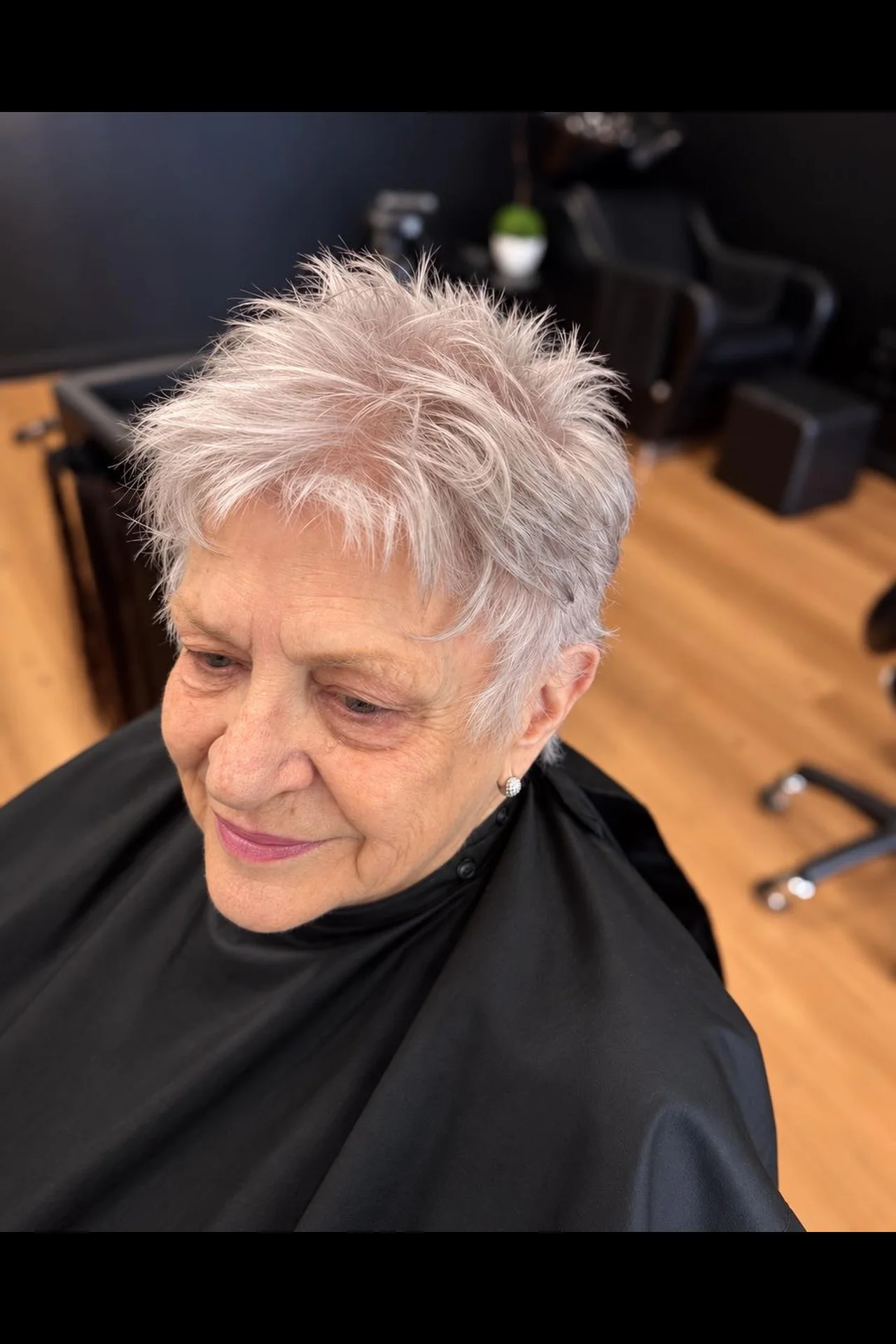
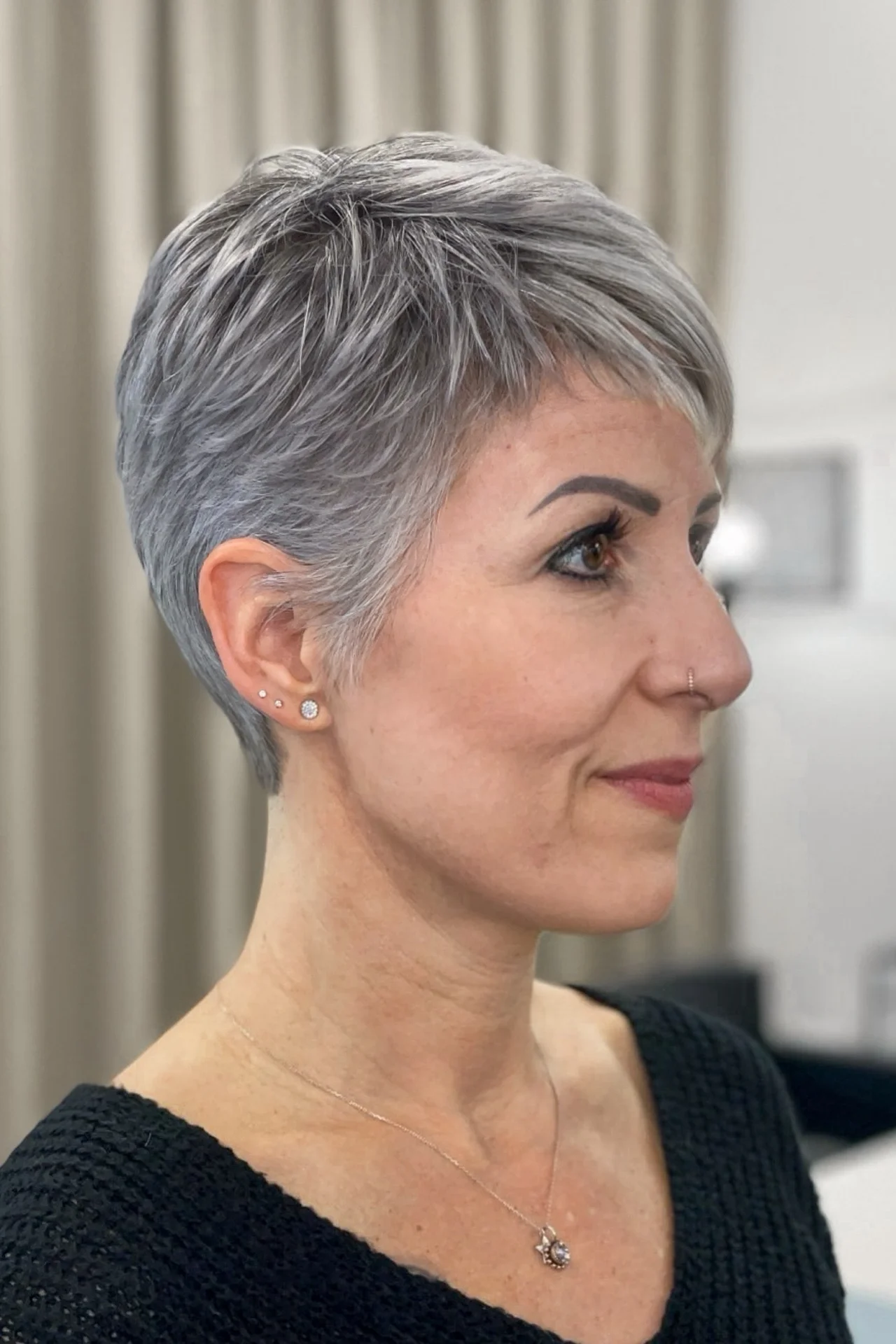
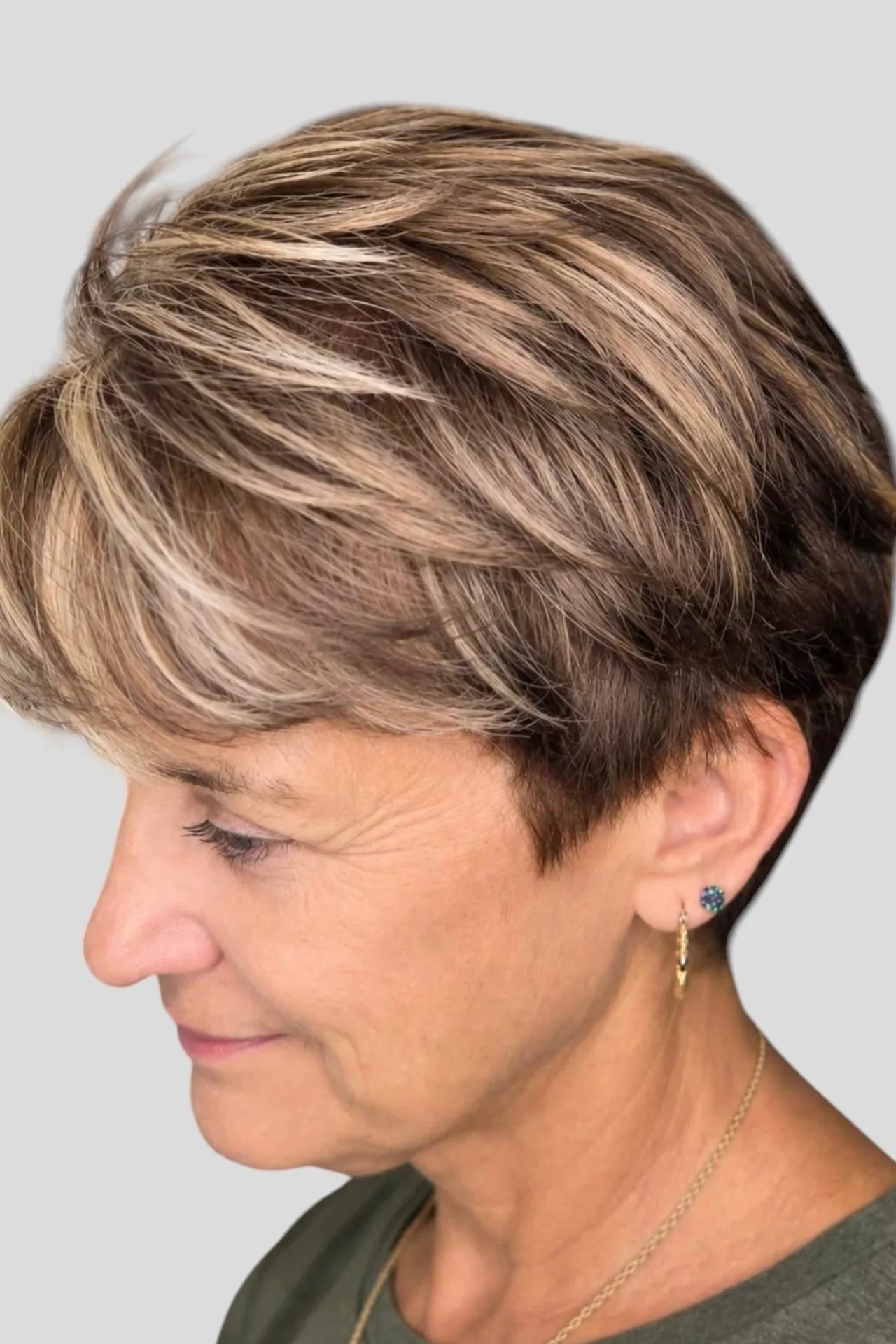
A pixie is the classic low maintenance choice for thin hair, and it earns that reputation. Short sides and back remove weight, while longer layers on top give you something to lift and tousle, so the result looks fuller.
The shape matters more than the length. A pixie with a longer, textured top and tapered sides gives you height at the crown, where thin hair usually falls flat. Styling takes minutes: work a pea-sized amount of light paste through damp hair, push the top where you want it, and let it air dry. Skip heavy gels and oils, since they glue fine strands together.

The Layered Bob
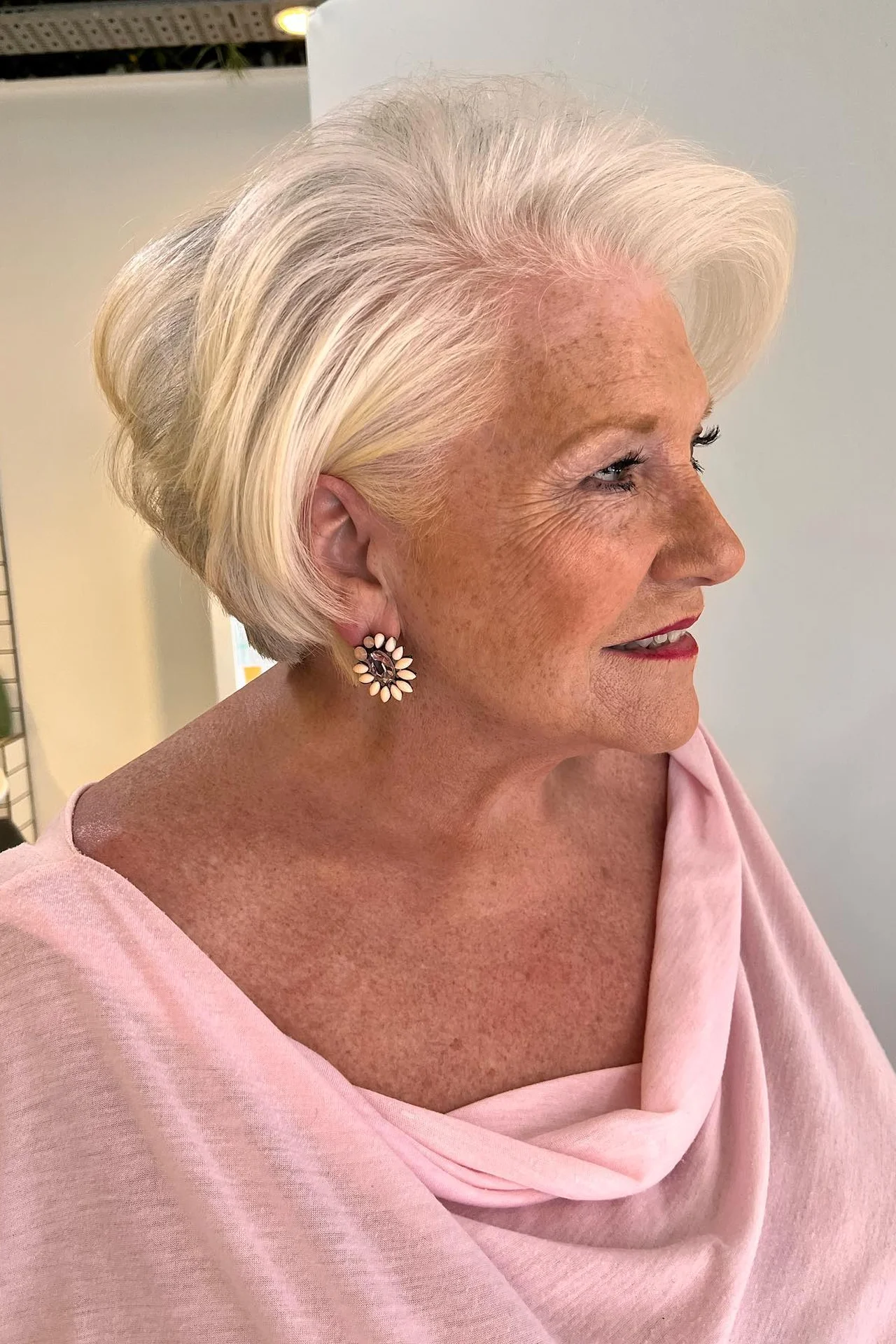
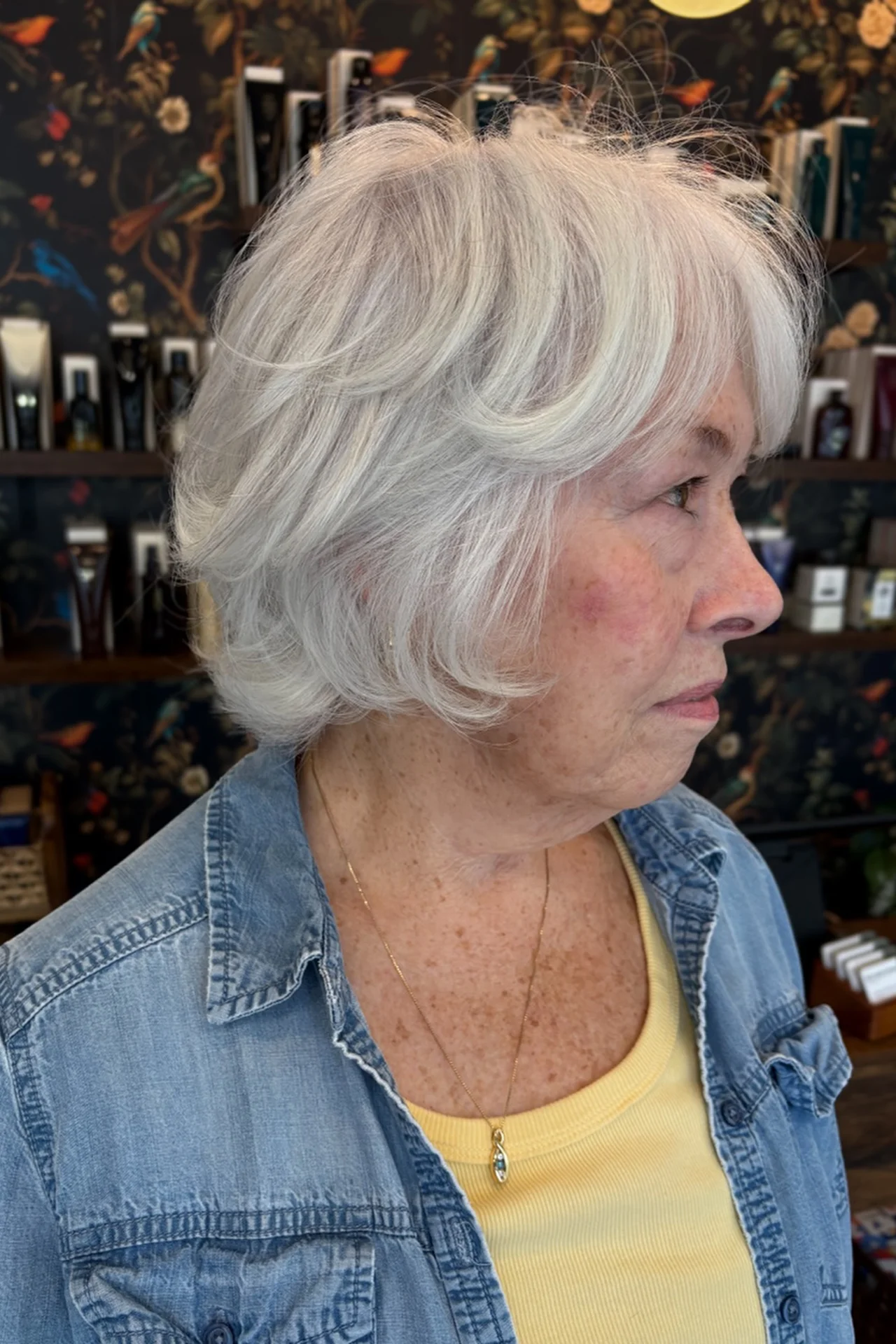
A layered bob is the middle ground if a pixie feels too short. It sits around the jaw or chin, frames the face, and uses soft layers for movement. For thin hair it works because the ends stay blunt enough to look thick while the layers stop it from lying flat.
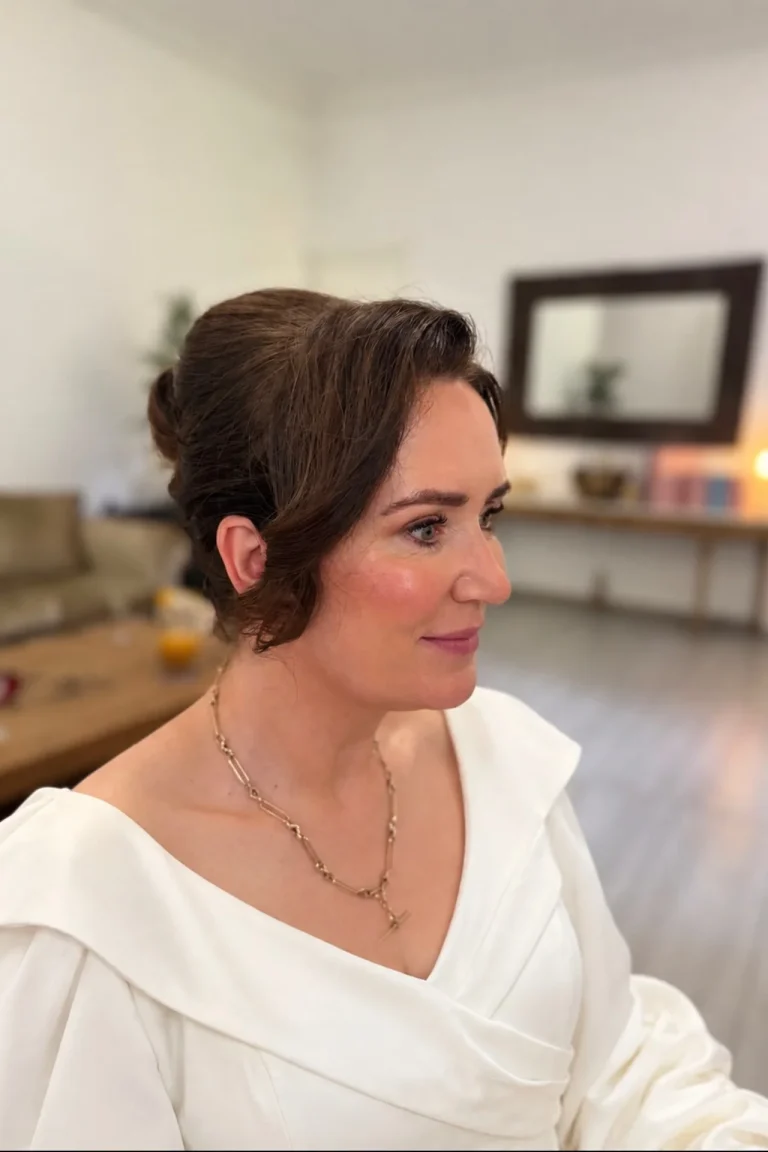
Graduation at the back is the quiet trick here. A slightly stacked back lifts the crown and rounds out the shape, while longer front pieces keep it soft around the face. If you like a short, polished shape, a textured French bob shows how a chin-length cut can look full without fuss. Keep the layers gentle: two or three soft layers are plenty.
The Soft Shag
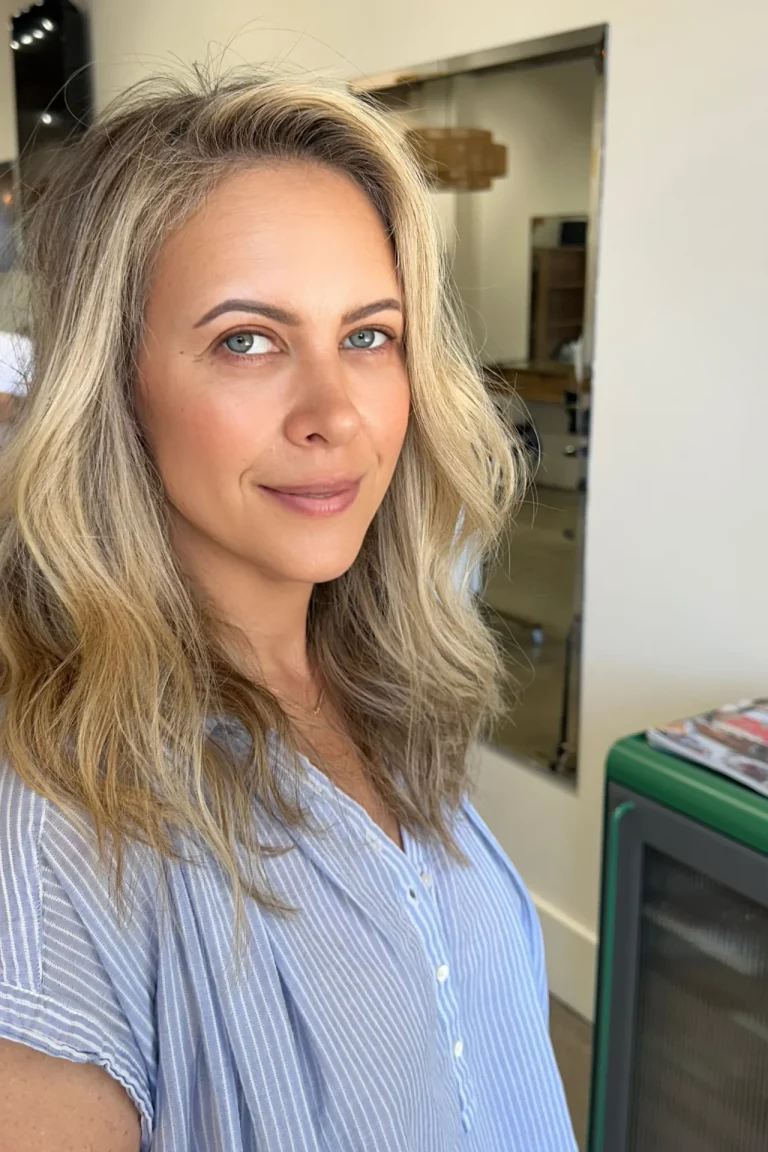
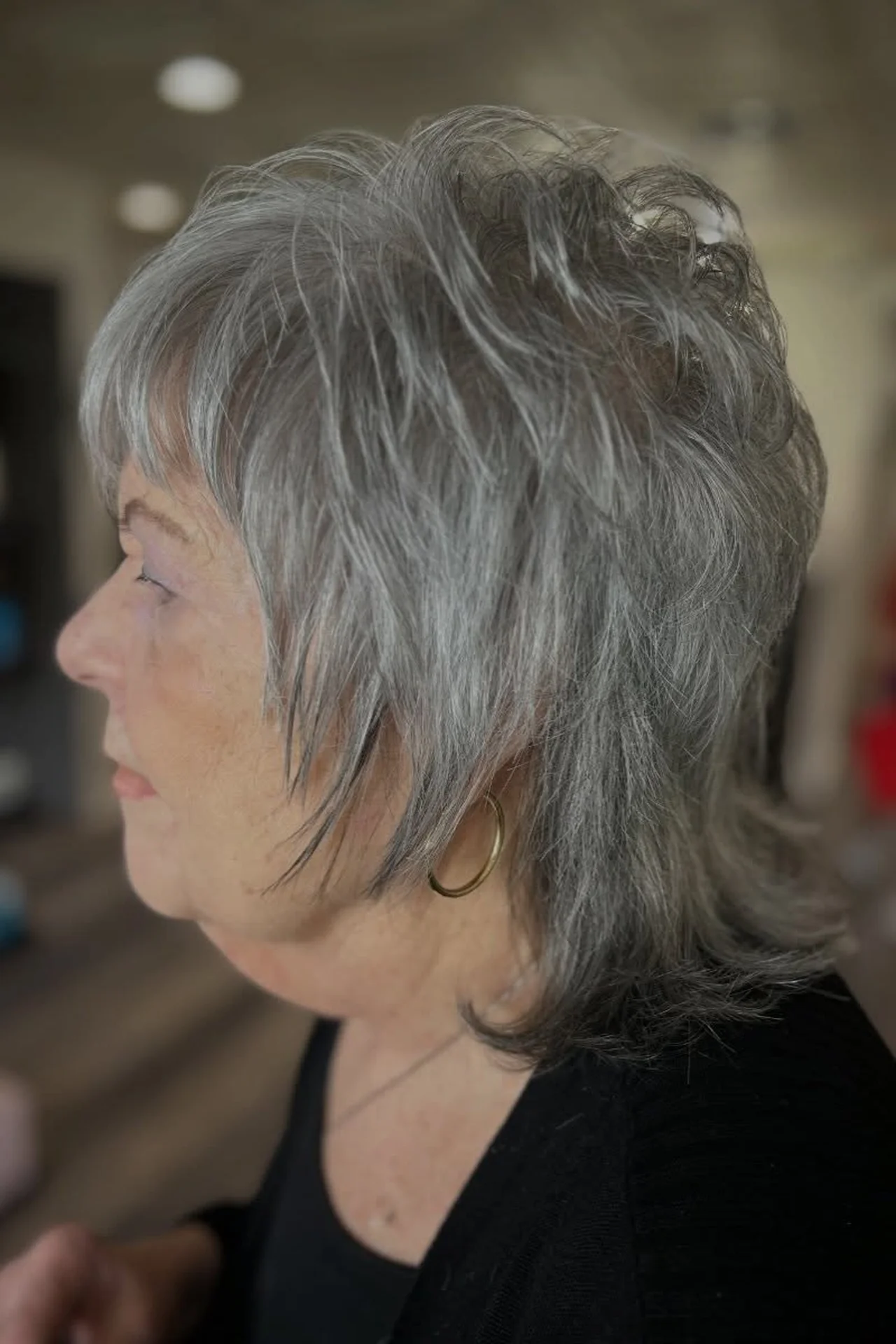
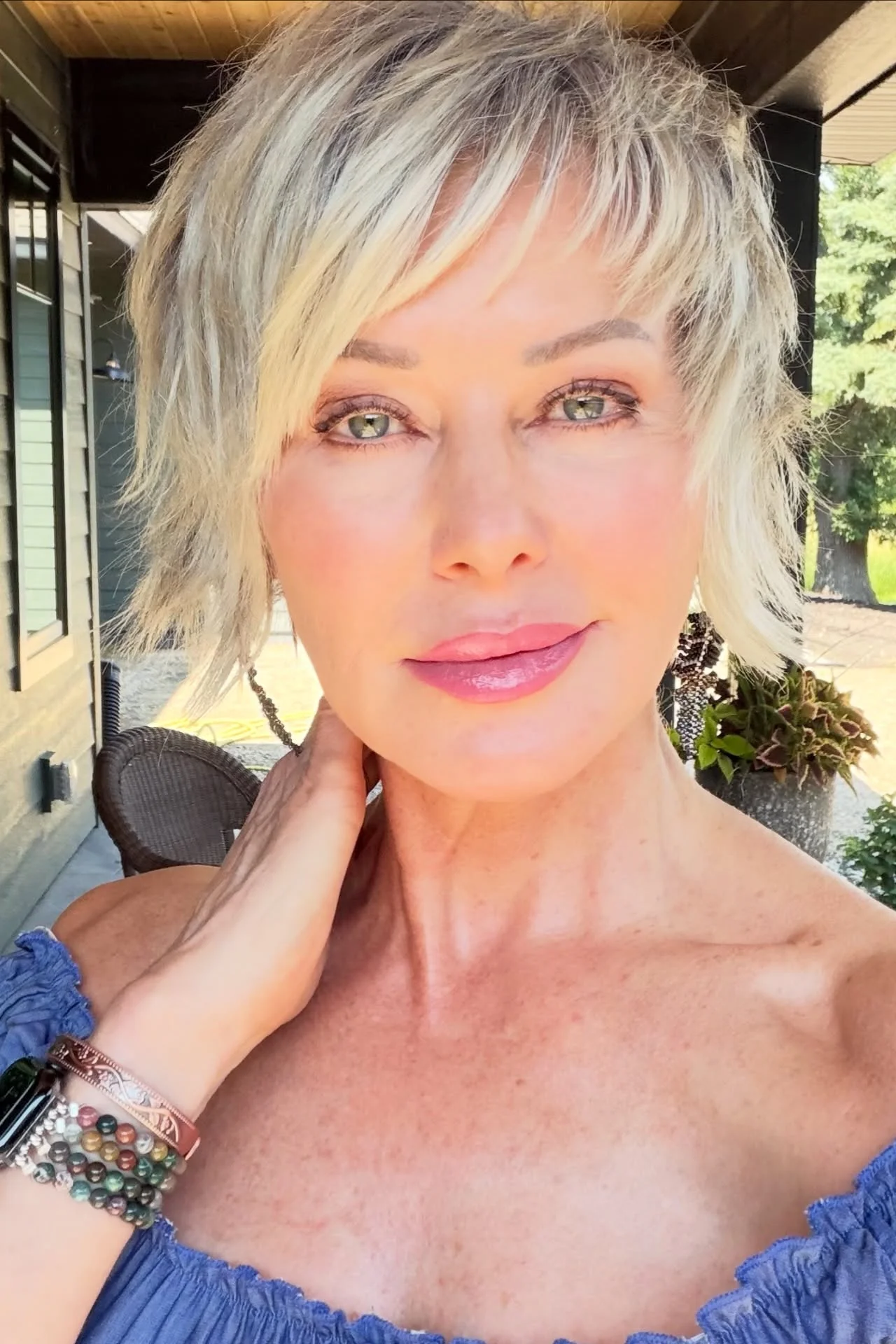
A soft shag is a pixie or bob with broken-up, feathered layers, and it suits thin hair beautifully. The layers fall in pieces rather than one smooth sheet, so the hair looks airy and full at the same time. It is the cut for women who like a little edge without daily styling.
The shag works because the shape lives in the texture, not in a precise outline. Even on a day when you do nothing to it, the layers keep their movement. A quick scrunch with a light cream is usually all it needs, and point-cut ends that feather instead of sitting in a hard line complete the look.
Blunt Ends Versus Feathering
Blunt ends and feathered ends do opposite jobs on thin hair, so it helps to know which one you are getting. Blunt ends cut straight across make the bottom of the hair look thicker, because all the strands end at the same place. That density at the ends is gold for fine hair.
Feathered ends thin the ends out on purpose, which sounds wrong for thin hair but works in small doses. Feathering through the top layers and around the face adds movement, while the outline underneath stays solid. Trouble starts only when feathering goes too far and ends turn see-through. The best low maintenance cuts mix the two: a blunt outline for fullness, feathering inside for movement.
The Bixie Bridge
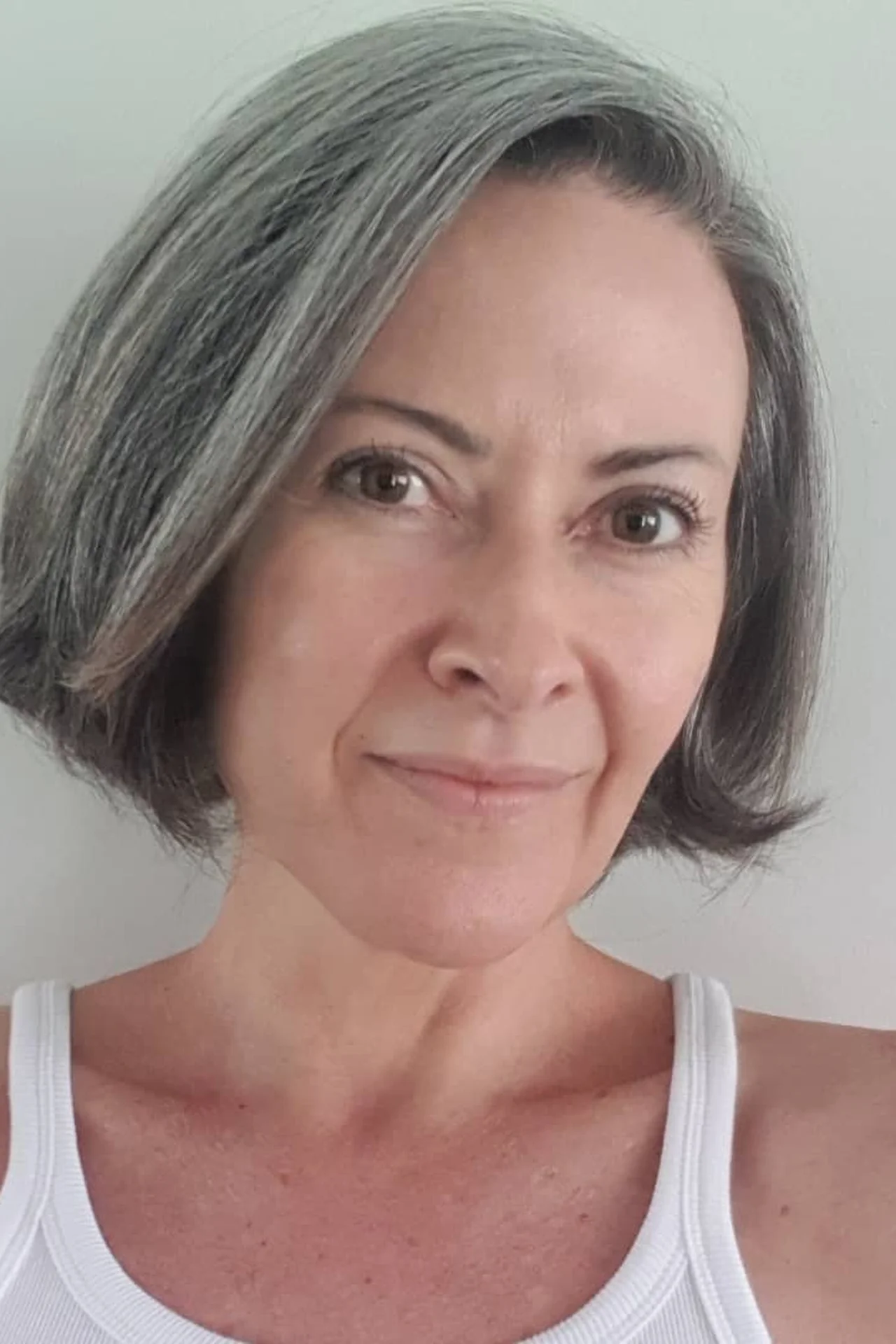
A bixie sits between a pixie and a bob, and it is a kind choice if you are nervous about going short. The back stays pixie-short while the front keeps bob length around the ears or jaw, so you get the lift of a pixie with the softness of a bob, and it grows out gracefully when trims slip.
Side-swept front pieces are what make the bixie work for thin hair. A deep side part moves hair across the forehead and over any thin spot at the part, and the longer front pieces frame the face. The asymmetry also adds instant volume, since hair piled to one side reads fuller than hair split down the middle.
Asking Your Stylist for the Cut
Good words at the salon make all the difference with thin hair. Ask for low maintenance haircuts for women over 50 with thin hair by name, then describe the shape: shorter at the back, longer textured layers on top, a solid outline, and feathering only where you need movement. Bring photos of women with your hair texture, since a cut for thick hair is a different haircut on fine hair.
Talk about your thin spots honestly. If your part looks wide or your crown lies flat, say so, since a good stylist can place layers and a part to cover those areas. Mention how much time you will actually spend styling, too: a cut that needs a round brush every morning is not low maintenance.
Wash-and-Go Styling
Wash-and-go styling is the whole point of a low maintenance cut, and it starts in the shower. Wash with a light shampoo, skip heavy conditioner on the roots, and squeeze water out with a soft towel instead of rubbing. Rough drying tangles fine hair and breaks the shape before you even start. A wide-tooth comb keeps the layers smooth while the hair is still damp, and it pulls far less than a brush.
Apply one product, not five. A light mousse at the roots or a pea-sized amount of texturizing cream through the ends is enough. Work it through damp hair, push the top where you want lift, and let the cut do the rest. On second-day hair, a little dry shampoo at the roots brings back lift without a full wash.
Colour and Volume Tricks
Colour can make thin hair look thicker, as long as it stays honest. Soft highlights or lowlights add dimension, and dimension reads as density. A root shadow or a slightly darker nape also makes the top look fuller by contrast.
Gray blending is the lowest maintenance colour choice for women over 50. Instead of covering every silver strand, your stylist blends the gray with lowlights so regrowth looks intentional. That stretches the time between colour appointments and keeps hair healthier, since less processing means less breakage. Keep colour gentle: harsh bleaching can thin fine hair further, so ask for face-framing highlights rather than a full head of bleach. For general hair health guidance, the American Academy of Dermatology has simple, practical tips worth reading.
Grow-Out and Trim Rhythm
Grow-out is where low maintenance cuts either shine or fall apart. Pixies need trims every four to six weeks to hold their shape, since the nape and sides grow out fastest. Bobs and bixies are more forgiving and usually hold for six to eight weeks before the shape softens.
The good news is that these cuts grow out into each other. A pixie grows into a bixie, a bixie grows into a short bob, and a short bob grows into a chin-length bob, so a missed trim still looks intentional. Many women find low maintenance haircuts for women over 50 with thin hair easiest to live with at this stage, since the shape forgives a few extra weeks. Book your next trim before you leave the salon, since thin hair shows an overgrown shape fast.
Quick Answers
Does a pixie make thin hair look thinner?
No, a well-cut pixie usually makes thin hair look thicker. Short layers remove weight so the hair lifts at the roots, and textured ends catch the light.
What length is best for thin hair after 50?
Jaw length or shorter is usually the sweet spot. Shorter hair stands away from the scalp and holds lift, while long hair pulls fine roots flat.
Should thin hair be layered or blunt?
Both, in different places. Keep the outline blunt so the ends look thick, and add soft interior layers for movement and lift.
How often should I trim a low maintenance cut?
Pixies need a trim every four to six weeks, while bobs and bixies hold for six to eight weeks.
Can I go gray and keep a low maintenance cut?
Yes. Your stylist weaves lowlights through the silver so regrowth looks intentional, which stretches the time between appointments, and that is exactly why low maintenance haircuts for women over 50 with thin hair pair so well with blended gray.