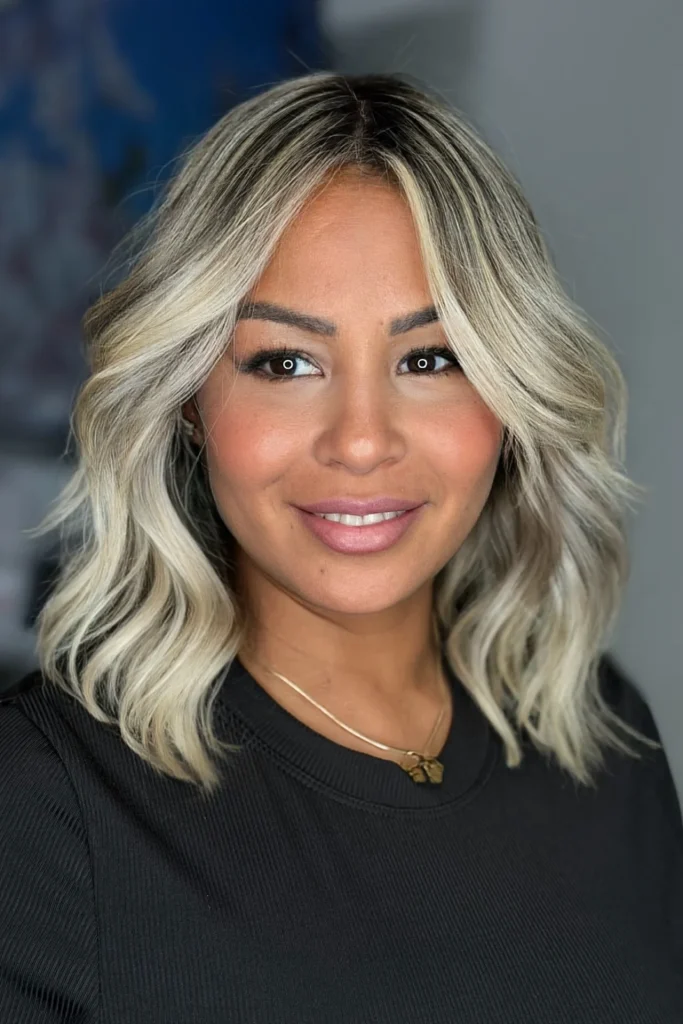
Winter is hard on blonde hair. Cold air dries it out, hats flatten it, and indoor heating leaves it feeling rough, while the blonde can turn dull or brassy just when you want it fresh.
Winter blonde balayage is a good answer to that problem, because balayage is painted on by hand rather than foiled from the root. The colour melts into your natural shade, so it grows out softly, and the lighter pieces sit where light would naturally catch them, which keeps the blonde looking bright even on grey days.
Choosing the right tone and the right amount of lightness for winter matters most. A blonde that looked sun-kissed in summer can look washed out in winter light, while a slightly deeper, softer blonde often reads richer and healthier. The ideas below cover the tones that work best, plus the care that keeps them looking good until your next appointment.
Table of Contents
Icy Blonde Balayage That Brightens a Cold Season
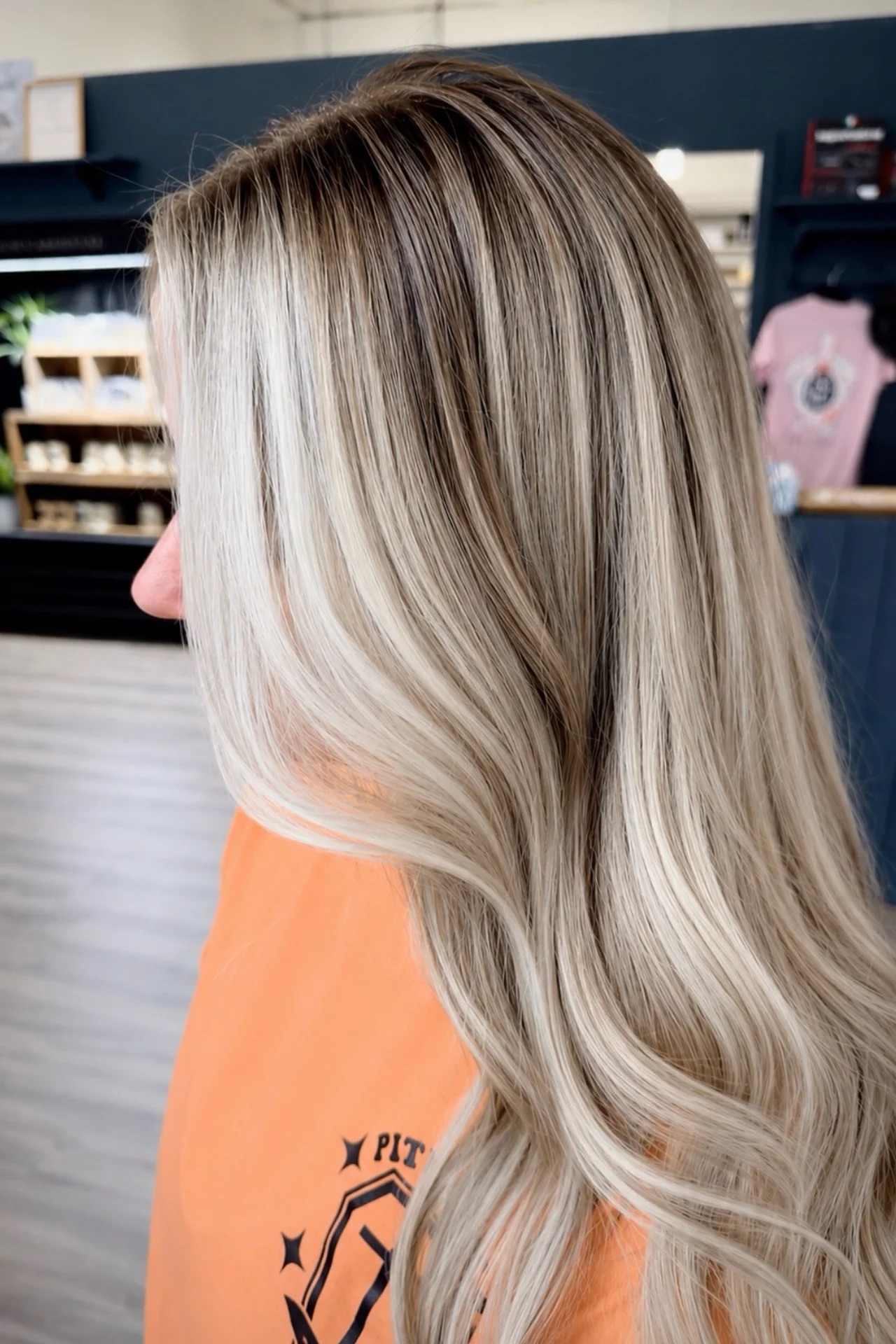
Icy blonde balayage is the brightest option among winter blonde balayage ideas, and it suits winter light well. Cool, almost silver blonde pieces against a slightly darker base give the hair a clean, crisp look that stands out against dark coats and scarves.
This tone needs a light base. If your hair is naturally dark, reaching icy blonde takes more lifting, and it may take more than one session without damage.
For more cool blonde inspiration, the Scandinavian blonde hair ideas show how pale, cool tones can still look soft rather than harsh.
Warm Honey Blonde Balayage That Softens Winter Light
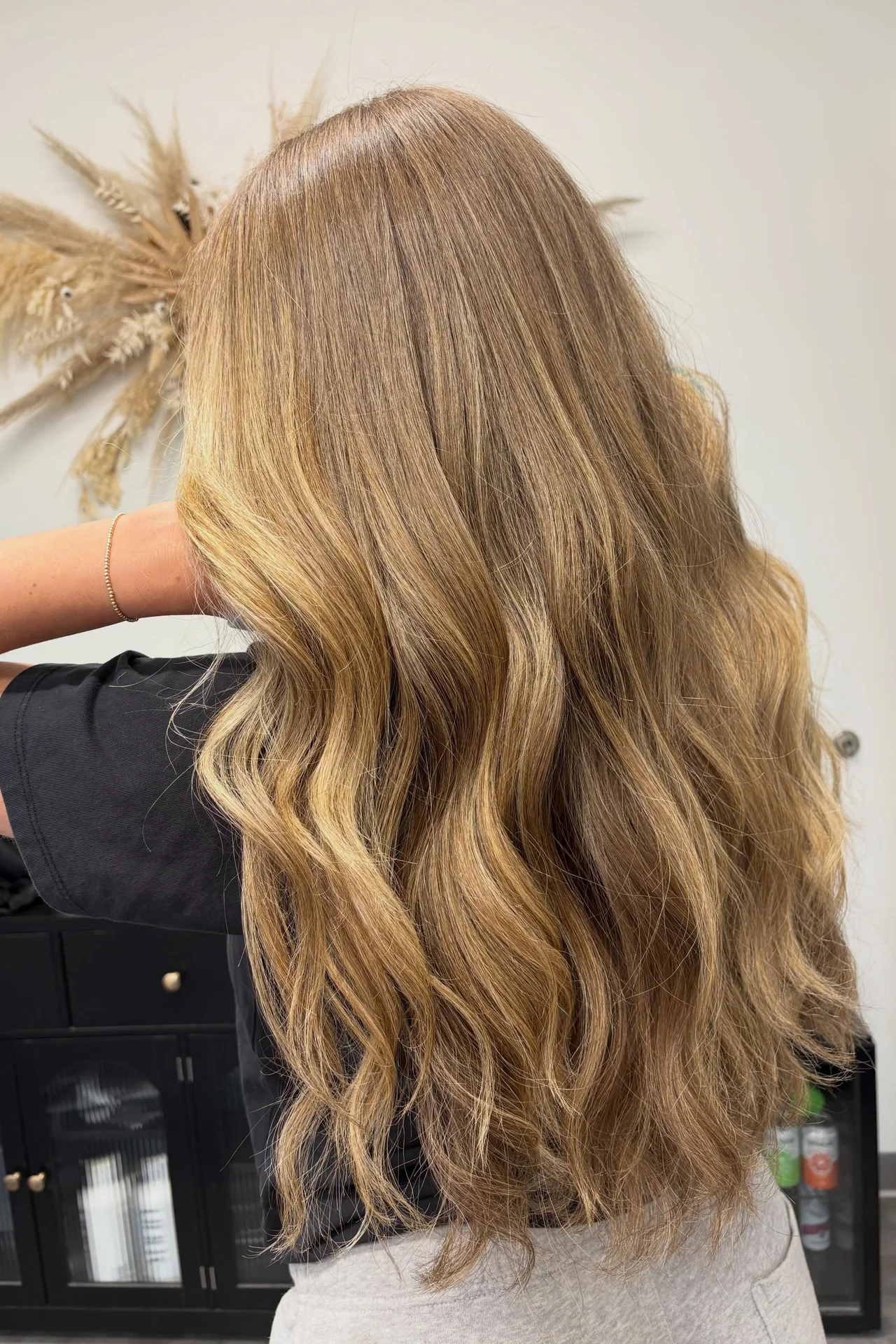
Warm honey blonde balayage is the friendliest winter option, and it is a good choice if icy blonde feels too stark for you. Golden, honey-toned pieces warm up the face, which is welcome when winter light is flat and pale.
Honey blonde works well on medium brown and dark blonde bases, since the lift needed is gentler than for icy blonde. The result looks natural, with more depth than a flat all-over colour.
This tone is also forgiving as it grows out. Warm tones fade more gracefully than cool ones, and the golden pieces blend into the base rather than showing a hard line. If you want winter blonde balayage that feels cosy rather than dramatic, honey is a safe place to start.
Soft Beige Blonde Balayage for a Quiet Glow
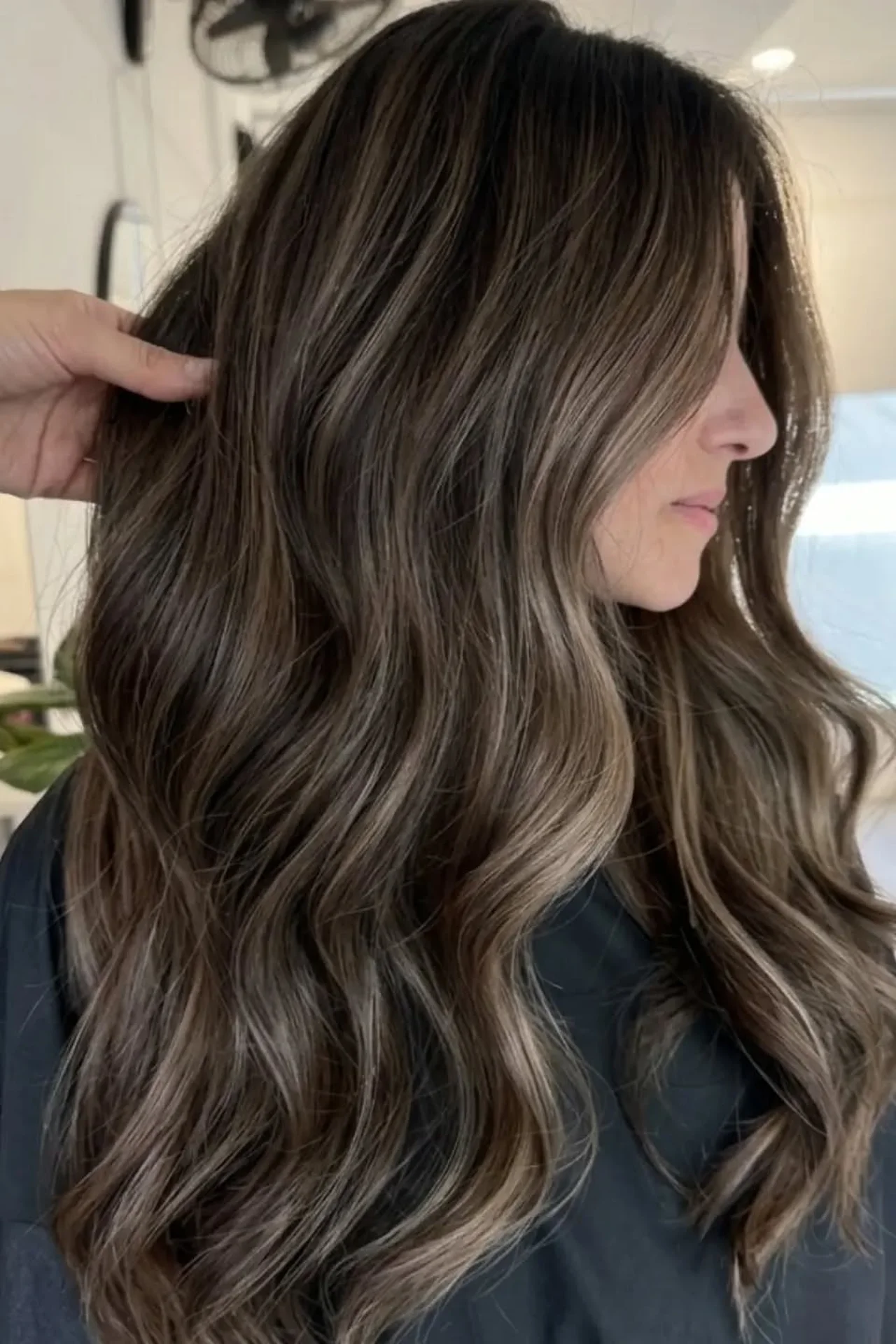
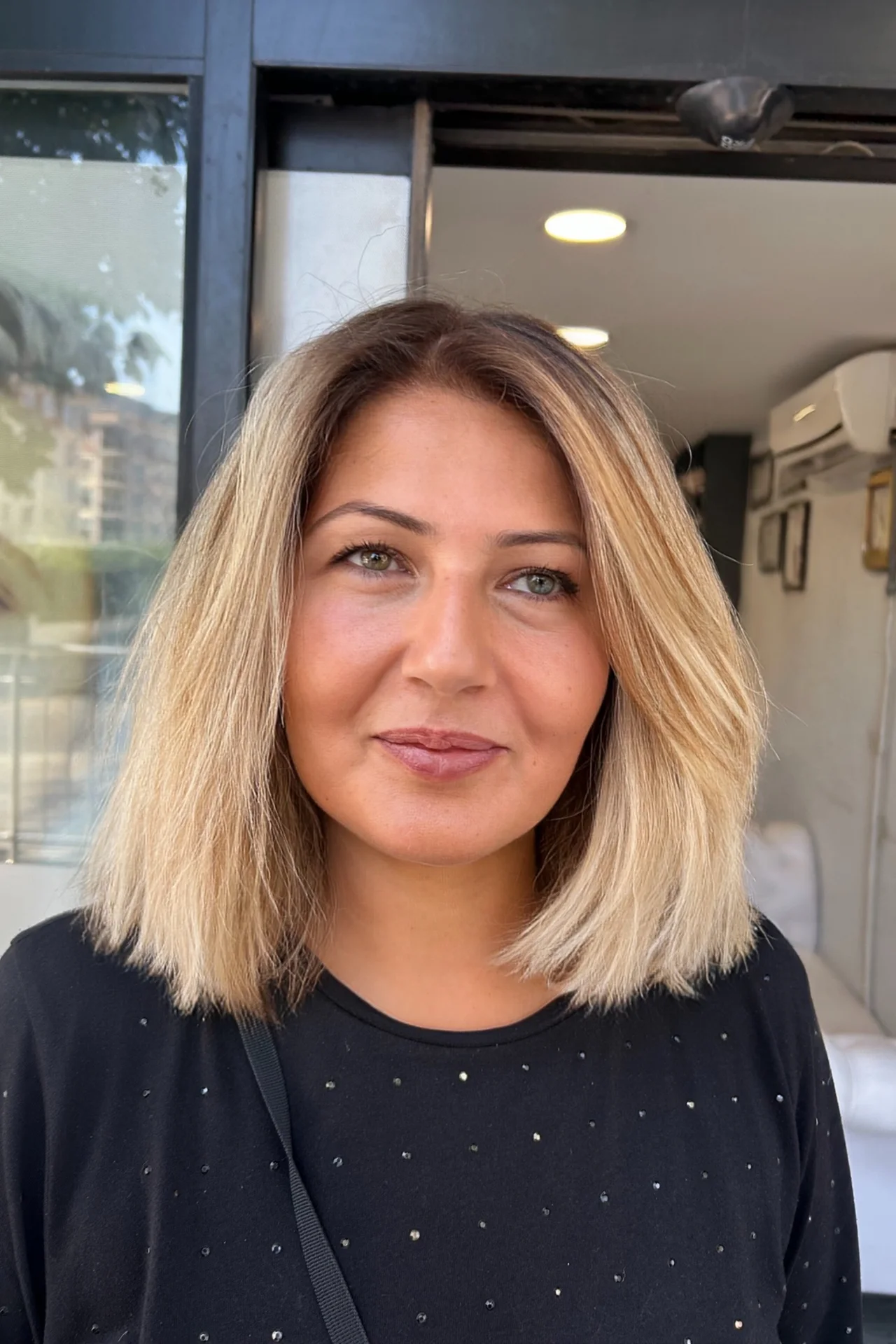
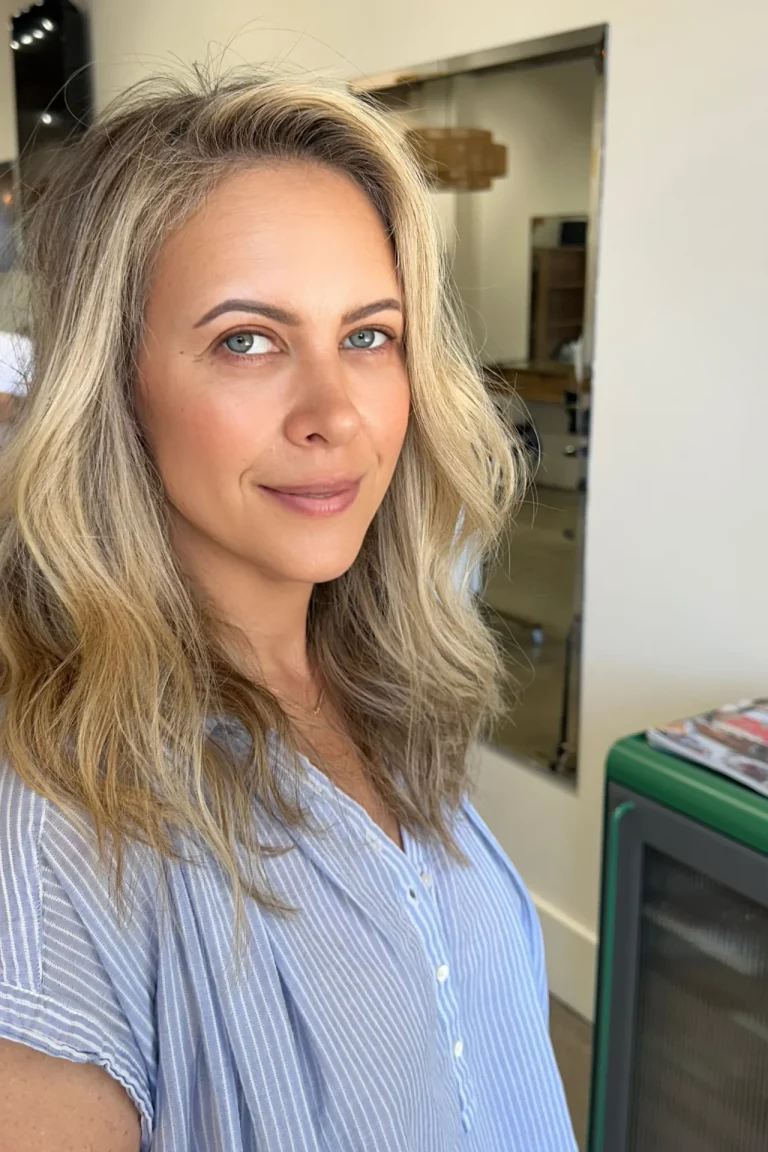
Soft beige blonde balayage sits between icy and honey, and it is the most versatile of the winter blonde balayage tones. Beige blonde is neither very cool nor very warm, so it reads as a natural blonde that does not shout.
This is a good option if you are unsure which direction to go. Beige tones suit light brown and dark blonde bases, and they keep their softness as they fade, since there is no strong gold or silver tone to lose first.
Beige balayage also photographs well in winter light. It catches light without looking brassy in warm indoor lighting or washed out in daylight. Ask your stylist for a muted, sandy blonde rather than an ashy or golden one, and bring photos that show the exact level of softness you want.
Rooted Blonde Balayage That Grows Out Gently
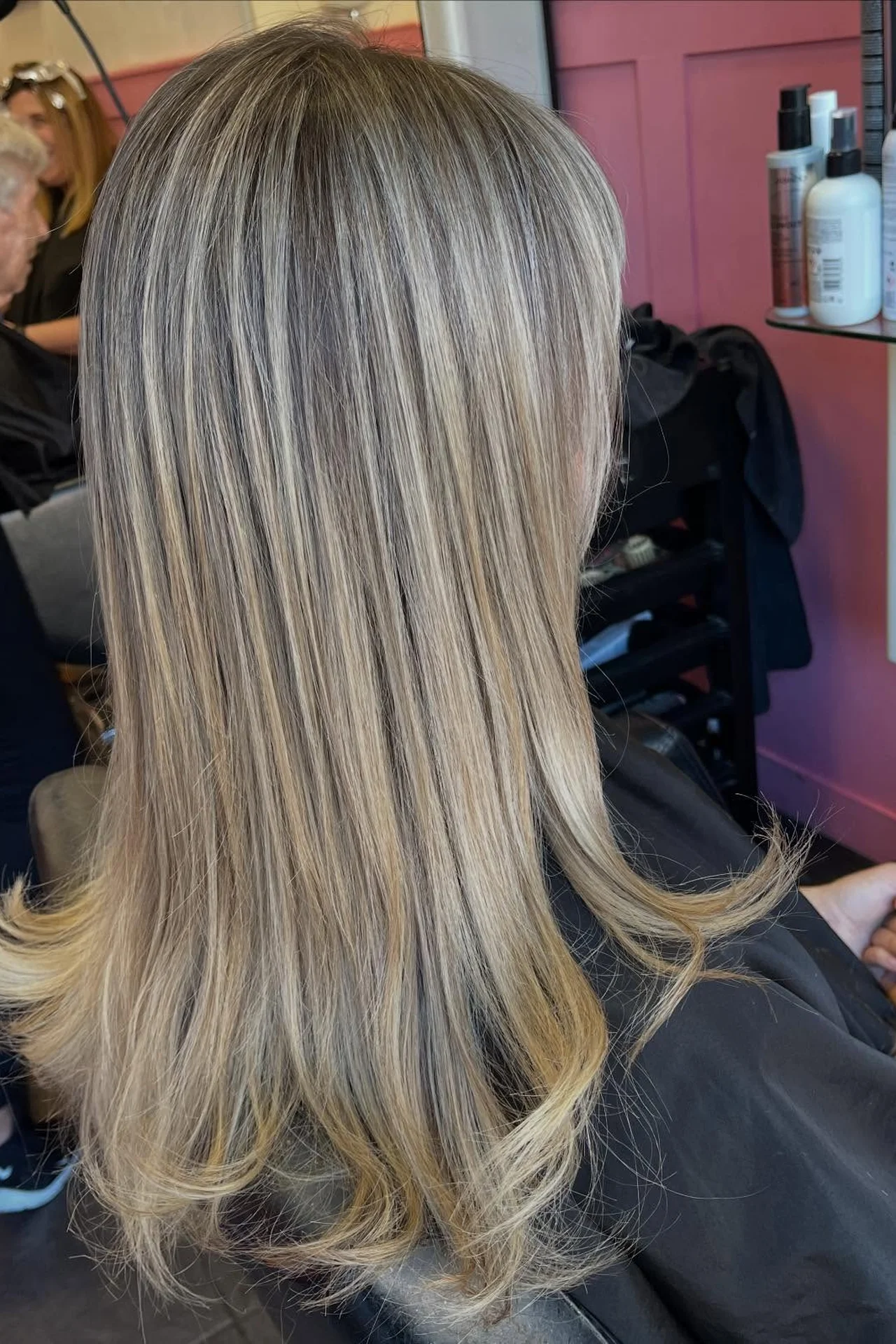
Rooted blonde balayage is the lowest maintenance winter blonde balayage option. The roots are left close to your natural colour, and the blonde builds gradually through the mid lengths and ends.
The benefit is simple: there is no harsh regrowth line. As your hair grows, the root area still looks intentional, so you can stretch appointments further apart without the colour looking neglected. That matters in winter, when busy schedules and dry hair can make frequent salon visits harder.
Rooted balayage works with icy, honey, and beige tones, so you do not have to give up your favourite shade to get the easy grow-out. The key is the blend at the root, which should melt rather than stop in a line.
Blonde Balayage on Dark Hair That Stays Dimensional
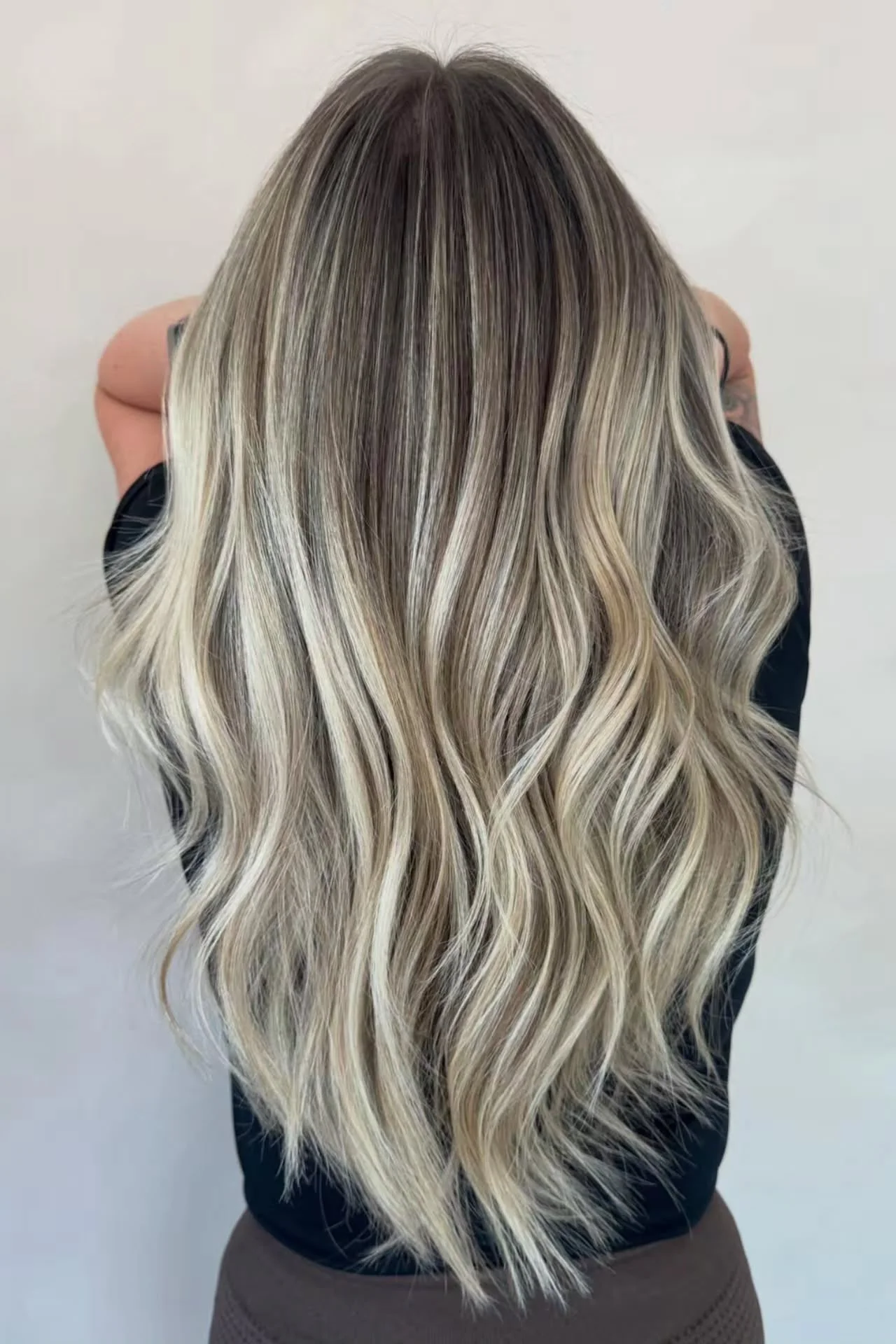
Blonde balayage on dark hair can look striking in winter, because the contrast between the dark base and the lighter pieces gives the hair real depth. Keeping that contrast soft rather than stripey matters most, and that is where good winter blonde balayage technique shows.
On dark hair, the blonde pieces should be placed mainly through the mid lengths and ends, with finer pieces near the face. That keeps the colour looking like a natural lightening rather than a block of blonde sitting on top of dark hair.
Expect the lift to be gradual. Dark hair often lifts through warm stages before it reaches blonde, so your stylist may aim for a caramel or honey blonde first, then go lighter at a later appointment. Rushing the lift risks damage and uneven tone.
For ideas on how warm tones sit on darker bases, the caramel highlights show how golden pieces can add warmth without a harsh contrast, and the brown hair colors cover deeper bases that pair well with blonde balayage.
Blonde Balayage With a Face Frame That Lifts Your Features
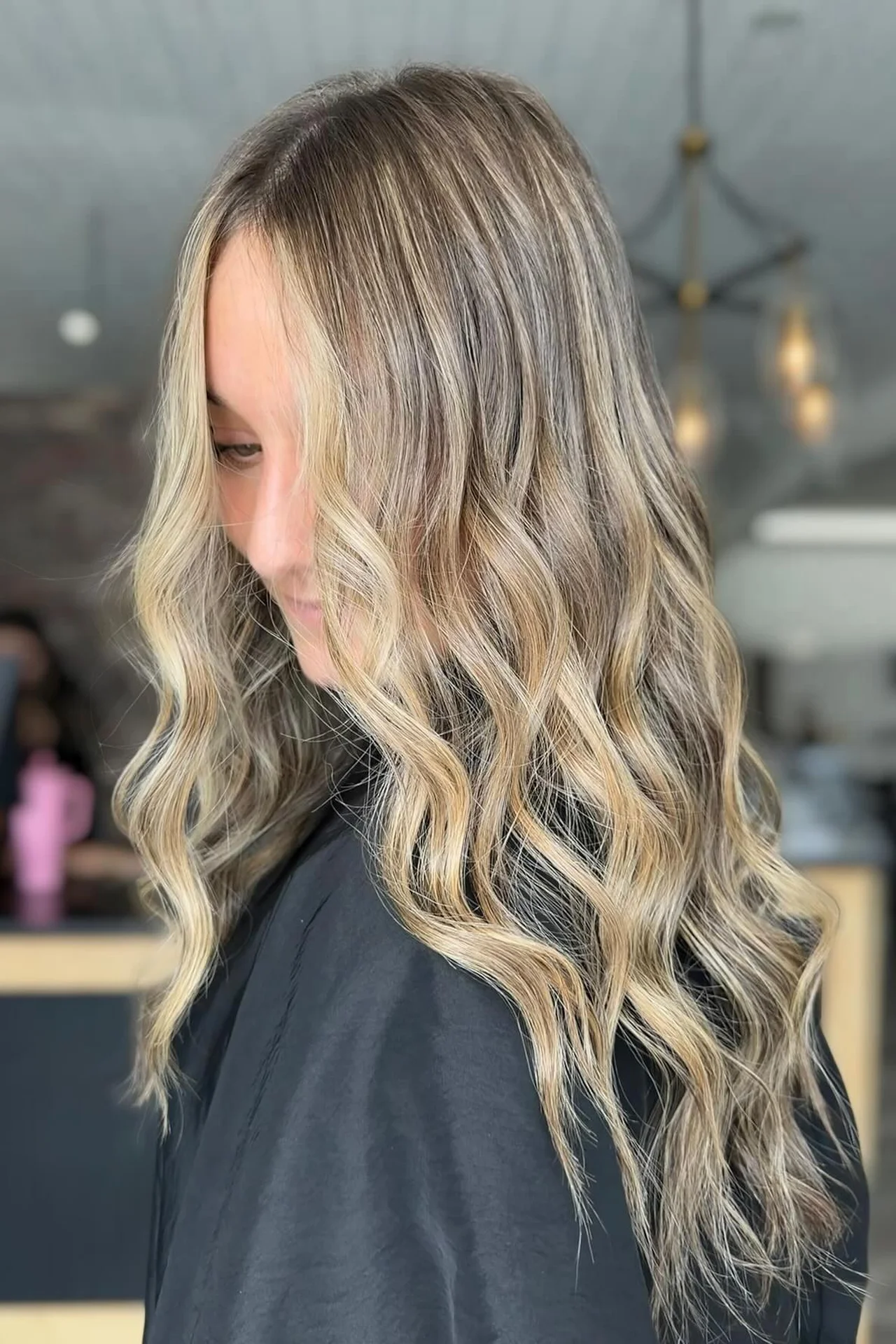
A face frame, sometimes called a money piece, is a brighter blonde section around the front of the hair, and it is one of the easiest ways to make winter blonde balayage feel fresh without lightening all of your hair. The brighter pieces around your face draw light upward on dark winter mornings.
The face frame should be blended, not a solid stripe. Soft, feathered pieces that melt into the rest of the balayage look modern, while a hard, blocky section can look dated and harsh.
This option works with any winter tone. An icy face frame brightens a beige base, while a honey face frame warms up a cooler blonde. It also grows out well, since the front pieces are the most visible and the easiest to refresh at a toner appointment.
Cool-Toned Care That Keeps Brassiness Away
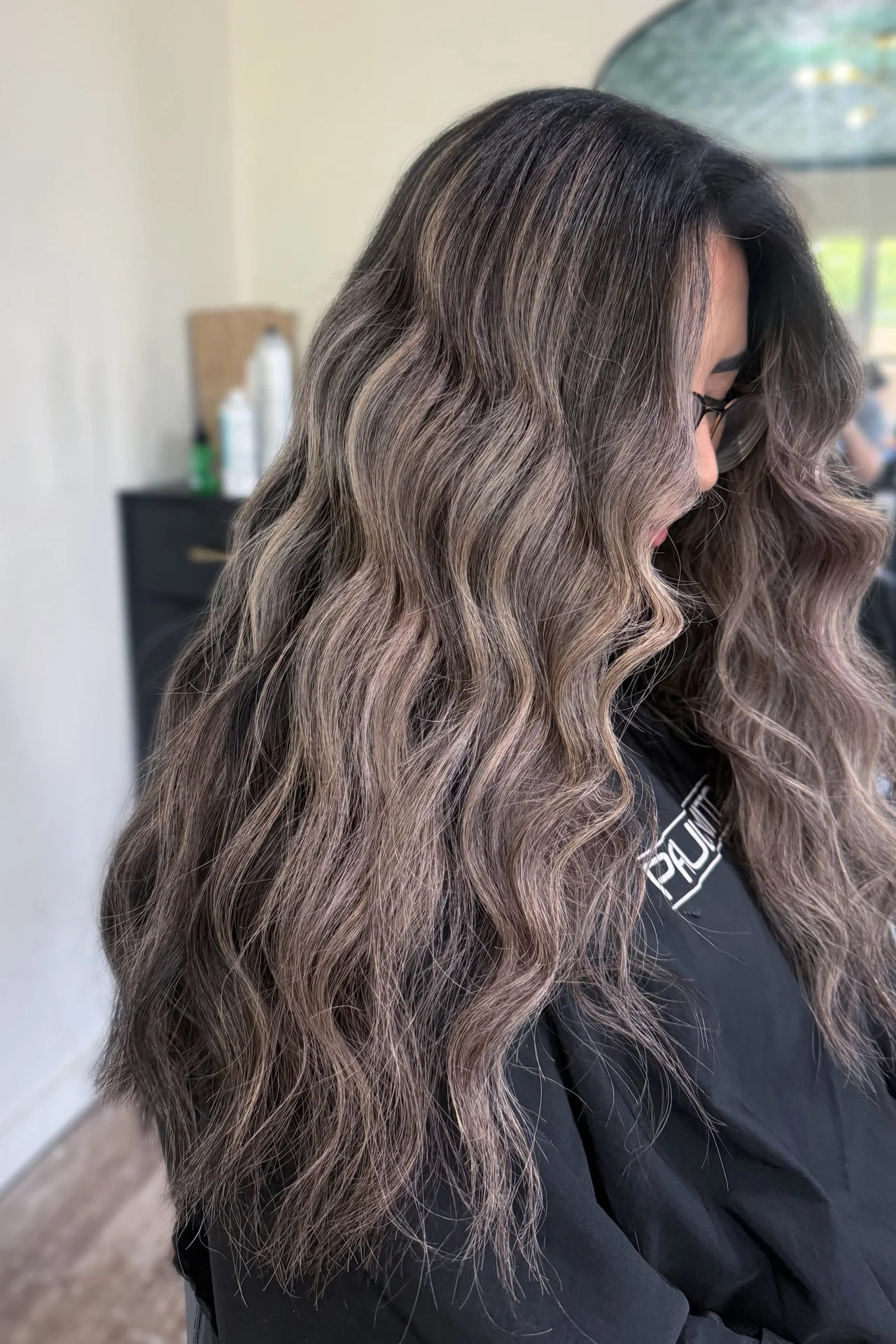
Cool-toned care is what keeps winter blonde balayage looking bright rather than brassy, and it matters more in winter than in summer. Hard water, heat styling, and product build-up can all push blonde toward yellow or orange over time.
Purple shampoo is the main tool here, but it needs a light hand. Use it once a week at most, leave it on only for the time the bottle suggests, and follow with a good conditioner, since purple shampoo can be drying on its own.
A salon toner every six to eight weeks refreshes the tone more evenly than home products can, and it is worth booking even if you are stretching your full colour appointments further apart. Between visits, a colour-safe shampoo and lukewarm water help the tone last longer, since very hot water opens the hair and lets colour fade faster.
Winter Hydration and Styling That Keeps Balayage Soft
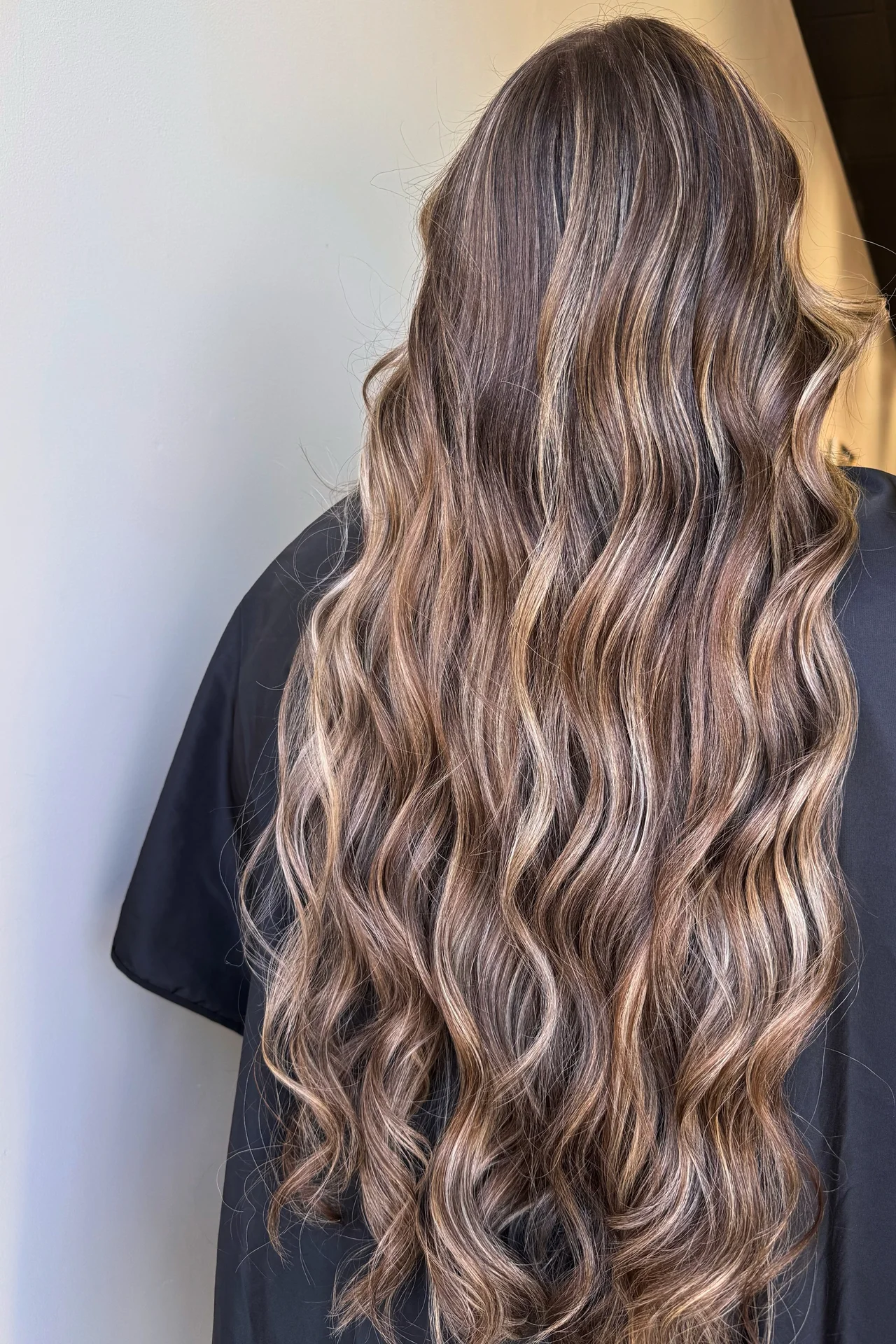
Hydration is the part of winter blonde balayage care that people skip, and it is the part that makes the biggest difference to how the colour looks. Lightened hair is drier by nature, and winter air, hats, and heating make that dryness worse.
A weekly deep conditioning mask helps, and so does washing less often. Two or three washes a week keeps the hair from being stripped, and it also helps the colour last longer.
Hats need a little care too. A satin or silk lining, or simply loosening your hair before you put a hat on, cuts down on static and breakage, and it stops the hat from flattening the balayage pieces that give the colour its dimension.
For general washing and heat care, the American Academy of Dermatology hair tips cover the basics plainly.
Quick Answers
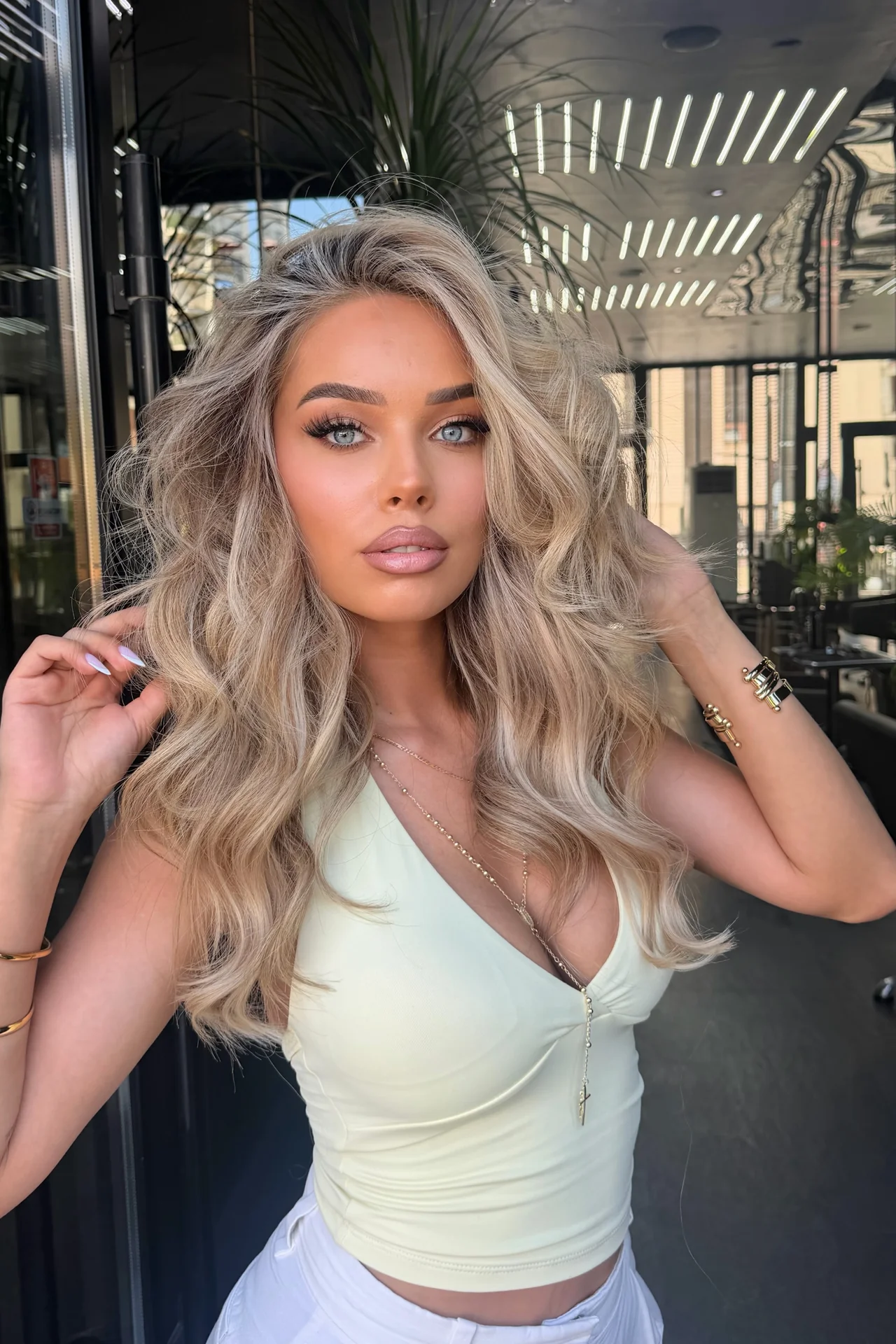
Does winter blonde balayage go brassy easily?
It can, especially cool tones, since hard water, heat styling, and product build-up push blonde toward yellow. A weekly purple shampoo and a salon toner every six to eight weeks usually keep it in check.
Is winter blonde balayage low maintenance?
Rooted winter blonde balayage is low maintenance, since the natural root means no harsh regrowth line. Icy tones need more upkeep than honey or beige tones, so choose your shade with your schedule in mind.
Can I get winter blonde balayage on dark hair?
Yes, but expect a gradual lift. Dark hair often needs more than one session to reach blonde without damage, and a honey or caramel blonde is a sensible first step.
How do I ask my stylist for winter blonde balayage?
Bring photos of the exact tone and root blend you want, and say how much upkeep you are happy with. Mention whether you want a face frame, and whether you prefer icy, honey, or beige blonde.
How often should I wash winter blonde balayage?
Two or three times a week is plenty for most people. Washing less keeps the hair hydrated and helps the colour last, and dry shampoo covers the days between washes.