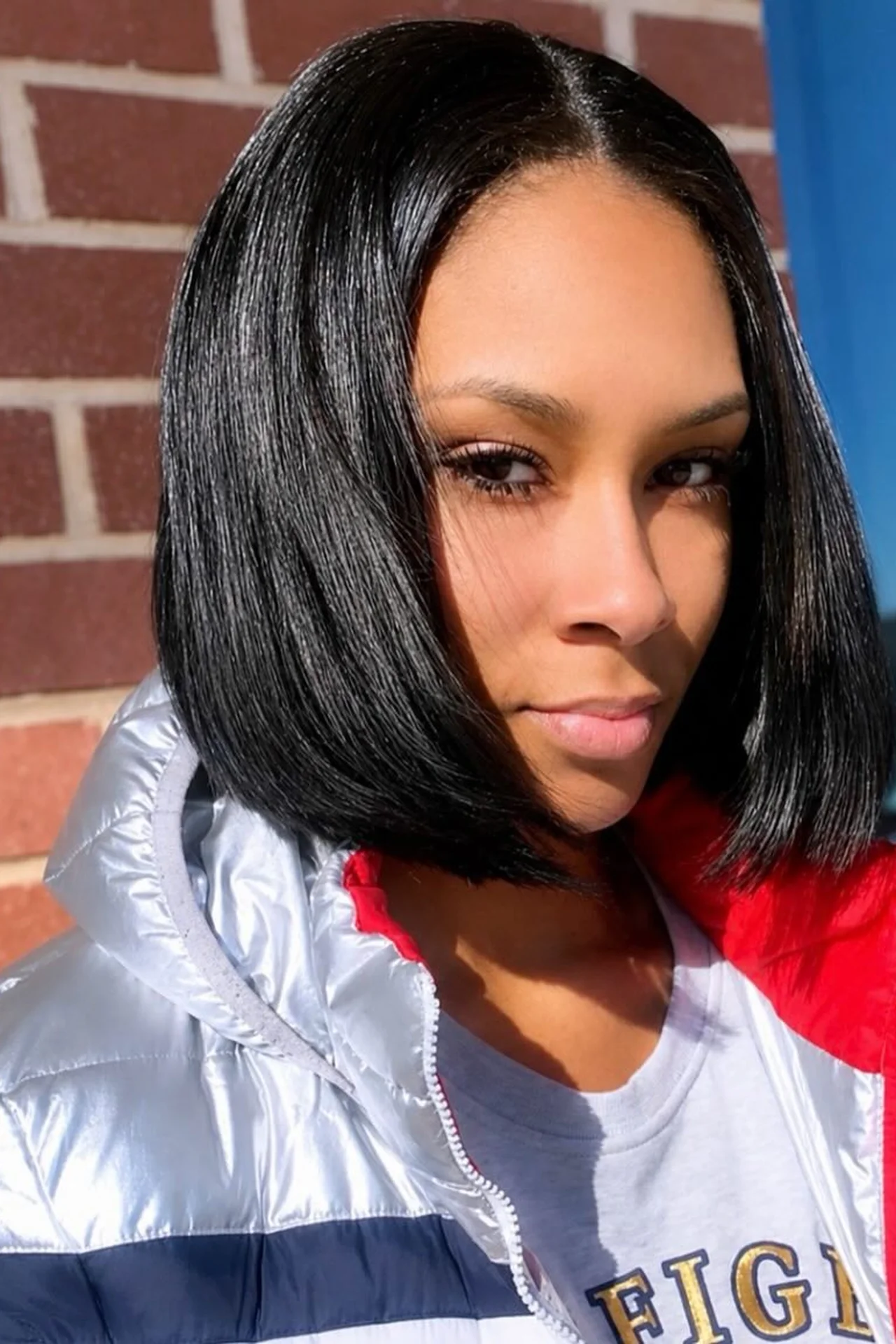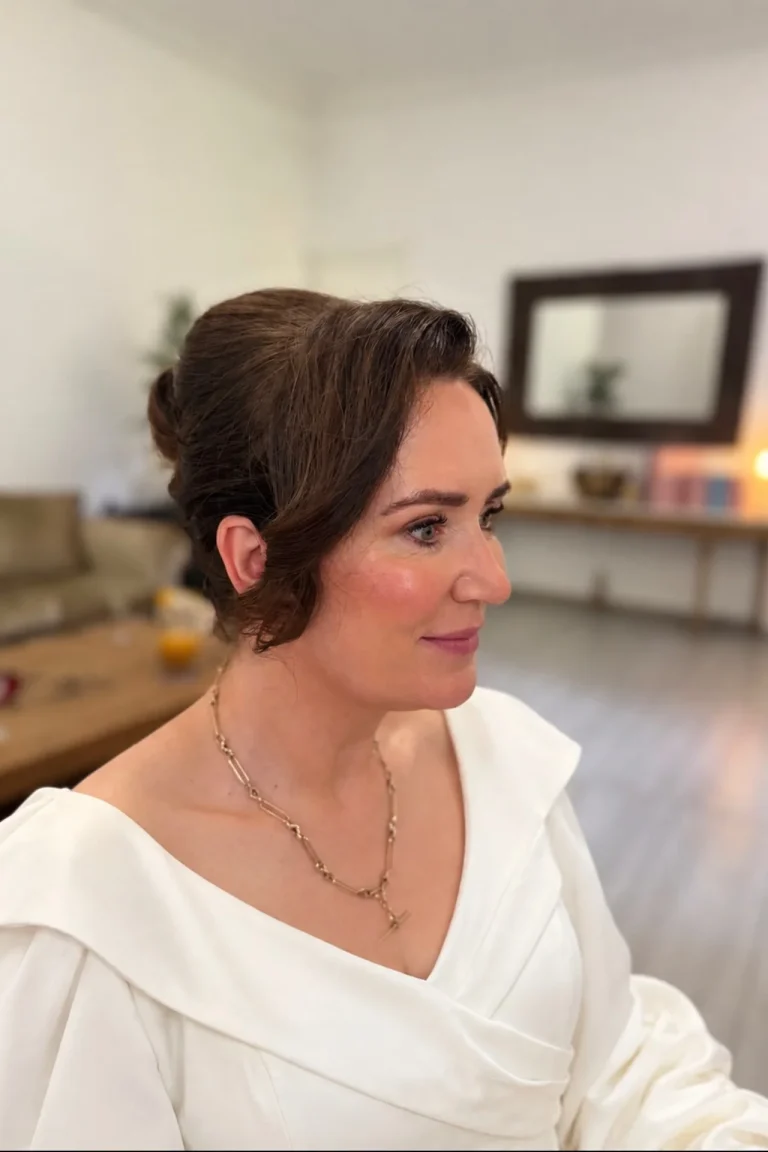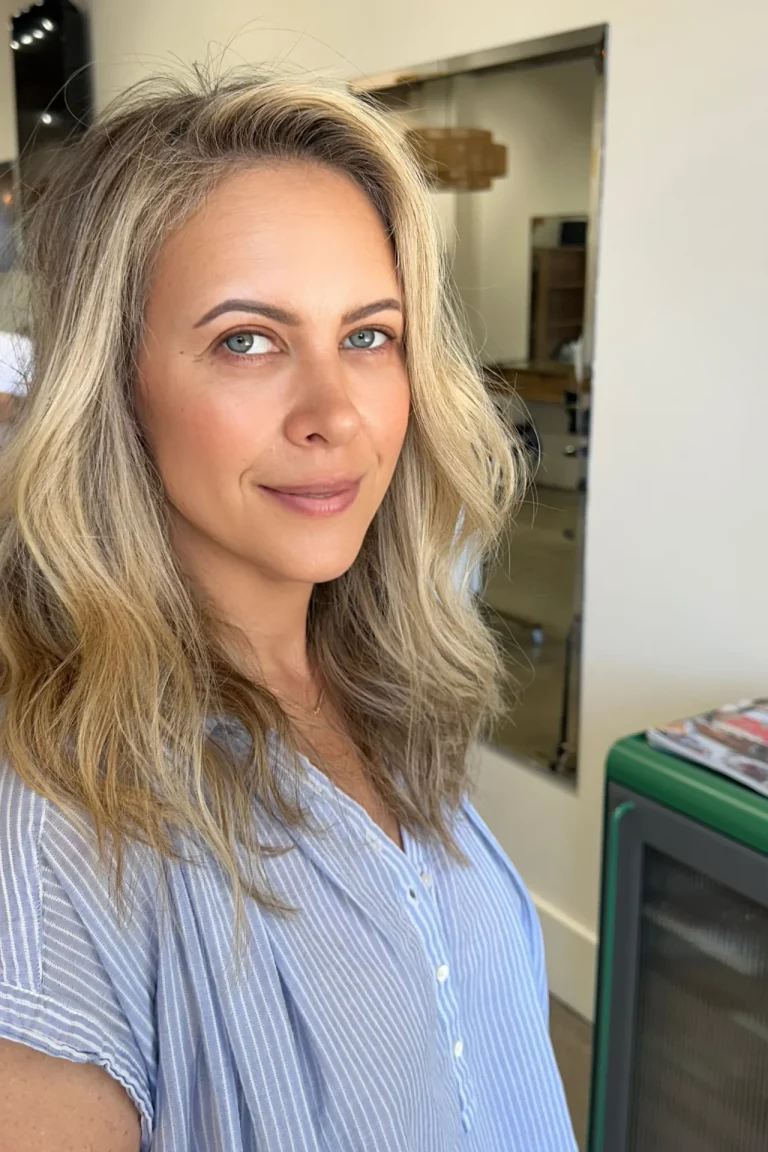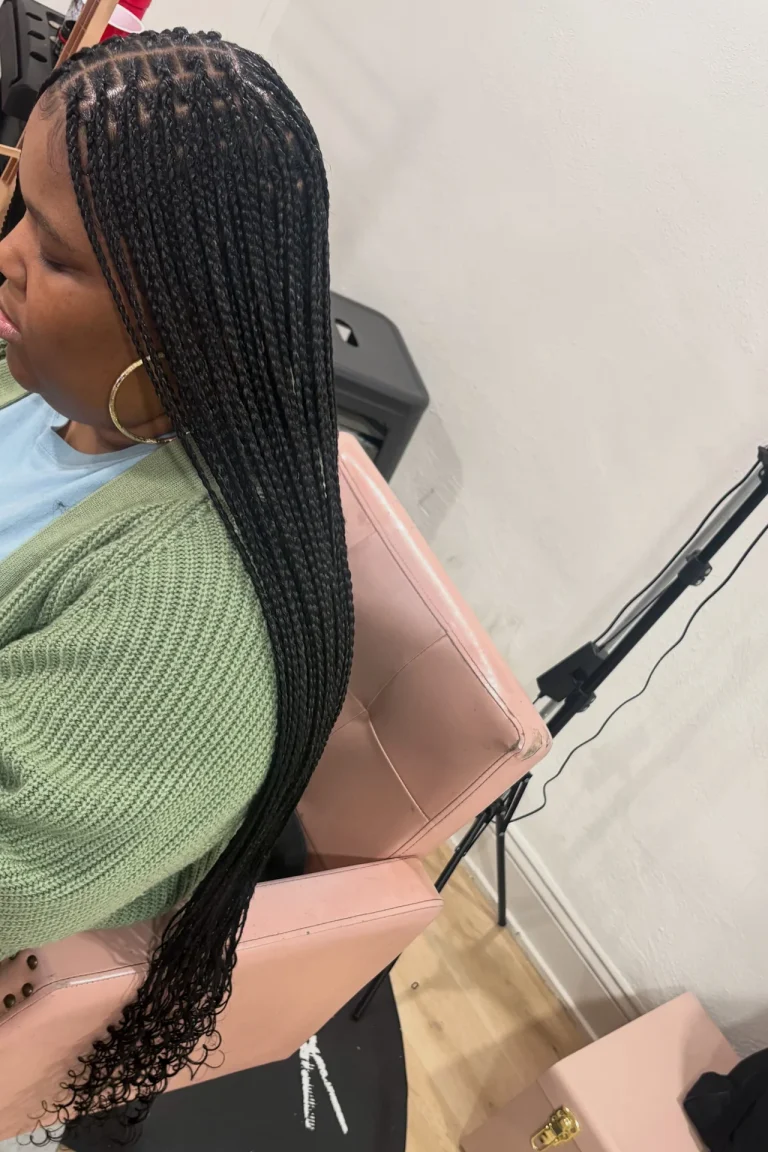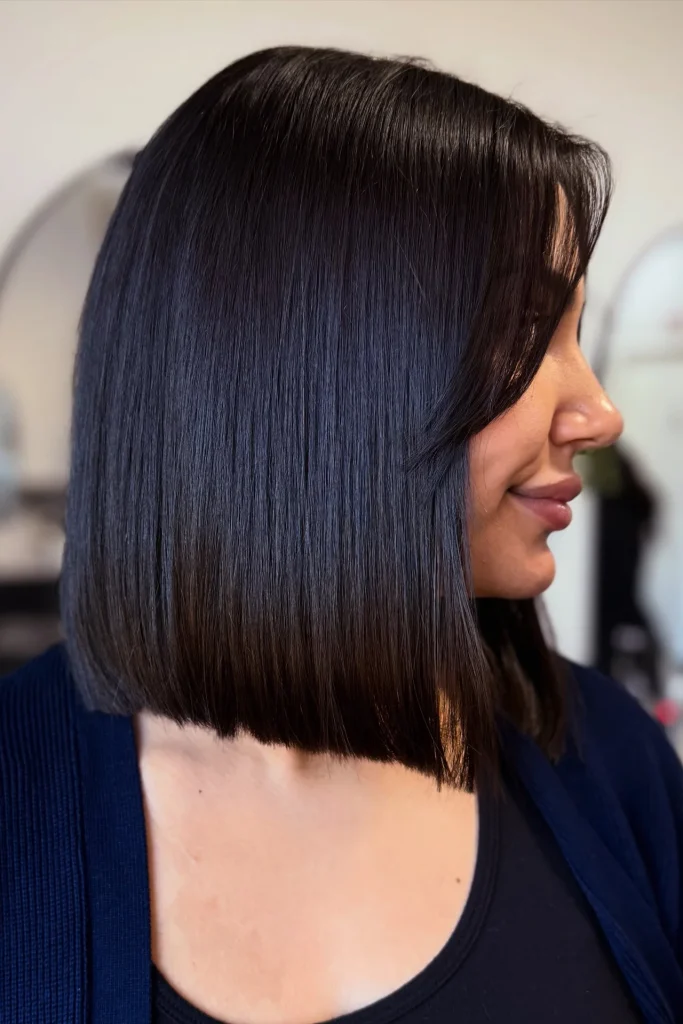
A blunt cut does one thing really well. It ends in a clean, straight line, with no thinning at the bottom, so the hair looks thicker the moment it is cut.
That matters if your hair has always felt thin at the ends. Layers can take weight away and leave the bottom looking wispy. A blunt line keeps the weight where you can see it, right at the ends.
Short blunt cuts suit busy routines too. The shape does most of the work, so you are not fighting to create volume every morning.
Table of Contents
Chin-Length Blunt Bob That Frames the Face
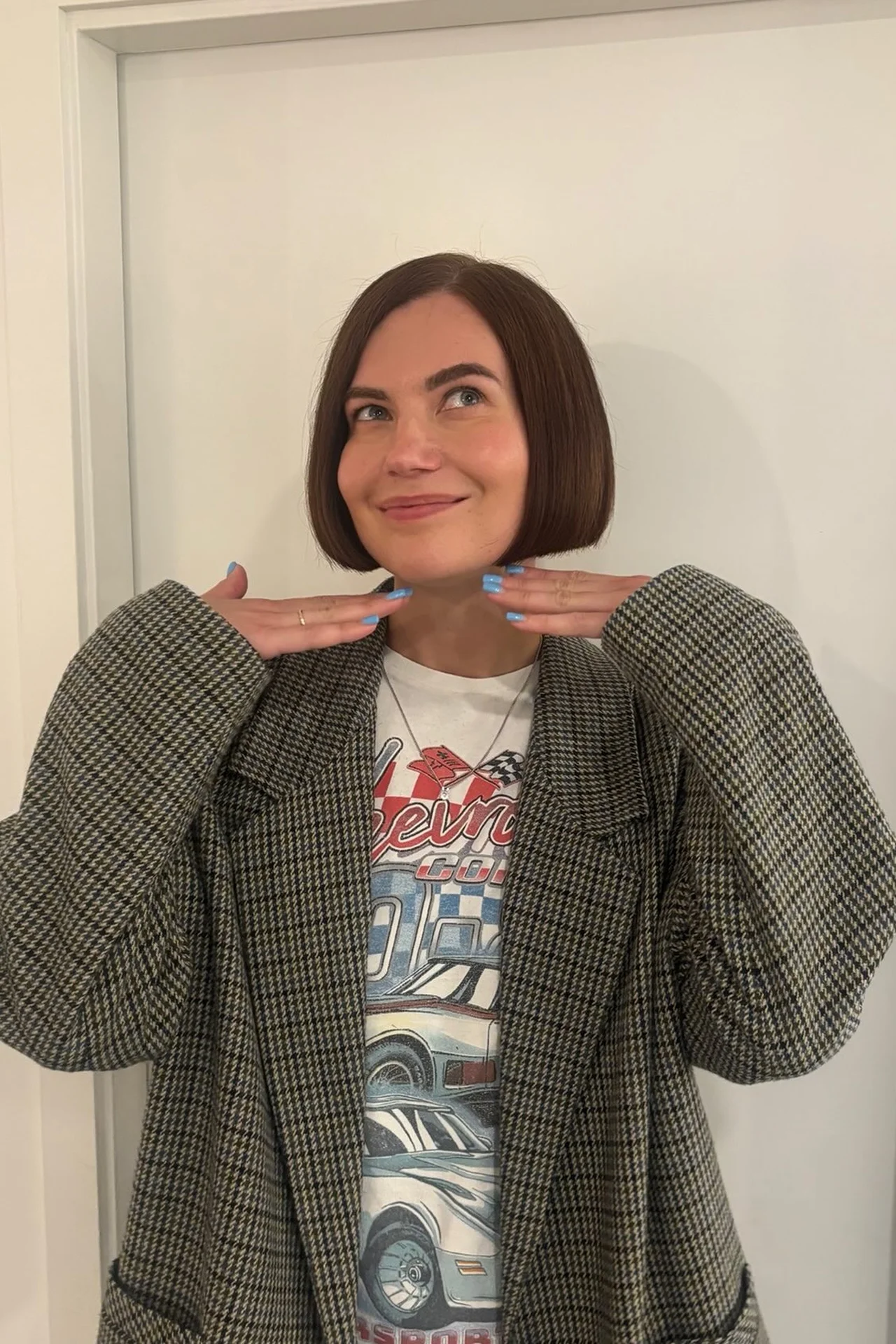
A chin-length blunt bob is the classic short blunt cut, and it earns that place. The ends sit at the jaw, the line stays even all the way round, and the shape looks finished with very little styling.
Ask your stylist to cut it dry or to check the line once it is dry, since hair can sit a little shorter once it dries. The front pieces should be just long enough to tuck behind the ear or to sit forward and frame the face.
Short blunt cuts at this length flatter a lot of face shapes, because the jaw-length line draws the eye to the cheekbones and jaw. A bob hairstyles shape cut blunt, rather than layered, is the simplest way to try the look.
Blunt Lob That Sits Just Above the Shoulders
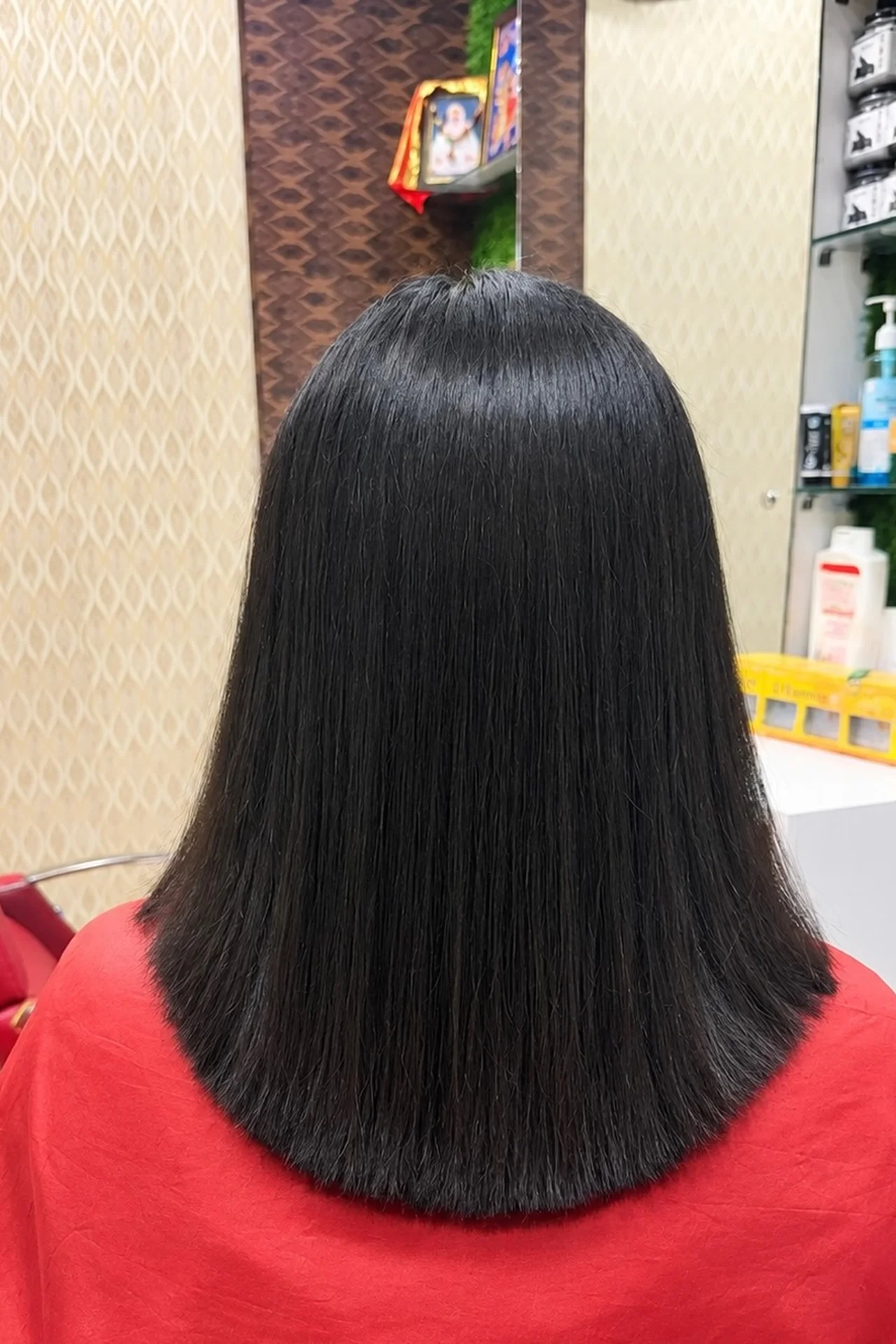
A blunt lob gives you the same clean line with a little more length to play with. It sits just above the shoulders, so you can still tie it back on a rushed day, but it keeps the thick, even ends of a true blunt cut.
Wear it straight for a polished finish, or add a slight bend through the mid-lengths with a flat iron. Keep the ends straight, though, or the blunt line will disappear.
Blunt Pixie With a Sharp Edge
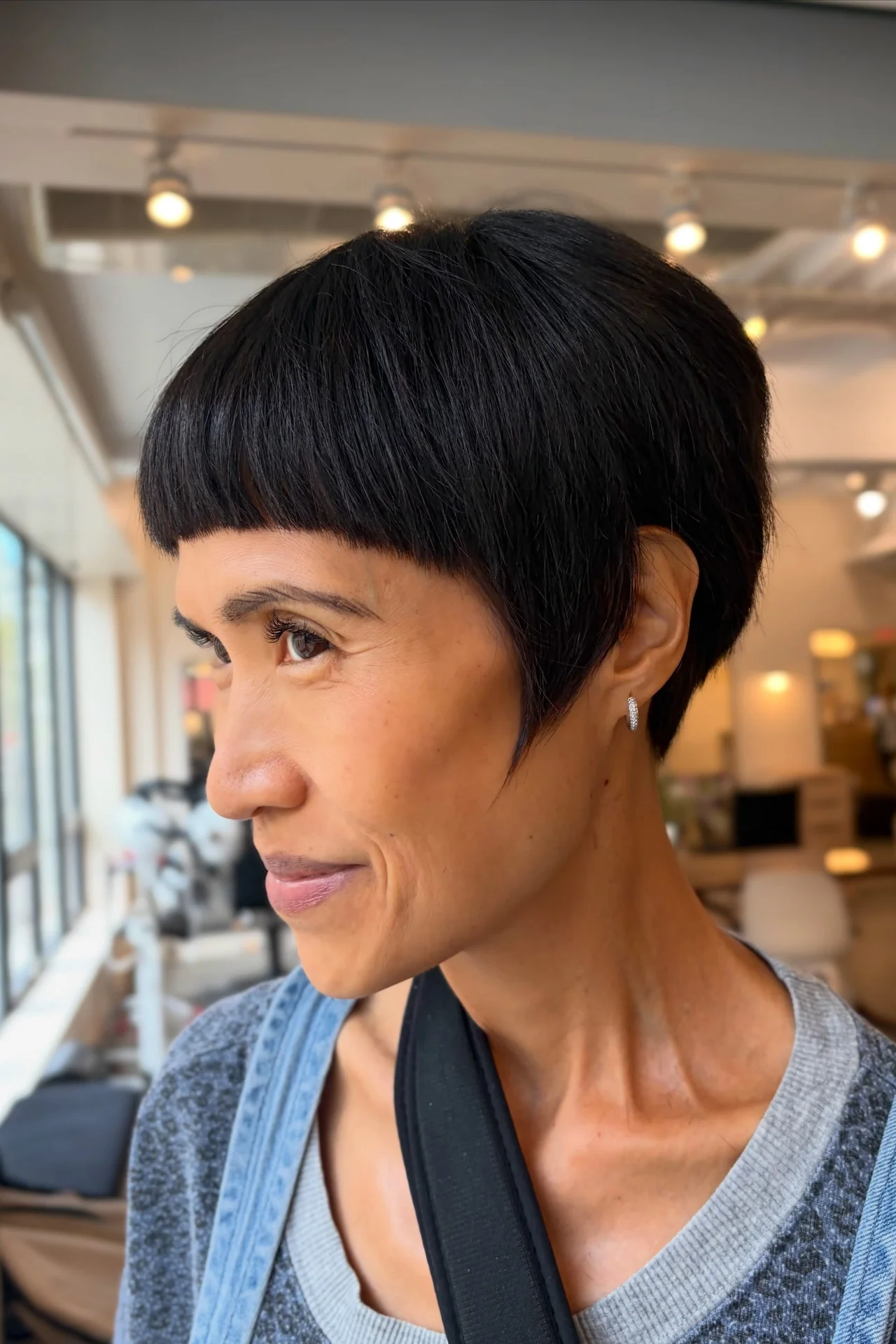
A blunt pixie sounds like a contradiction, but it works. The top and sides stay short, while the outline is cut clean and even instead of textured or choppy. The result is bold, neat, and easy to style.
This cut suits anyone who likes a strong shape and does not want to spend long on styling. A little pomade or wax through the top gives control without stiffness, and the clean edge does the rest.
It shows the face more than a bob does, so it helps to think about what you want to highlight. A blunt fringe or a side-swept front piece can soften the outline while keeping the sharp edge.
Short blunt cuts in pixie form grow out fast, so book trims every four to six weeks if you want to keep the line. A pixie haircut cut blunt, rather than layered and piecey, gives a very different feel from the usual textured pixie.
Blunt Cut With Full Bangs for a Strong Outline
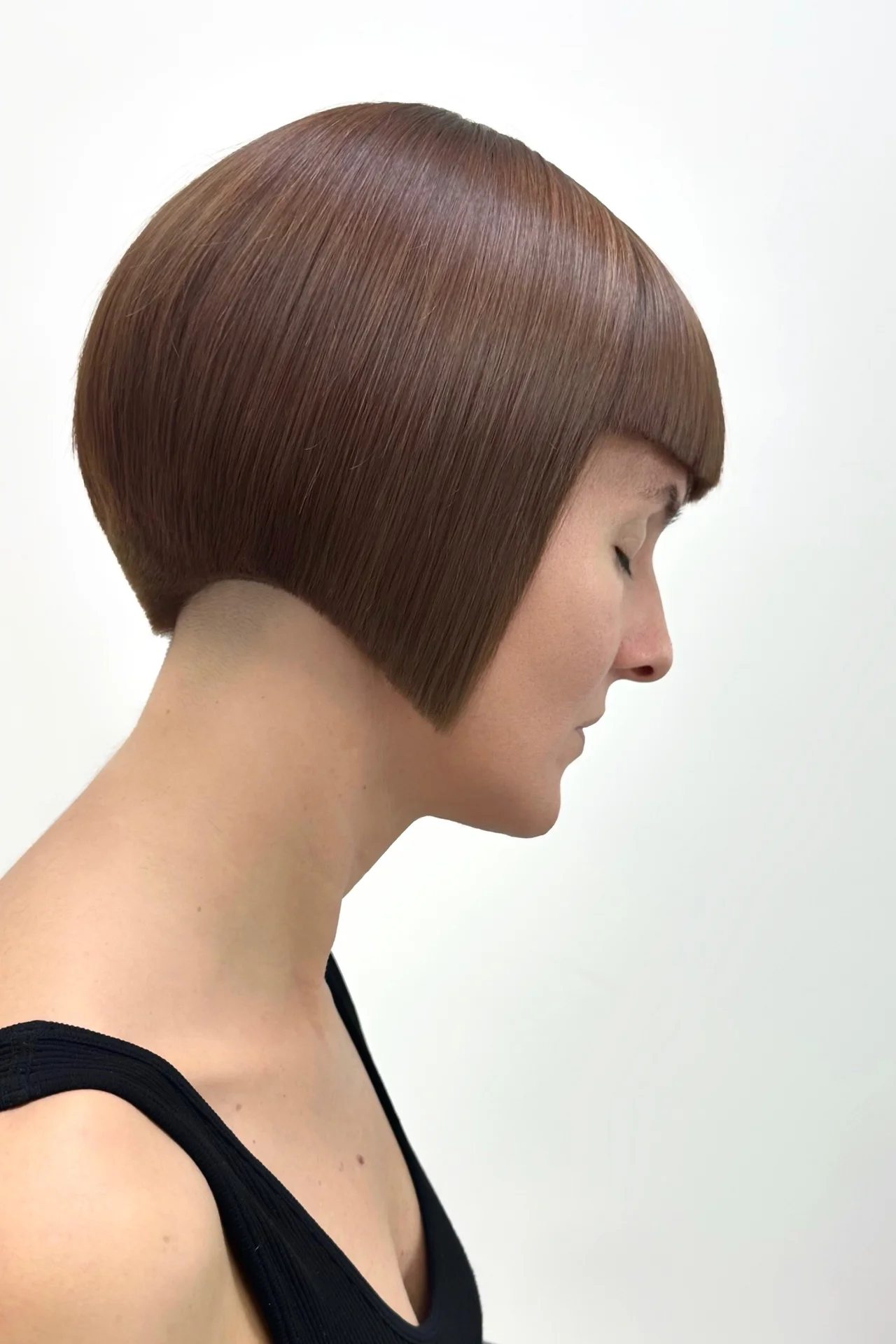
Full bangs and a blunt cut belong together. Both rely on a straight line, and together they make a frame that looks deliberate from every angle.
The bangs should be cut to sit just above the brows, with a clean edge that matches the ends of the cut. If the bangs are wispy and the ends are blunt, the two will fight each other.
This look needs a little more upkeep, since bangs grow out faster than the rest of the cut. A quick fringe trim between full appointments keeps the outline sharp. Short blunt cuts with bangs suit straight or slightly wavy hair best, since very curly hair will not hold the straight line without daily heat.
Blunt Cut That Gives Fine Hair Real Weight
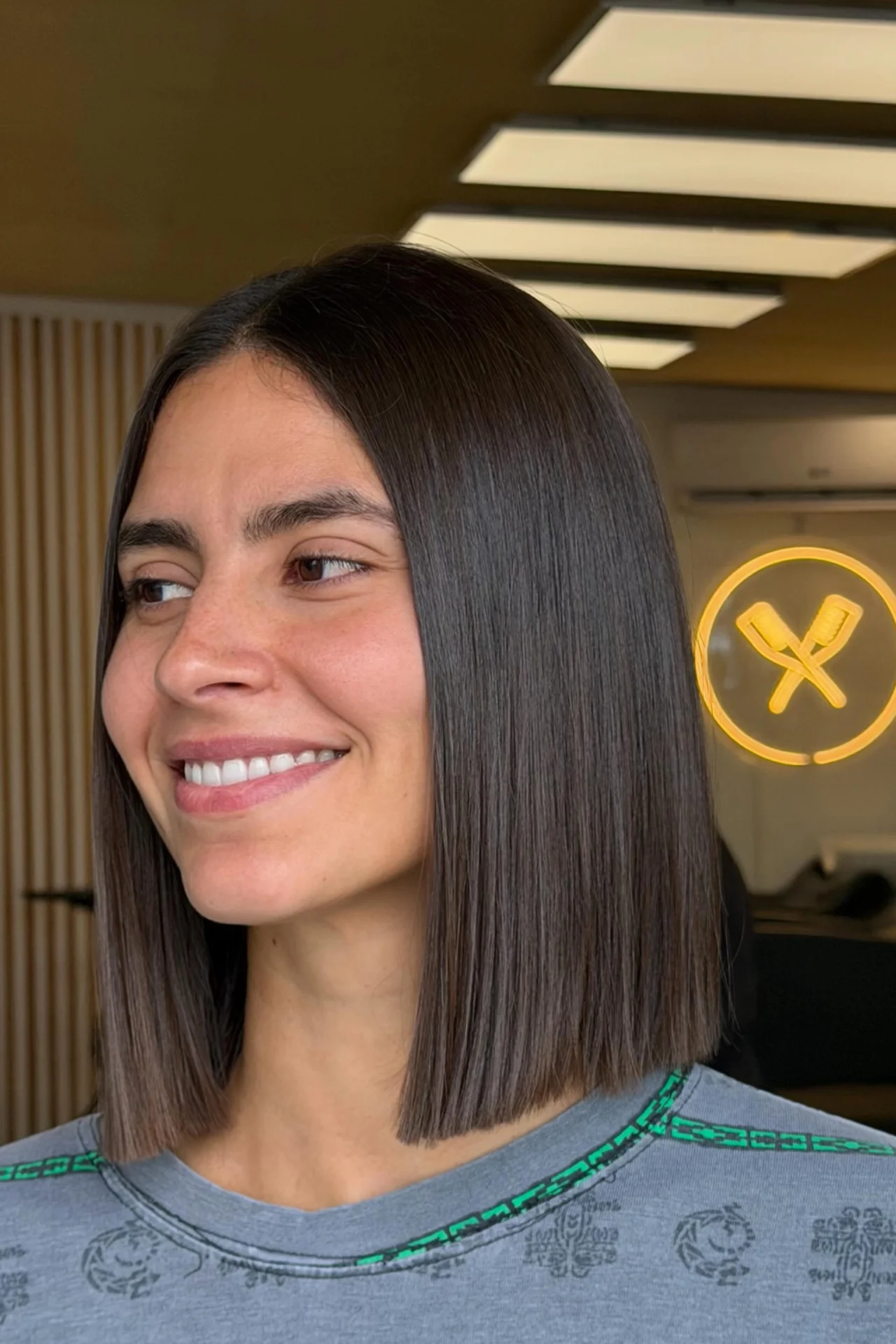
Fine hair is where short blunt cuts do their best work. Thinning the ends only makes fine hair look thinner, while a blunt line makes the same hair look denser.
Keep the cut at chin length or just above the shoulders, where the weight can still show. Going much longer will pull the hair down and make it look flat again. Ask for no thinning shears at the ends, and be clear about that, since many stylists reach for them out of habit.
Dry the hair with a little root lift at the crown, then smooth the ends straight. You do not need heavy products. A light mousse at the roots and a smoothing cream on the ends will do more than a pile of styling products.
Blunt Cut That Tames Thick Hair Without Layers
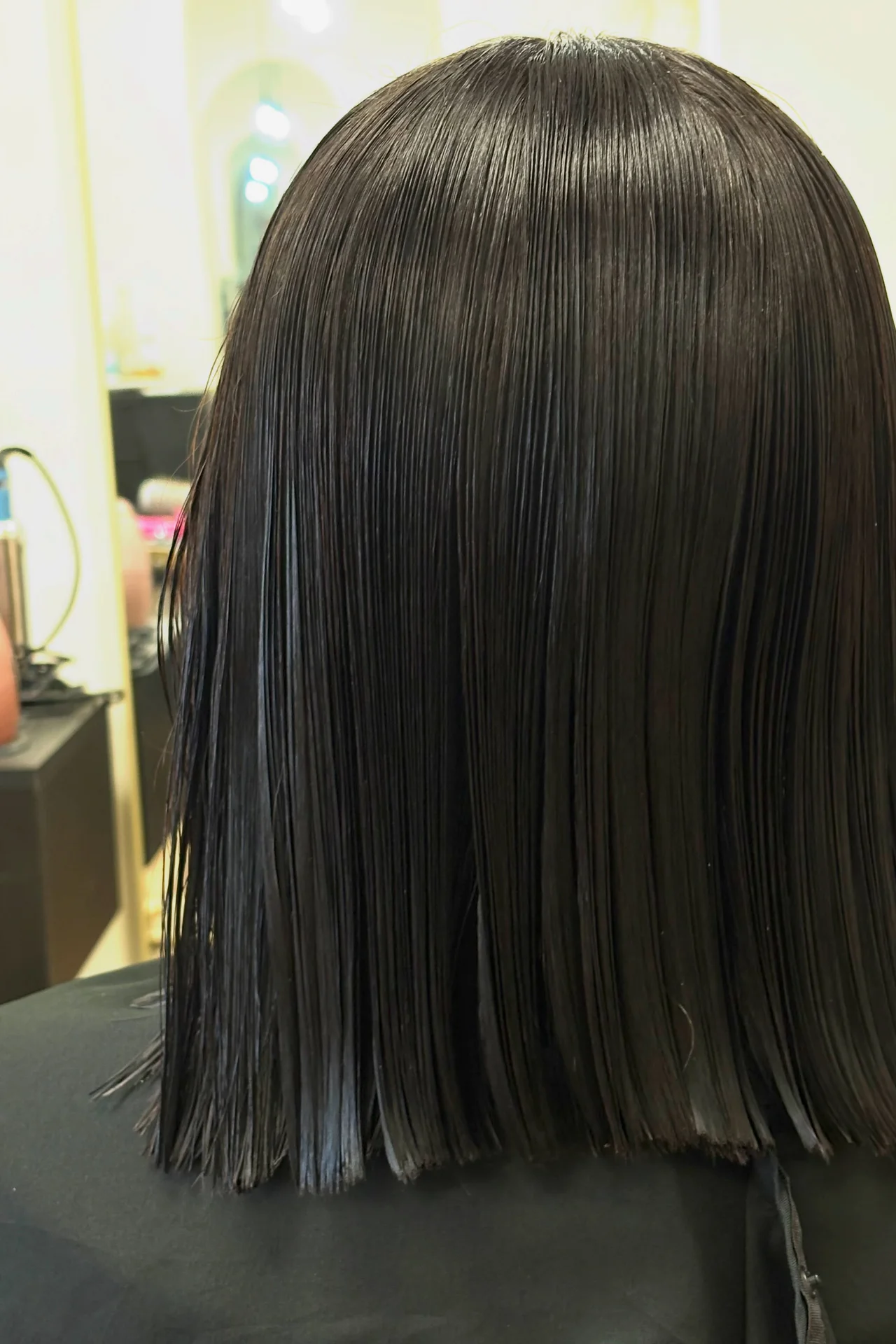
Thick hair can feel heavy, and the usual answer is layers. Short blunt cuts take a different route, and it can work just as well if the shape is right.
The trick here is length and weight, not thinning. A blunt bob or lob on thick hair looks sleek and controlled, because the even ends keep the bulk in one clean shape instead of letting it puff out at different lengths.
Ask your stylist to cut the inside slightly shorter, or to undercut the very bottom layer, so the hair sits flat against the neck. That hidden shaping keeps the blunt line visible while taking away the bulk underneath.
Blow dry in sections, smoothing down from the roots, and finish with a serum on the ends. You will spend a little longer drying thick hair, but the style will hold for days.
Blunt Cut With a Little Natural Texture
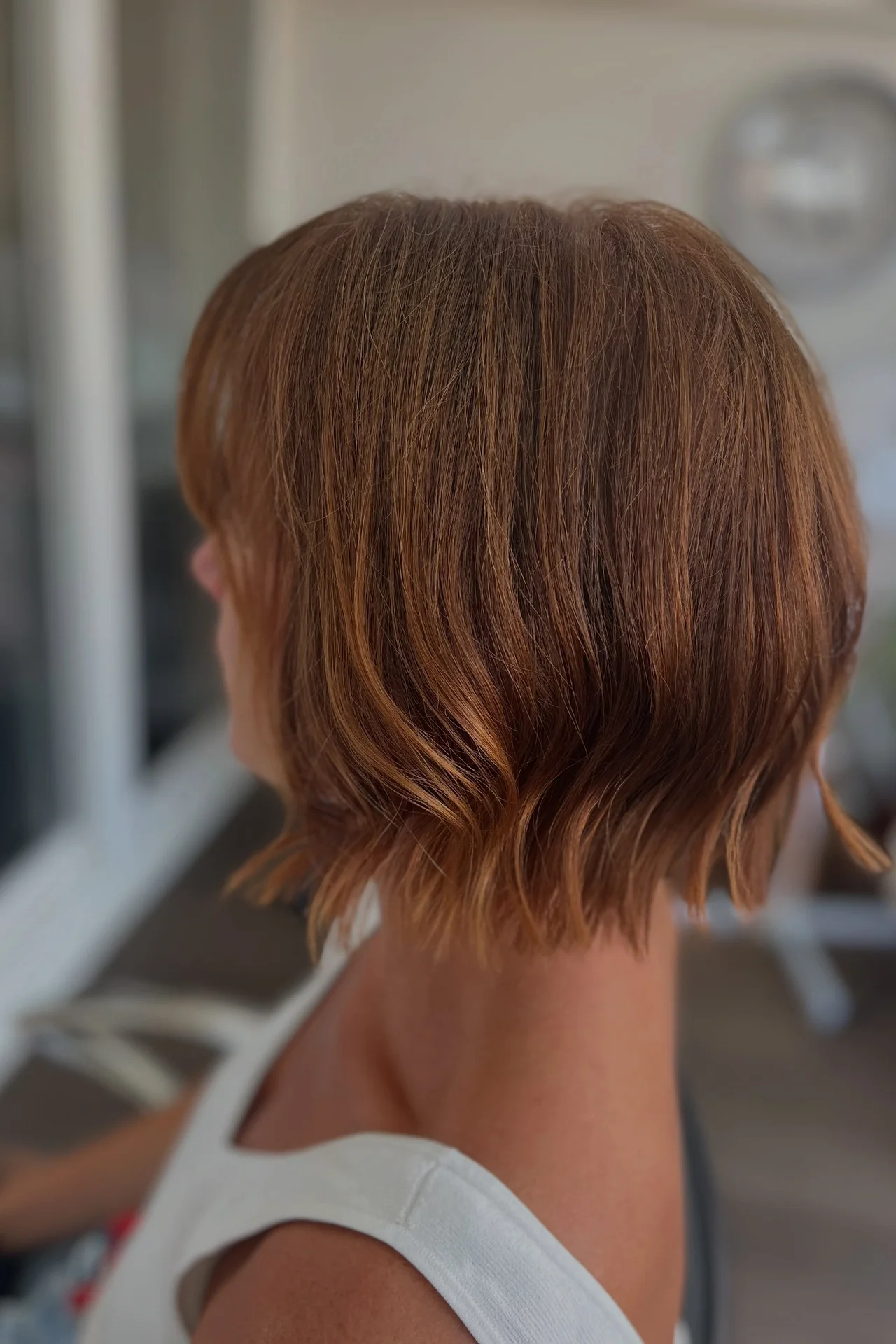
A blunt cut does not have to mean pin-straight hair. A little natural wave or curl can sit beautifully with a clean line, as long as the ends stay even.
Let the hair air dry with a curl cream or a light wave spray, and do not brush it once it is dry. Brushing will break the wave pattern and turn the blunt line fuzzy. Scrunch gently instead, and let the texture form on its own.
This version suits wavy hair best. Very curly hair will shrink and change the line, so talk to your stylist about cutting it in its natural state.
How to Keep a Blunt Cut Sharp Between Trims
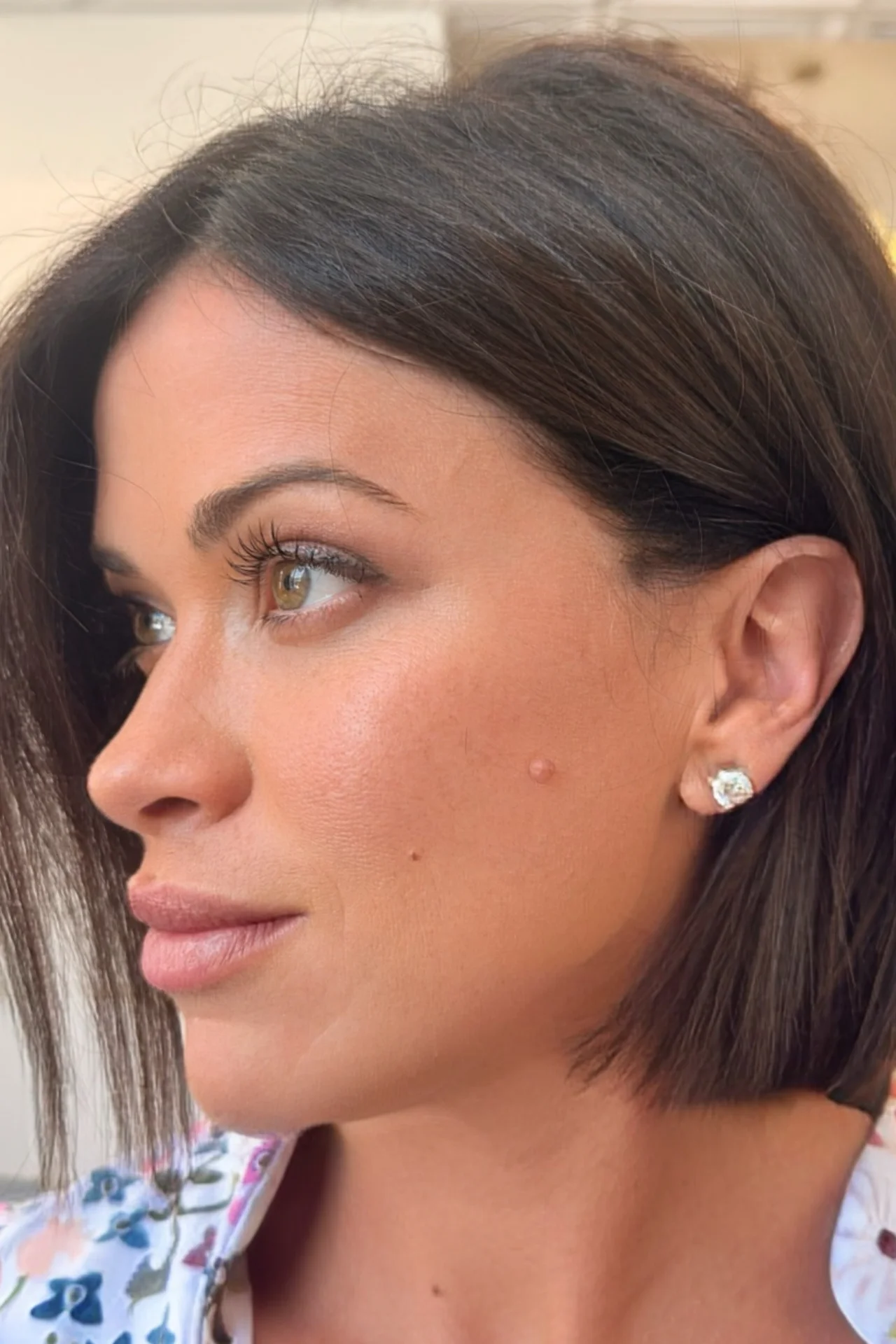
A blunt cut lives or dies by its ends. Once the line starts to fray, the whole cut looks tired, even if the rest of the hair is fine.
Book trims before you think you need them. Six to eight weeks works for most bobs and lobs, and four to six weeks for a pixie. A small trim that just refreshes the line is quicker and cheaper than waiting until the shape is gone.
Between trims, protect the ends. Sleep on a satin pillowcase, avoid daily high heat, and use a leave-in conditioner on the ends after washing. Split ends will not repair themselves, so trimming is the only real fix once they appear.
Grow-out is kinder than people expect. A blunt bob grows into a blunt lob, and a lob grows into a longer blunt cut. The shape stays wearable for months.
Short blunt cuts reward a little routine, and that routine is mostly just regular trims and gentle care. For care ideas, see the American Academy of Dermatology hair tips. For rushed mornings, the easy hairstyles for busy mornings still work, and a shaggy bob shape can inspire a softer change when you are ready to move on from the blunt line.
Quick Answers
Will a blunt cut make my hair look thicker?
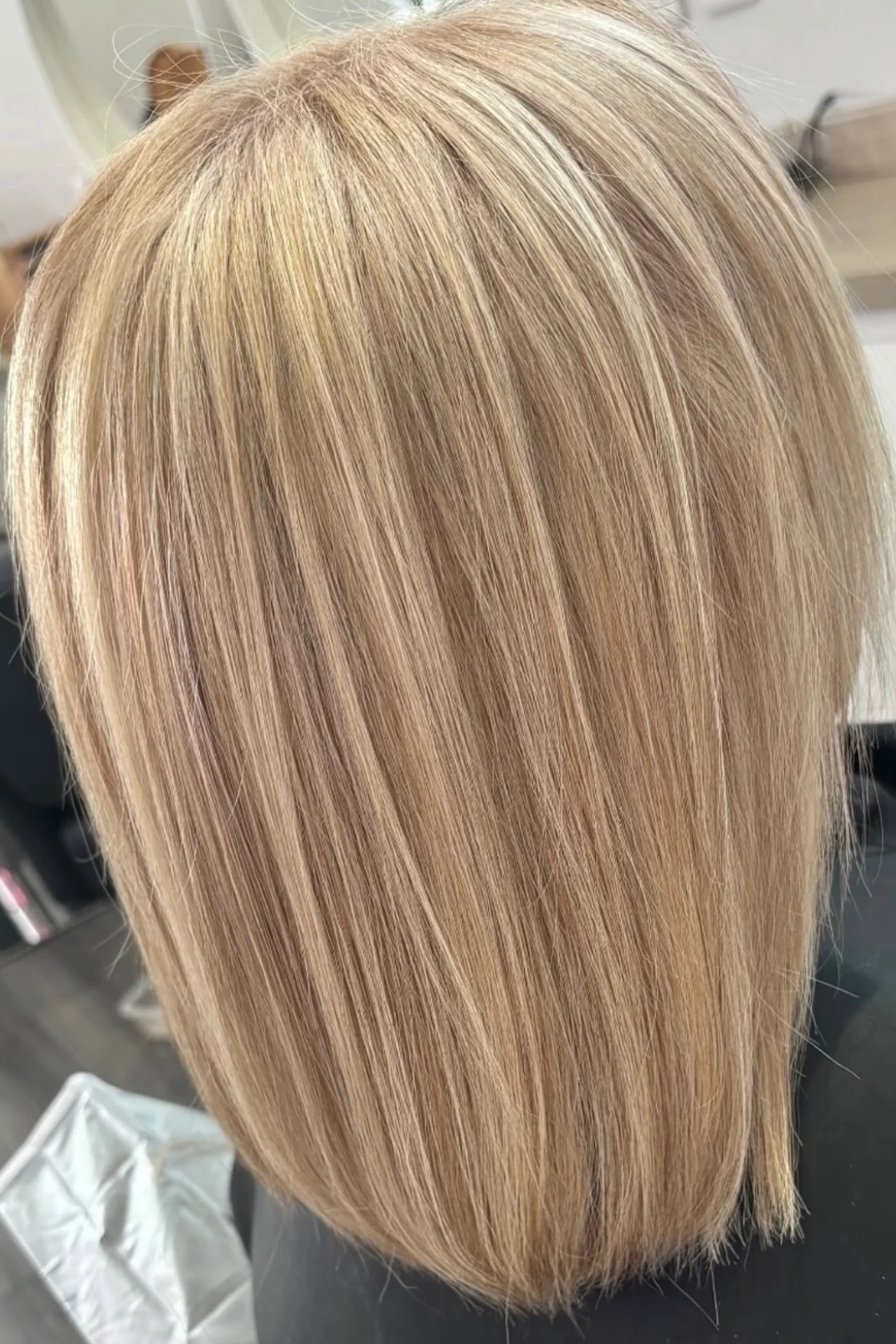
Yes, in most cases. A blunt line keeps all the hair at the same length at the ends, so the bottom looks denser than a layered cut on the same hair. It works best on fine to medium hair.
How often do short blunt cuts need trimming?
Every six to eight weeks for a bob or lob, and every four to six weeks for a pixie. The line shows growth sooner than a layered cut does, so waiting too long will soften the shape. A small, regular trim keeps the cut looking intentional.
Can I wear a blunt cut if my hair is wavy or curly?
Wavy hair works well, especially if the cut is checked in its natural state. Very curly hair will shrink and change the line, so talk to your stylist about how the cut will sit when dry.
Does a blunt cut suit a round face?
It can, if the length is right. A chin-length blunt bob with a little length around the face, or a bob hairstyles for round face shape that sits just past the jaw, will frame a round face without adding width.
What should I ask my stylist for?
Ask for a clean, straight-across line with no thinning at the ends, and be clear about the length you want when dry. Bring a photo of the exact line you like, and mention how much styling time you realistically have. A hair care routine guide can help with washing and conditioning between trims.