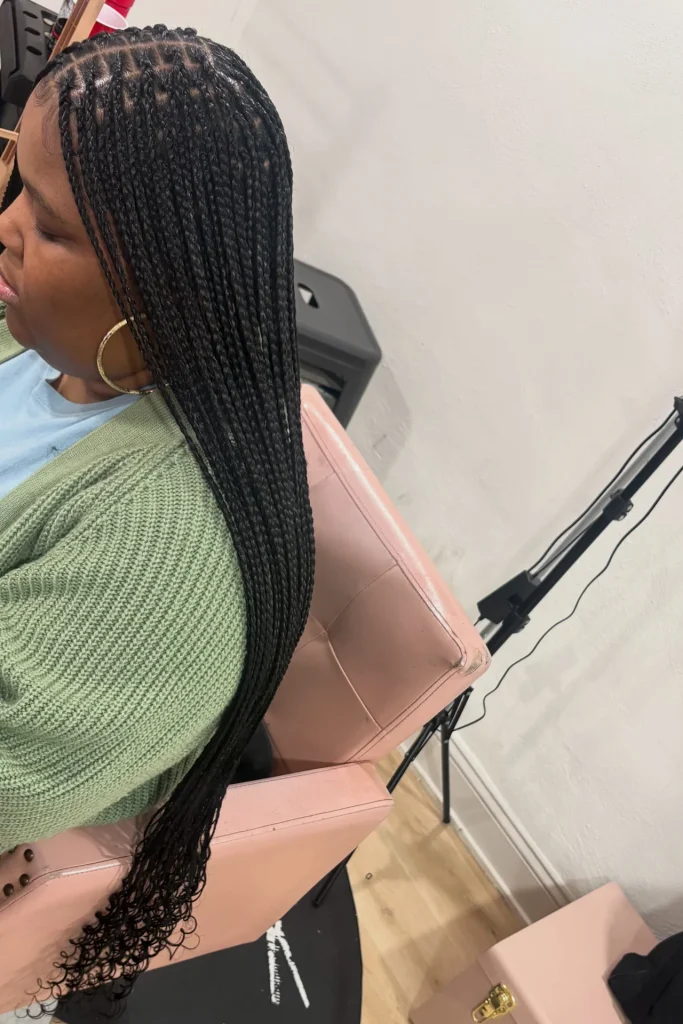
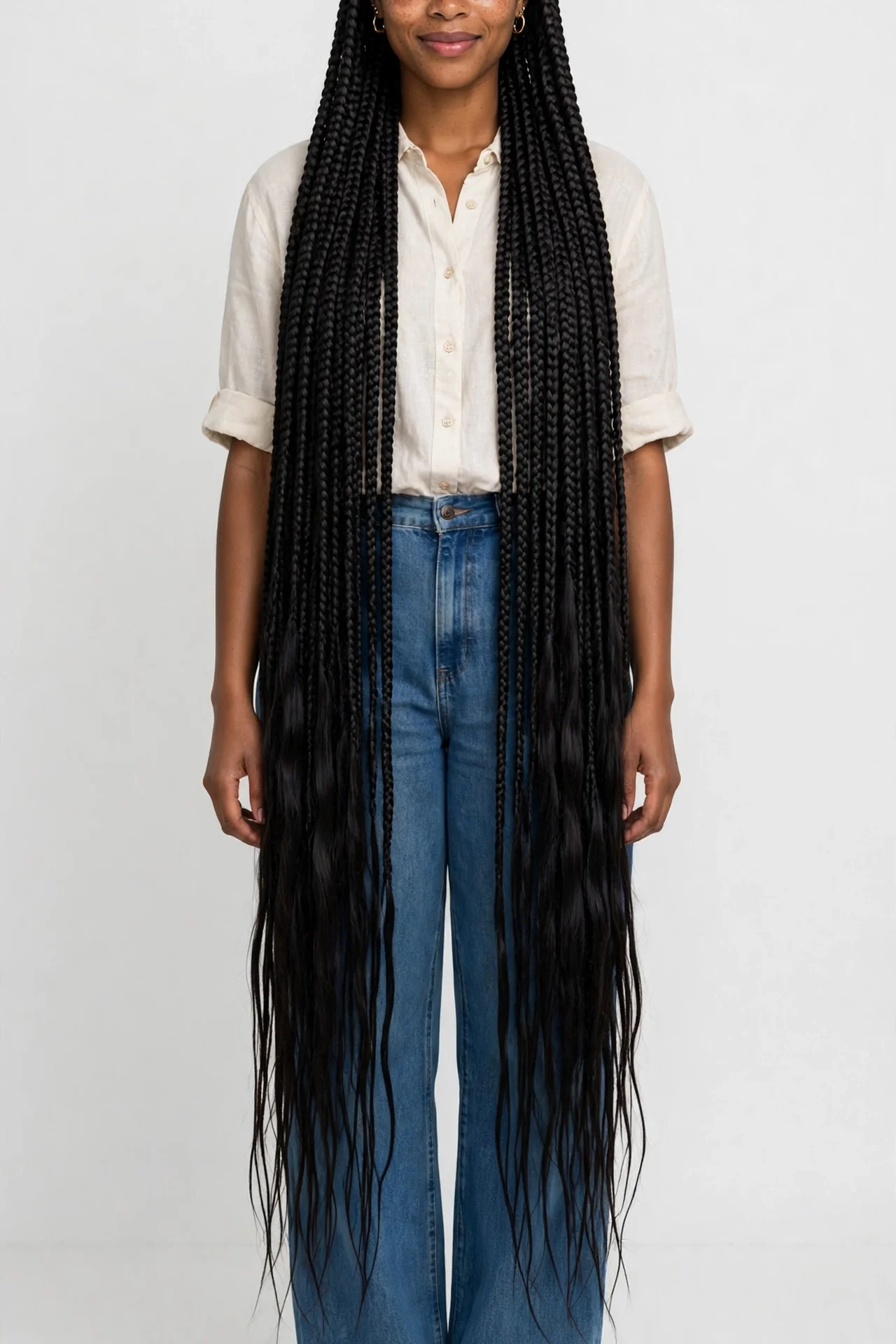
There is something quietly powerful about braids that fall all the way to your waist. They move when you move, they catch the light as you turn, and they make even a plain outfit feel finished. Waist length knotless braids for black women deliver that drama without the tight, aching start that used to come with long braids.
The knotless method changed the game for long lengths. Instead of anchoring each braid with a firm knot at your scalp, your braider starts with your own hair and feeds the extension hair in gradually. The result sits flatter, feels lighter, and puts far less pull on your edges. That matters even more at waist length, because every extra inch adds weight your hairline has to carry.
This guide walks through the whole journey, from choosing a size to the day you finally take them down. You will learn what to ask for in the chair, how to keep long braids fresh for weeks, and which styles actually work when your braids reach your waist.
Table of Contents
What Waist Length Knotless Braids Actually Are
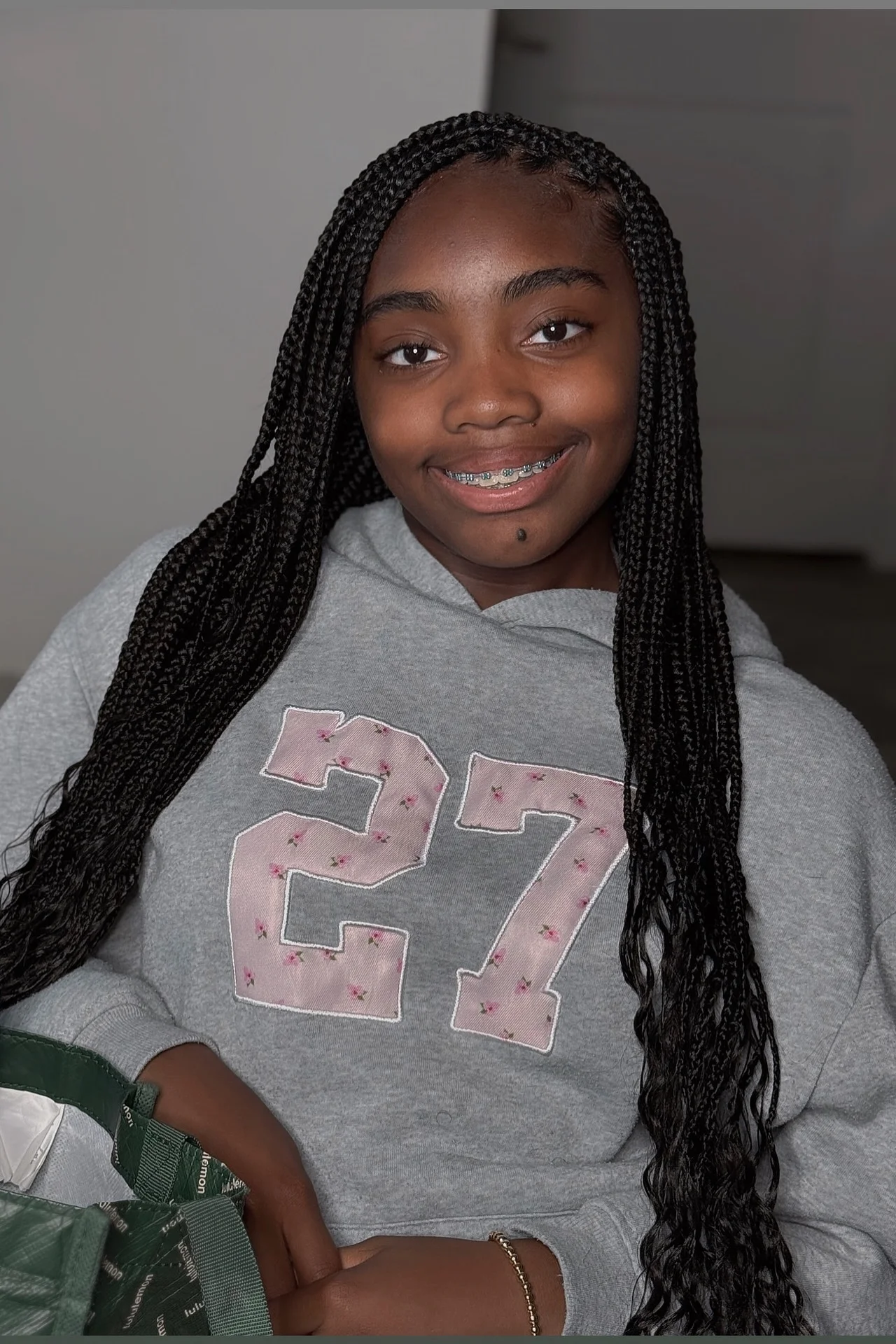
Waist length knotless braids for black women are box braids installed with the feed-in method and extended until the ends fall around your waist. The “knotless” part describes the start of each braid, not the braid itself. Your natural hair forms the base, and extension hair joins in a little at a time, so there is no bulky knot sitting on your scalp.
That flat start is why the style looks so natural. The braids fall from your scalp the way your own hair would, with no raised bumps along the parting. From the front, the hairline looks soft and clean. From the back, the parts form a neat grid that shows off your braider’s skill.
Length is measured on your body, not on a pack of hair. Waist length means the ends land at your natural waist when the braids hang straight down your back. On a taller woman, that takes more hair and more time than on a shorter woman. If you are unsure, ask your braider to hold a finished braid against your back before the install begins, so you both agree on where it should end.
Why Knotless Feels Different From Traditional Box Braids
Traditional box braids start with a knot. That knot grips your hair to hold the extension in place, and the grip is exactly what makes the first week hurt. Your scalp feels tender, your edges feel pulled, and sleeping on a fresh set can be miserable. Knotless braids skip that grip entirely.
Because the extension hair feeds in gradually, the tension spreads along the braid instead of concentrating at the root. Most women notice the difference the same day. You can move your head freely, tie your braids up sooner, and sleep without that tight, throbbing feeling. For women with fine hair or sensitive edges, that gentler start is the whole reason to choose knotless.
The comfort lasts beyond install day too. Long braids are heavy, and a knotted base adds a hard point where that weight pulls. A knotless base flexes with the braid, so the weight hangs more evenly. You still need to be sensible about how long you keep them in, and you still need to care for your scalp, but the day-to-day wear is noticeably easier.
Choosing Your Size and Parting
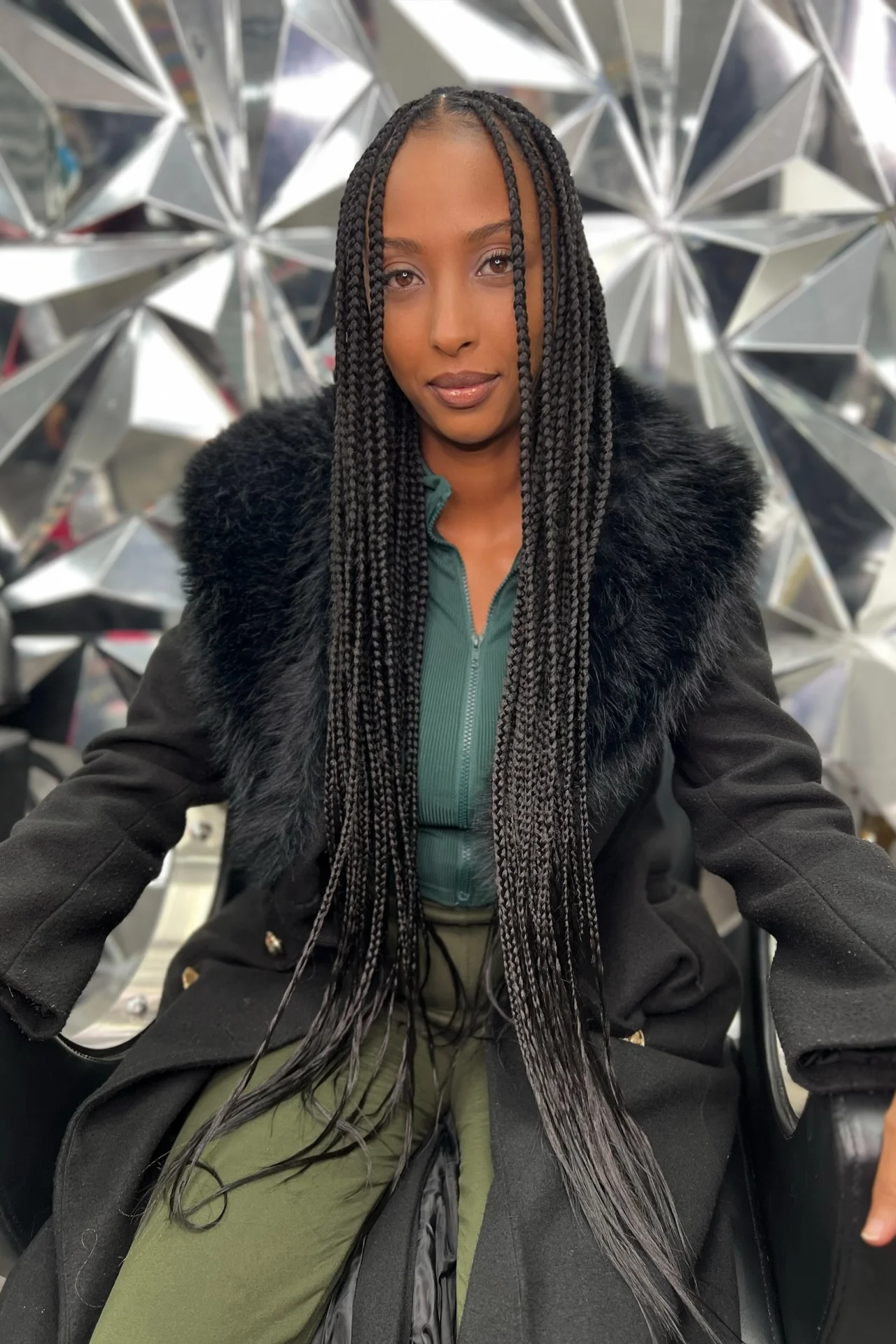
Size changes everything about this style, from the install time to the final look. Small knotless braids give you the most movement and the most styling freedom, but they take the longest in the chair, sometimes a full day. Medium braids, often called smedium, strike a balance that suits most women: full enough to look lush, light enough to wear up.
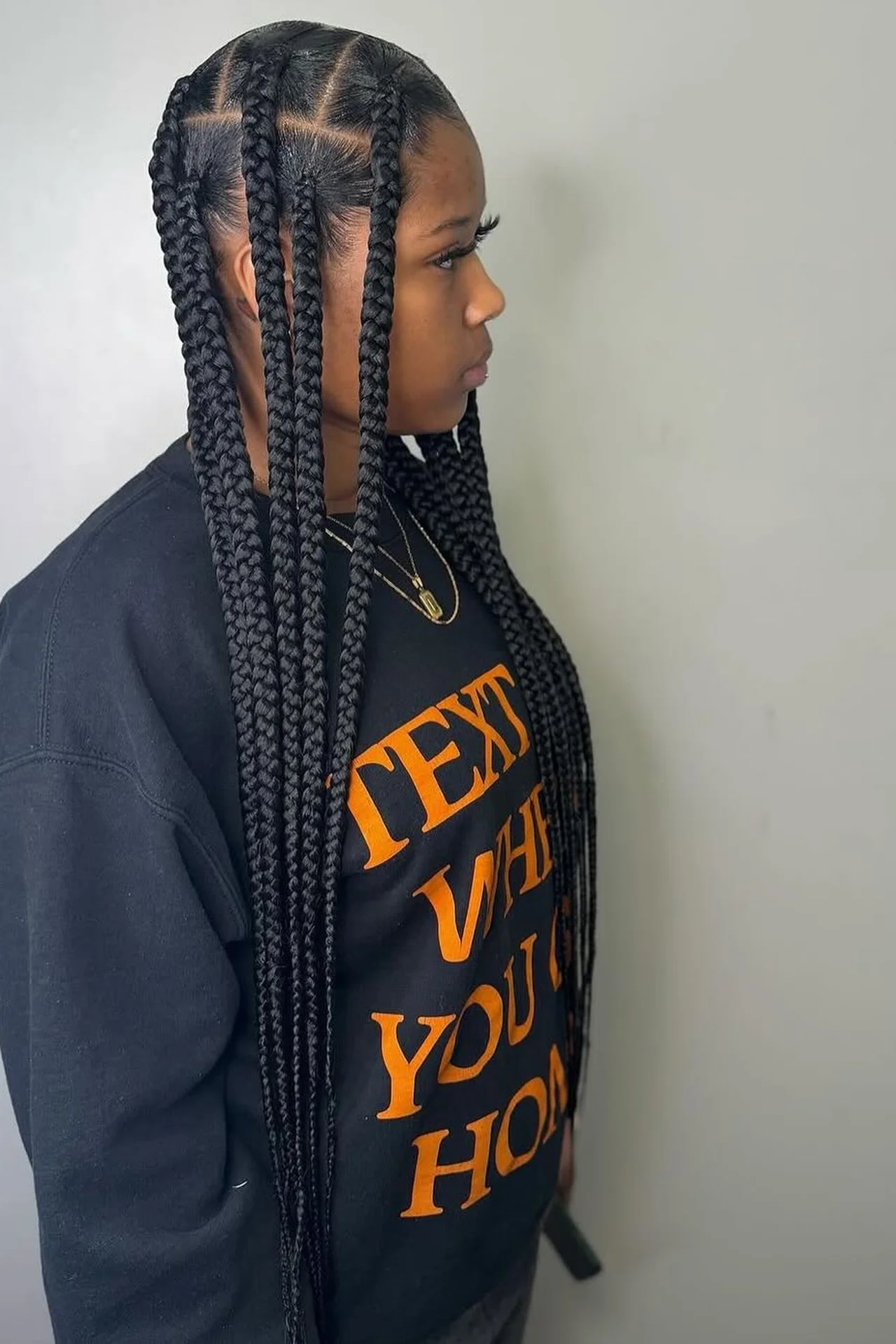
Large knotless braids install fastest and make a bold statement, but at waist length they carry real weight. If you love the big-braid look, talk honestly with your braider about your hair density and your neck comfort. A skilled braider will tell you when a size is too heavy for your hair, and that honesty is worth more than any photo you saved.
Parting matters just as much as size. A middle part gives a clean, balanced frame and shows off the length evenly on both sides. A side part adds volume on one side and a softer, swept line on the other. Square parts are the classic choice for knotless braids, while triangle parts give a slightly more organic finish. Bring reference photos, but let your braider adapt the parting to your hairline and head shape.
Prepping Your Hair Before Install
Good braids start before you sit in the chair. Wash your hair a day or two before your appointment, and follow with a deep conditioning treatment so your strands are soft and strong. Hair that is clean and moisturized braids more smoothly, and it holds up better under weeks of wear.
Detangle fully, section by section, and trim any split ends you have been ignoring. Split ends do not heal under braids, and they make take-down day harder than it needs to be. If your hair is very dry or breaking, give yourself a week of moisture treatments first. A short delay beats an install that damages already stressed hair.
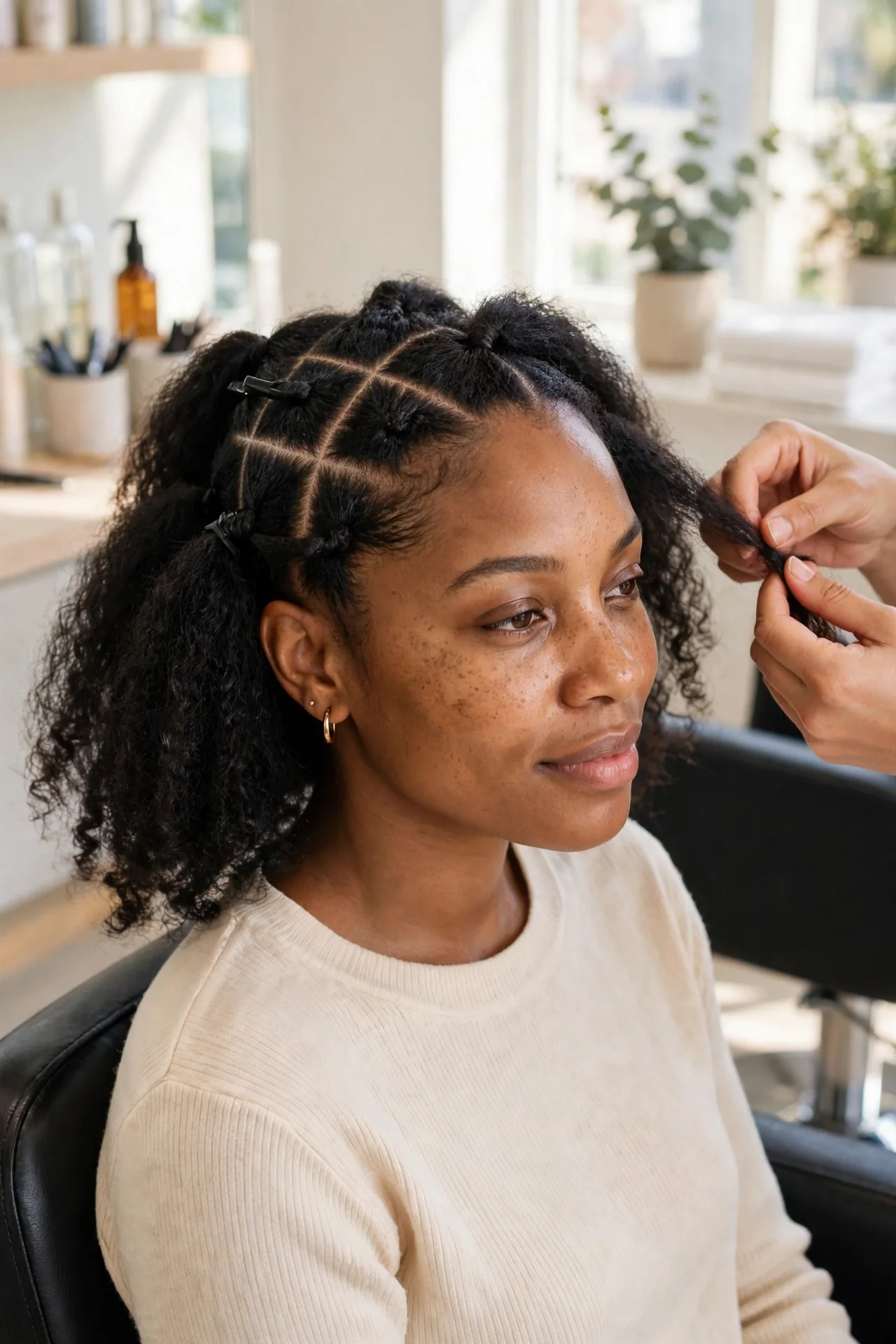
Arrive with your hair stretched, either blow-dried on low heat or stretched with braids or twists the night before. Stretched hair makes parting cleaner and keeps the install moving. Pack a snack, water, and something to watch or listen to, because a waist length install takes hours. Comfort during the appointment is part of the experience, not an afterthought.
What Install Day Really Looks Like
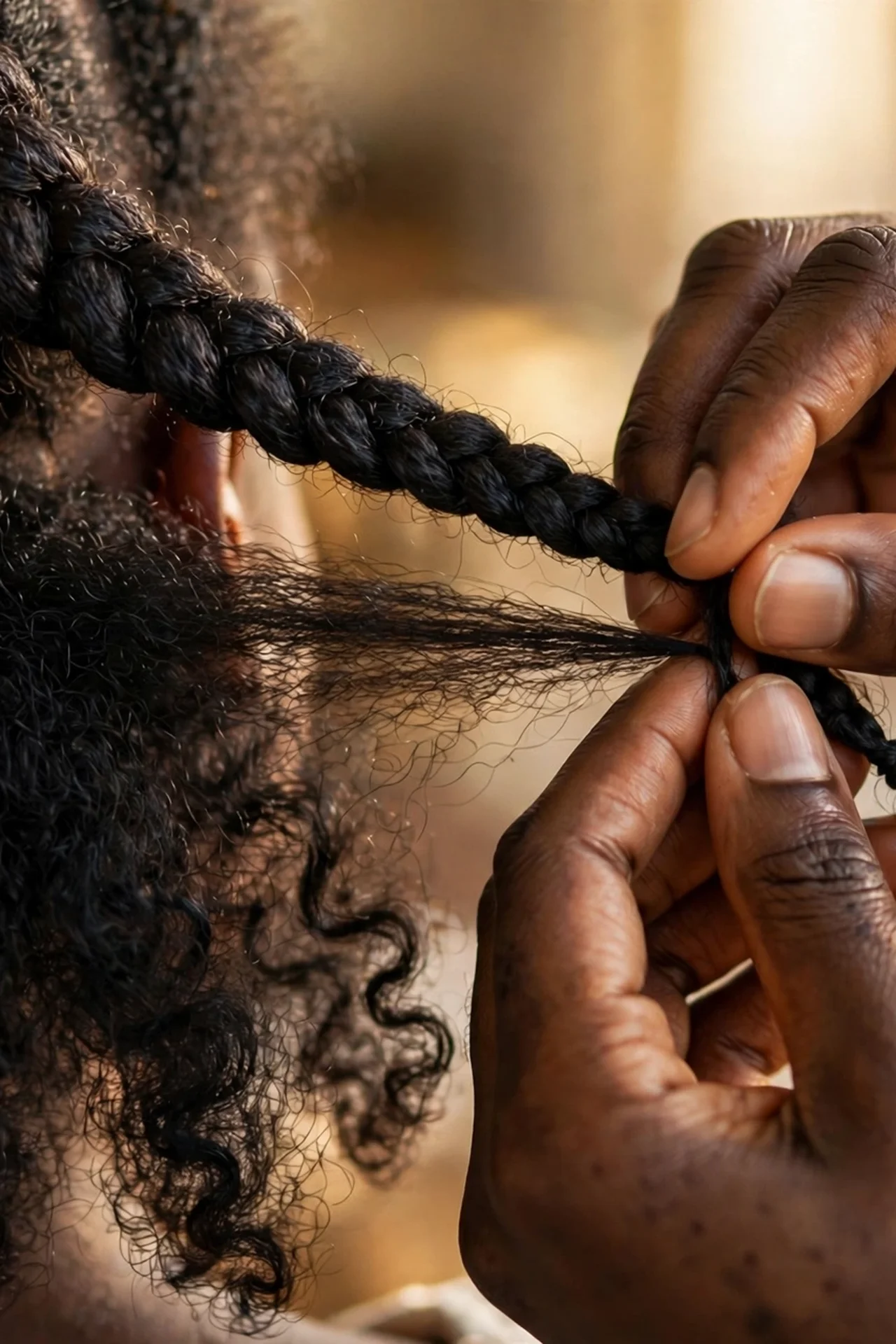
Install day starts with parting. Your braider sections your hair into a grid, working row by row from the nape upward. Each section gets a light coat of edge control or gel at the root, then the braiding begins. Your own hair forms the first few stitches, and extension hair joins in as the braid travels down.
The pace feels slow at first, then steady. Expect anywhere from five to nine hours depending on size, with breaks for stretching and eating. Waist length takes longer than shoulder length for a simple reason: every braid has more length to build. Small braids at this length can push toward the top of that range, so plan your day around it.
You will know the install is going well by how your scalp feels. Mild snugness is normal, sharp pain is not. Speak up right away if a braid feels too tight, especially around your hairline and nape. A good braider would rather redo one braid than send you home with a sore scalp. When the last braid is sealed, usually with hot water on the ends, you will feel the full weight for the first time, and it should feel long, not painful.
How Long They Last and What They Cost
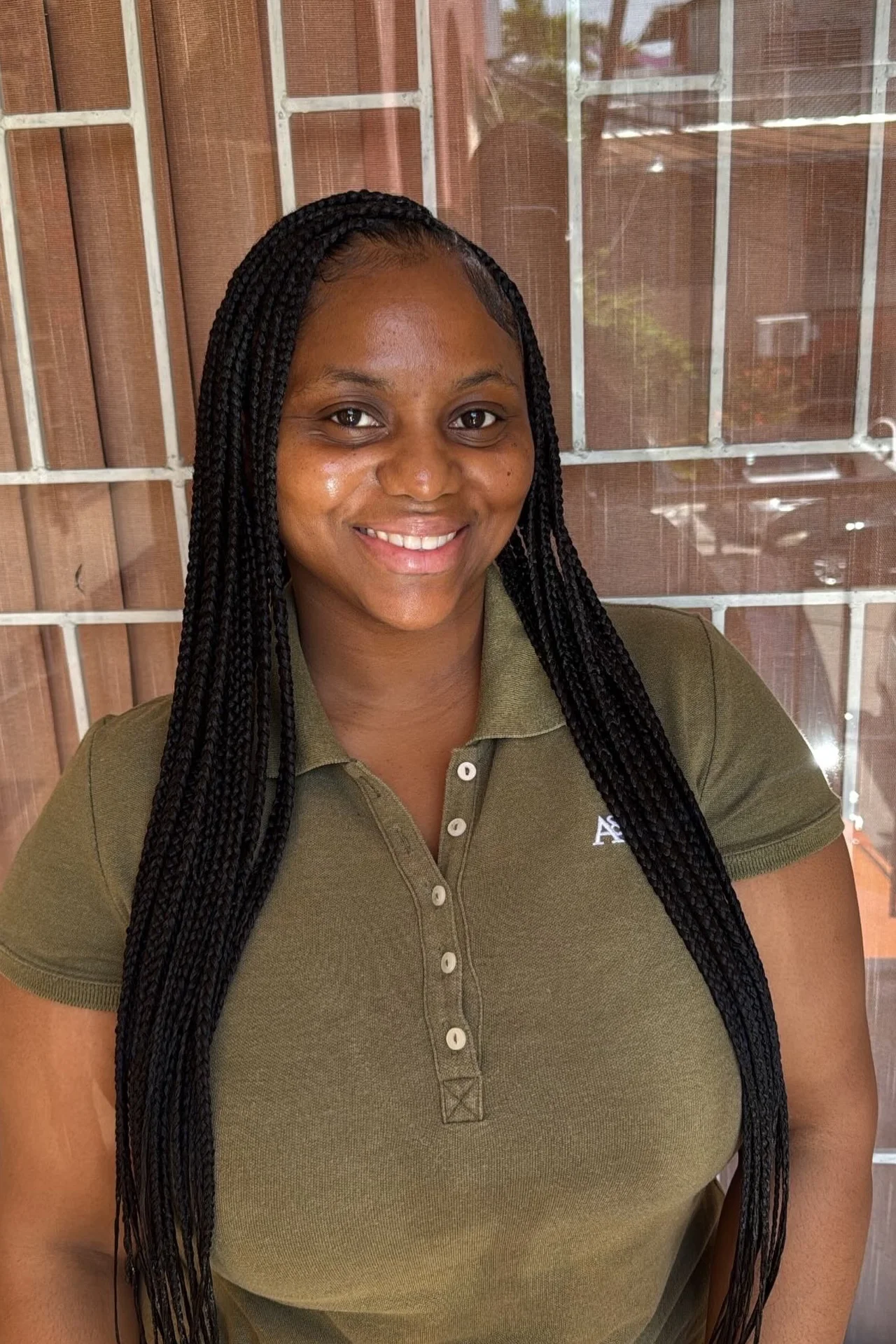
With steady care, waist length knotless braids for black women last four to six weeks. Some women stretch to eight weeks, but longer wear brings more new growth, more frizz at the roots, and a harder take-down. The sweet spot is the point where your braids still look fresh and your natural hair underneath is still healthy.
Cost varies by city, size, and whether hair is included. In most salons, medium waist length knotless braids run higher than shorter styles, because they use more hair and more hours. Small braids cost more again for the extra time. Ask for the full price up front, including hair, and confirm whether boho curls or color cost extra. A clear quote avoids an awkward surprise at the end of a long day.
Think of the cost across the weeks you will wear them. A style that looks polished every morning with almost no effort, for six weeks straight, earns its price quickly. You are paying for time saved each day as much as for the braids themselves.
Daily Care for Waist Length Braids
Long braids need a light daily routine, not a heavy one. Start your morning by smoothing flyaways with a little mousse or braid spray, worked through with your palms. Keep products light, because buildup is the enemy of long braids. A clean scalp and light moisture beat a shelf of heavy creams.
Wash your scalp every week or two with diluted shampoo, applied with an applicator bottle and rinsed gently. Focus on the scalp, let the suds run down the braids, and never scrub the lengths roughly. Dry fully afterward, because damp braids held against your back can develop a musty smell. A hooded dryer on low, or a good hour of air drying, does the job.
Pay attention to your edges all through the wear. If your hairline feels sore, itchy, or bumpy, loosen the braids around your face or take the style down early. Dermatologists who write about protective styling stress the same point: a style should protect your hair, never punish your scalp. You can read practical scalp care guidance from the American Academy of Dermatology if your scalp ever feels stressed.

The Night Routine That Protects the Length
Night care decides how your braids look in week four. Before bed, gather your braids loosely and wrap them in a silk or satin scarf, or pull on a satin bonnet large enough to hold the length without crushing it. Cotton pillowcases pull moisture from your hair and rough up the surface, while satin lets the braids slide.
If your braids are too long for one bonnet, fold them gently in half before wrapping, or braid them into one or two loose plaits first. Never wrap them tightly, and never sleep with them sopping wet. A loose wrap keeps the parts neat, the ends smooth, and the frizz down, so your mornings start easy.
Once a week, add a light oil to your scalp before wrapping, massaged in with your fingertips. Focus on the parts and the hairline, not the lengths. A little oil keeps the scalp comfortable and the new growth soft, which makes the eventual take-down far gentler on your hair.

Styling Long Braids Without the Weight
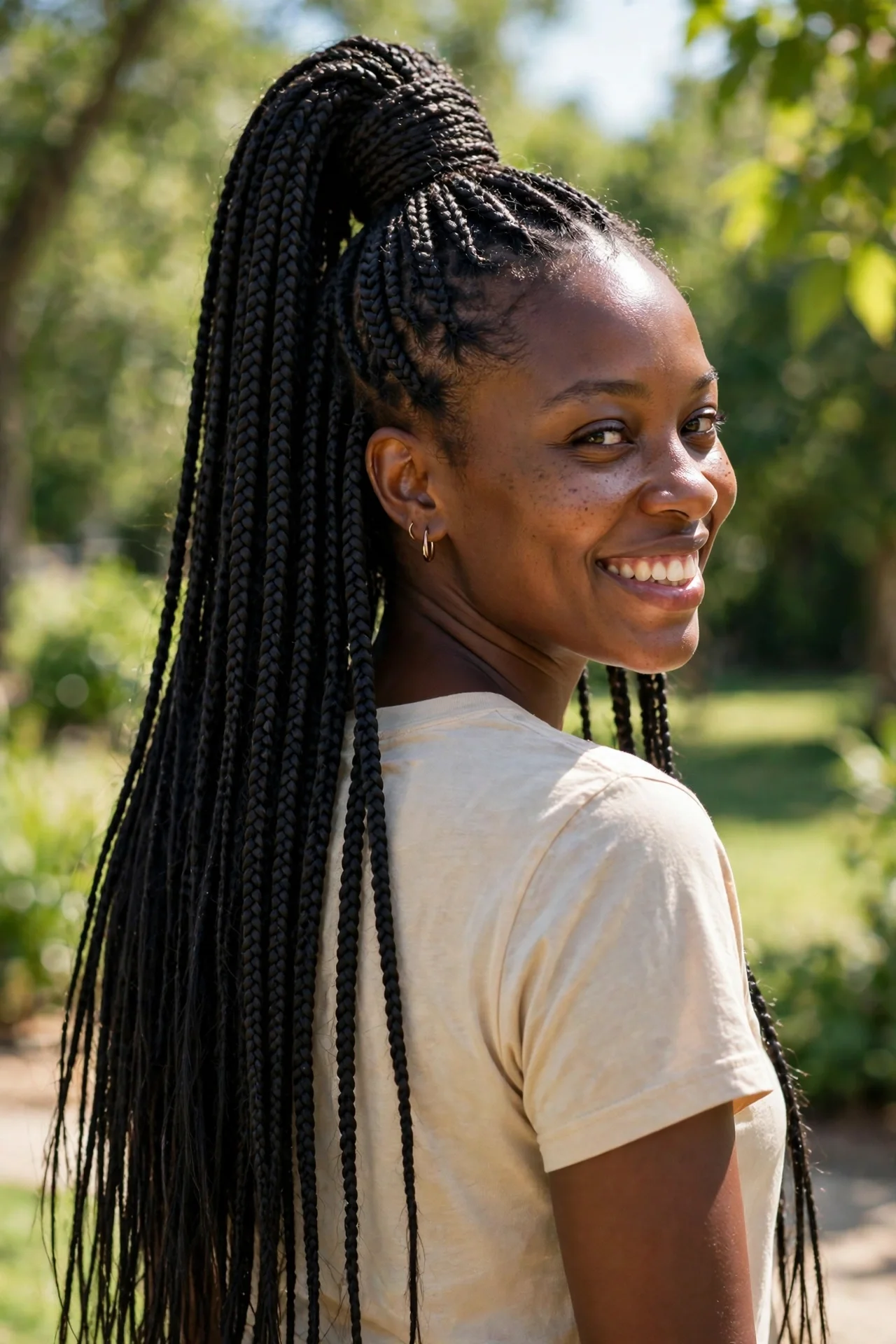
Waist length braids style beautifully, but the weight changes the rules. A high ponytail is the easiest everyday look, and it shows off the length as it falls down your back. A half-up style, with the top section gathered and the rest loose, gives you the best of both worlds for work and evenings out.
Low buns and braided crowns work well when you want your hair off your neck, but keep them loose. A bun pulled drum-tight defeats the whole point of knotless braids and strains the same edges you paid to protect. Let the bun sit softly, and use a scrunchie or spiral tie rather than a thin elastic that digs in.
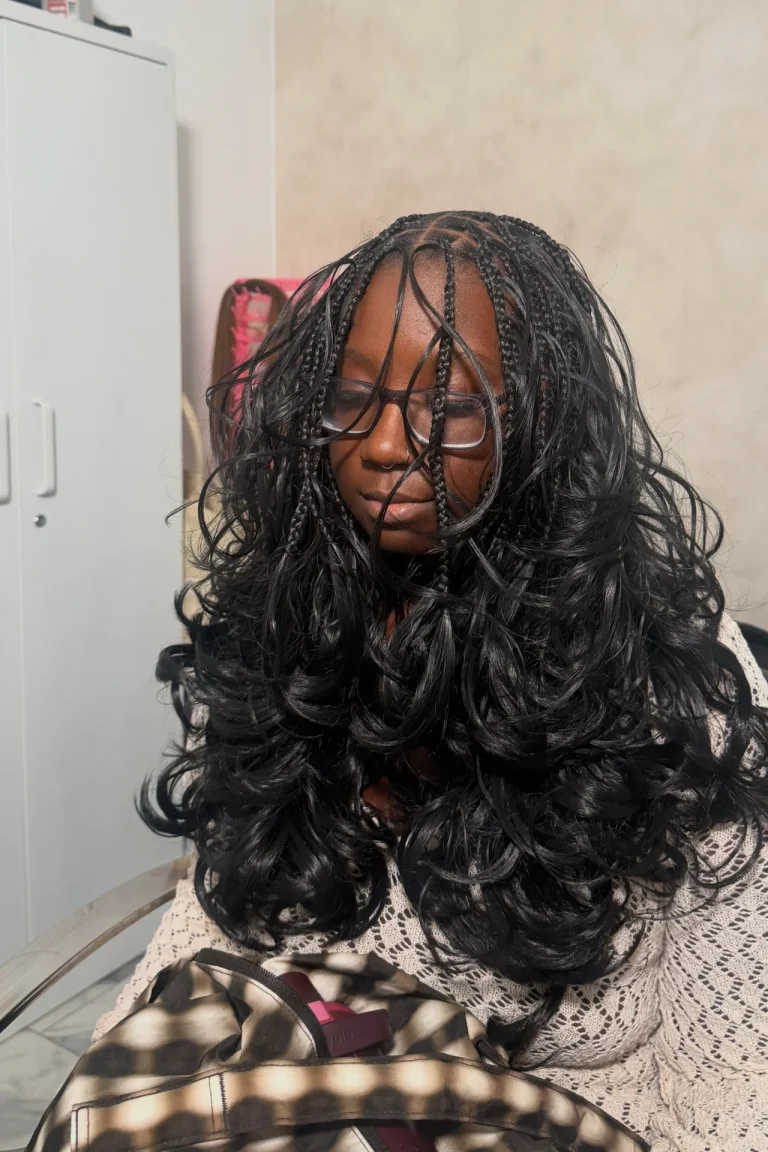
Accessories add polish without much effort. A few gold cuffs on two or three braids, or a simple headband, lift the style for a special day. Keep accessories light, because heavy beads pull on long braids and strain the roots over time. If you ever want a break from length altogether and fancy soft curls instead, french curl braids for black women give a completely different kind of movement, and the curly ends change the whole mood of the style.
Take-Down Without Breakage
Take-down day deserves the same patience as install day. Work braid by braid, starting at the nape and moving upward. Undo each braid to about an inch from the root, then gently separate the shed hair from your natural hair before moving on. Rushing this step is how breakage happens.
Keep a spray bottle of water and conditioner nearby, and mist each section as you free it. The moisture softens the new growth and helps the shed hair slide out instead of tangling. When all the braids are out, detangle slowly with a wide-tooth comb, then wash and deep condition before your next style. Your hair will feel light and a little strange after weeks of weight, and that is normal.
Give your hair a rest before reinstalling. A week or two of loose styles, or a smooth press if you want a change, lets your scalp recover and lets you check your hair’s real condition. If a sleek straight finish sounds tempting after braids, a silk press for black women is a lovely way to enjoy your natural length before your next protective style.
Quick Answers
How long do waist length knotless braids take to install?
Most installs take five to nine hours, depending on braid size and your hair density. Small braids at waist length take the longest, while large braids install fastest. Book a full day and bring snacks, water, and something to watch.
Do knotless braids hurt less than traditional box braids?
Yes, for most women. The feed-in start spreads tension along the braid instead of concentrating it in a knot at your scalp. You should still speak up if any braid feels sharp or sore, especially around your hairline.
Can I wash waist length knotless braids?
Yes. Wash your scalp every week or two with diluted shampoo from an applicator bottle, let the suds run down the lengths, and dry fully afterward. Never scrub the braids roughly, and never sleep on them while they are wet.
How do I sleep with braids this long?
Gather them loosely, fold them in half if needed, and wrap them in a silk or satin scarf or a large satin bonnet. Avoid tight wraps and cotton pillowcases, which rough up the braids and pull out moisture overnight.
When should I take waist length knotless braids down?
Plan on four to six weeks. Take them down sooner if your edges feel sore, your scalp itches constantly, or the new growth makes the roots hard to manage. A gentle, patient take-down protects everything your braids were meant to protect.