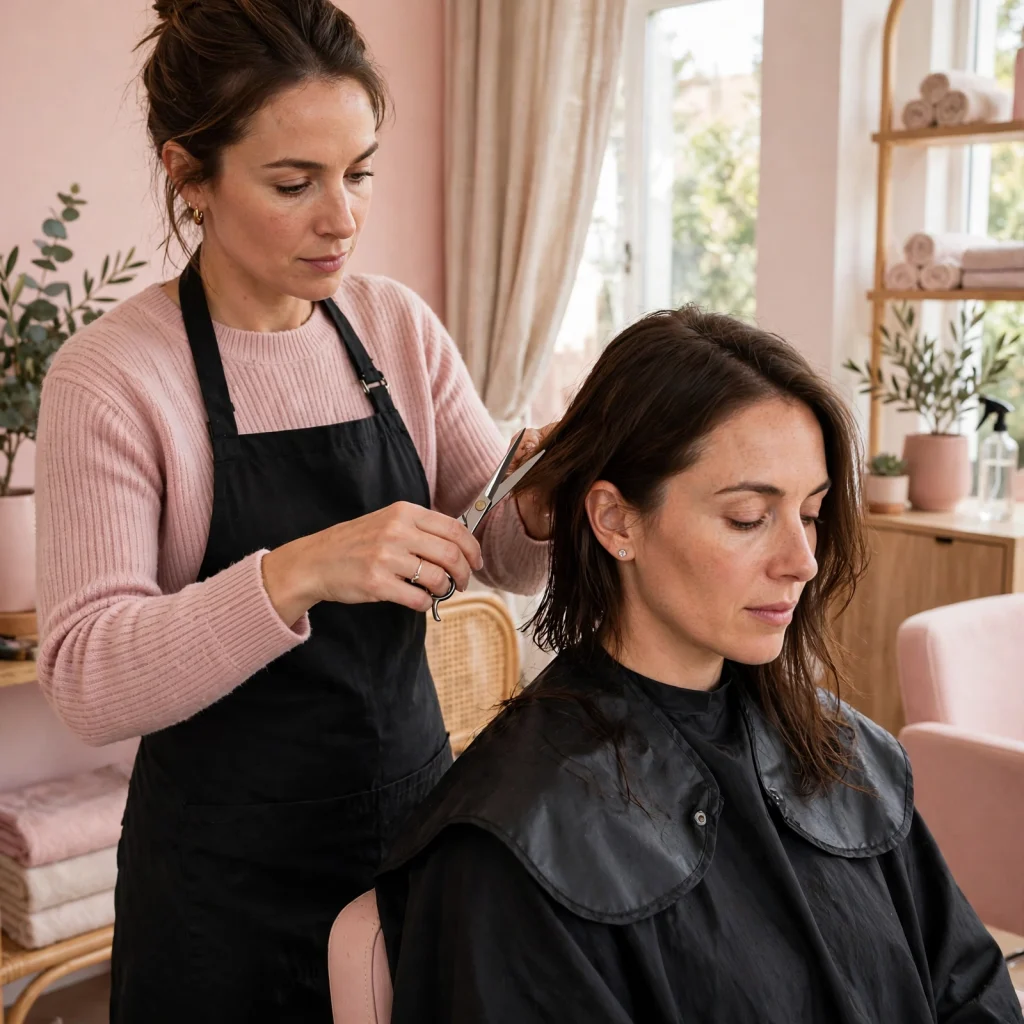
The right haircut should suit your features, your hair texture, and your daily routine. Face shape is one helpful starting point, not a strict rule. Use this guide to narrow your options, then talk through the details with your stylist.
First, Look at Your Face Shape
Pull your hair back and look in a mirror. Notice whether your forehead, cheekbones, and jaw are similar in width, and whether your face is longer than it is wide. Round faces tend to be similar in length and width with softer angles. Oval faces are longer than wide with a gently rounded jaw. Square faces have a stronger jaw and a broader forehead. Heart-shaped faces are wider at the forehead and narrower at the chin.
Ideas by Face Shape
- Round: longer layers, a side part, and styles with height at the crown can help elongate the look.
- Oval: many lengths work well, so focus on texture and how much styling time you want.
- Square: soft layers around the face, waves, and a side-swept fringe can soften strong angles.
- Heart-shaped: chin-length layers, a lob, or side-swept bangs can balance a wider forehead.
Do Not Forget Hair Texture and Lifestyle
Fine hair often looks fuller with blunt ends and light layers, while thick hair may benefit from internal layers that remove bulk without losing length. Think about how much time you want to spend styling each morning, and whether you prefer air-drying or using heat tools. A cut you can maintain easily will look better than a high-maintenance cut you rarely style.
What to Tell Your Stylist
Bring a few photos of styles you like, and note what you like about each one: the length, the layers, or the fringe. Be clear about what you do not want, and ask how the cut will grow out. A short conversation before the scissors start makes the result much more predictable.
After the Cut
Give a new cut a few days to settle, and try styling it two or three ways before deciding how you feel about it. Small trims every few weeks help keep the shape, especially for shorter styles and fringes.